





There is a privately owned refinery capable of easing Nigeria’s fuel problem, yet Nigerians are still buying fuel like a country that has none, and that contradiction is raising serious questions about who the system is really working for.
Development Diaries reports that the standoff between the Dangote Refinery and Nigeria’s downstream regulator has turned what should have been a national breakthrough into a slow-moving governance puzzle that ordinary citizens are now paying for in real time.
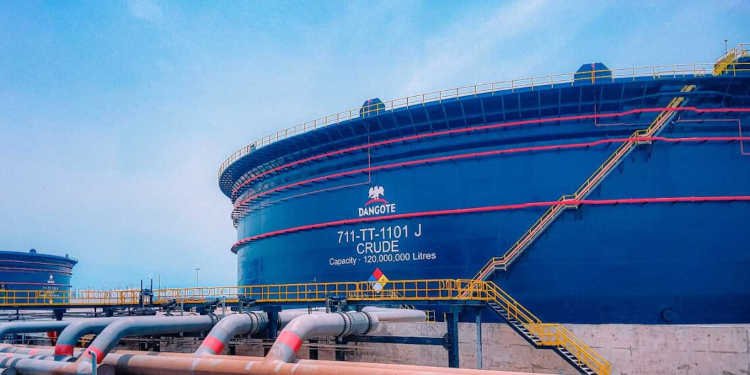
The refinery, owned by Aliko Dangote, is not a small project hidden somewhere hoping to scale up someday, as it is Africa’s largest refinery with a capacity of 650,000 barrels per day, built precisely to end Nigeria’s long-standing habit of exporting crude oil and importing refined fuel at higher costs.
On paper, it should have changed the story already, but on the streets, the story still sounds the same, with high fuel prices, unstable supply, and businesses struggling to keep up.
The regulator’s explanation has been that the refinery’s products are yet to receive full approval for retail distribution, framed as a matter of standards and compliance, but in a country where people are already used to seeing systems bend when it suits powerful interests, many are asking whether this is purely about quality checks or something more political hiding behind technical language.
The timing of this situation makes it even harder to ignore, because in the same week domestic airlines warned they might shut down operations over the rising cost of aviation fuel, Nigerians were reminded that the same refinery caught in regulatory delay has the capacity to produce that very fuel locally.
It is like watching someone sit beside a well and complain about thirst while arguing over who should fetch the water.
What this points to is not just a regulatory delay but a deeper issue within Nigeria’s political economy, where the fuel import business has operated for decades as a powerful network with strong financial and political influence.
For years, Nigeria has depended on imported fuel, and an arrangement that profitable does not quietly step aside just because a local solution has arrived.
This is where the conversation shifts from engineering to governance, because the real question is no longer whether Nigeria can refine its own fuel but whether the system is willing to allow it happen in a way that benefits the public.
When a country produces crude oil, builds a refinery capable of meeting local demand, and still struggles with fuel pricing and supply, then the issue is no longer capacity but control.
For ordinary Nigerians, this is not an abstract policy debate, as it shows up in transport fares that keep rising, businesses that spend more to run generators, and households that are forced to adjust daily living around the cost of energy.
At this point, what matters is transparency and urgency, because citizens deserve clear answers on what exactly is delaying approval, what standards are yet to be met, and how long the process will take.
Without that clarity, the situation begins to look less like regulation and more like hesitation dressed in official language.
Nigeria does not lack solutions; it often struggles to make those solutions work, and until that changes, the country may continue to stand beside its own answers while searching for relief elsewhere, which also raises another question Nigerians have been asking for years about why, after the current government spending over three billion USD on revamping the country’s four state-owned refineries, they are still not working as promised.