


When people can be hunted out of their homes for where they were born and the institution created to defend their rights says almost nothing, xenophobic violence stops looking like a public order problem and starts looking like an accountability failure.
Development Diaries reports that a foreign national died after jumping from the eighth floor of a building on Margaret Mncadi Avenue in Durban on the night of 30 June while hiding with two others from people they believed were pursuing them.
According to the South African Police Service (SAPS), the three had been sheltering in a storage facility for three days when they heard noise outside and concluded they had been found.
It is understood that the man’s immigration status is still being verified.
That account came from the police, but the South African Human Rights Commission (SAHRC) has yet to publish its own account of the incident or publicly address the reported killing of a Malawian man in Pietermaritzburg, the deaths of five Mozambicans in Mossel Bay in the weeks before 30 June, and the displacement of an estimated 25,000 foreign nationals forced to flee their homes, businesses and livelihoods across South Africa.
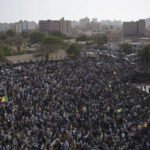
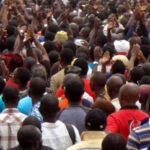
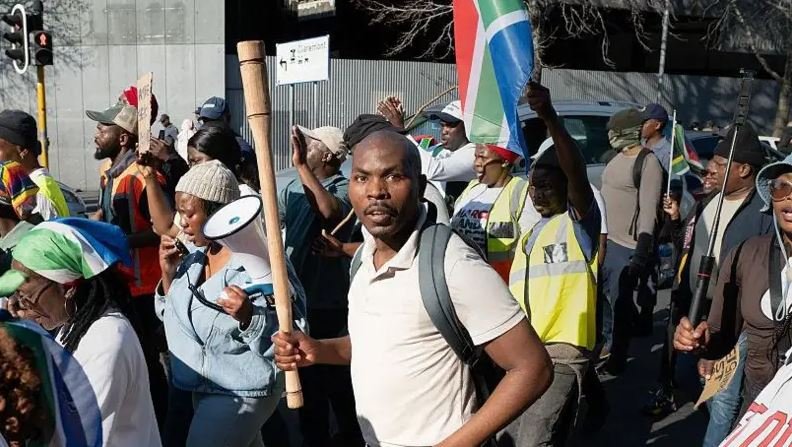
As thousands marched through Durban, Johannesburg, Pretoria, Cape Town and several other towns demanding the removal of undocumented migrants, two people were shot and wounded in Hillbrow.
While soldiers were deployed to parts of Johannesburg and police arrested suspected looters in Durban, Cape Town and Pietermaritzburg, campaign leader Jacinta Ngobese-Zuma declared that the protests would continue every Thursday until undocumented migrants left South Africa, signalling that the campaign was only gathering momentum.
The continuing mobilisation makes the silence of the SAHRC increasingly difficult to explain. Section 184 of South Africa’s constitution gives the commission the responsibility to promote, protect and monitor human rights, investigate alleged violations, secure appropriate redress and publish its findings.
Those powers exist precisely for moments like this, when violence becomes organised, widespread and sustained. But months into the renewed anti-migrant crisis, the commission has not publicly announced a dedicated investigation, released preliminary findings or issued a comprehensive accountability report on the campaign.
The consequences have already crossed South Africa’s borders, with Nigeria documenting losses suffered by citizens forced to abandon businesses, homes and other assets while fleeing the violence, and saying it will seek compensation.
Ghana has demanded a full investigation into the reported killing of its citizen, Bashiru Isak, in Cape Town, although South African police dispute aspects of that account.
Those demands expose another weakness of Africa, still lacking an effective legal framework through which one government can recover compensation for citizens displaced by xenophobic violence in another member state.
South Africa has not ratified the African Union Protocol on Free Movement of Persons, meaning diplomatic protests are likely to produce correspondence rather than enforceable remedies.
The pattern has become painfully familiar, as similar attacks erupted in 2008, 2015, 2019, 2021 and now 2026. Governments condemned the violence, investigations were promised, diplomatic tensions eased, and the cycle returned because little changed structurally.
There is another dimension that deserves closer scrutiny. Before the 30 June protests, the Institute for Security Studies (ISS) assessed that elements within the March and March movement could have operational links to organised criminal networks, particularly construction mafia groups operating in KwaZulu-Natal.
The assessment suggested that some mobilisation around anti-migrant sentiment might also serve to obstruct investigations involving a prominent traditional leader.
If that assessment proves accurate, the violence cannot be explained simply as public frustration over immigration; it would also involve organised crime exploiting a genuine public grievance for its own interests.
However, neither SAPS Crime Intelligence nor the National Prosecuting Authority has publicly clarified whether those alleged links are under active investigation.
The political calendar also deserves attention. South Africa’s local government elections are due in November 2026. Several political parties, including the MK Party, Patriotic Alliance and ActionSA, have adopted increasingly hardline anti-migrant messaging.
KwaZulu-Natal, where much of the campaign has unfolded, remains one of the MK Party’s strongest support bases. Announcing weekly protests through the election period ensures that migration remains a permanent campaign issue and raises a broader legal question about where political mobilisation ends and unlawful incitement begins.
The Independent Electoral Commission has not publicly explained whether a campaign that continues to mobilise supporters after repeated attacks on foreign nationals complies with the Electoral Act, which prohibits incitement to violence.
South Africa’s constitution leaves little room for ambiguity, with Section Nine guaranteeing equality before the law., and Section 12 protecting everyone from violence.
Those protections apply to every person within South Africa’s borders, regardless of nationality or immigration status. The repeated attacks on foreign nationals, therefore, represent criminal offences and constitutional failures.
The burden has fallen hardest on women and children, who make up a large share of those displaced, with images of Malawian families sleeping outdoors in Durban during winter while waiting for repatriation buses becoming symbols of a crisis that extends beyond policing into human dignity.
Women working as traders and domestic workers have lost businesses, homes and livelihoods, while their children have seen their schooling interrupted. Without an official investigation by the SAHRC, many of these experiences risk disappearing from South Africa’s institutional record.
South Africans also have a role to play. Victims, community organisations and diaspora groups should submit documented incidents of violence, displacement and property destruction to the SAHRC through its public complaints process.
For their part, the SAHRC should publish, within 14 days, a comprehensive accountability statement covering every documented death, displacement and alleged rights violation linked to the anti-migrant campaign since March 2026, including the status of police investigations and prosecutions.
Parliament’s Portfolio Committee on Police should also summon the National Police Commissioner to publicly explain whether SAPS is investigating the alleged organised crime links identified by the ISS.
South Africa has investigated the violence after every previous outbreak. What remains missing is an accountability process strong enough to stop the next one.
Photo source: Rodger Bosch/AFP via Getty Images