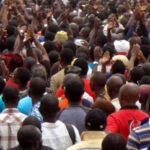




Nigeria’s humanitarian response is shrinking while more than 17 million people across nine northern states are struggling to find enough food.
Development Diaries reports that the World Food Programme (WFP) recently warned that in Borno State alone, more than three million people are acutely food insecure, over 750,000 face severe hunger, and more than 10,000 are living in catastrophic conditions.
However, the agency, which reached about 1.3 million people during the 2025 lean season, now has funding to assist only around 740,000 people.
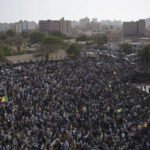
WFP suspended food assistance in some internally displaced persons camps in Borno State after funding ran out, resulting in residents joining armed groups in exchange for food and income and others enduring prolonged hunger, as documented by camp monitors.
One of the biggest shocks came from the dismantling of the United States Agency for International Development (USAID) in 2025, which had long served as one of the largest channels for emergency humanitarian assistance in countries such as Nigeria.
The same reduction in American aid that disrupted HIV treatment programmes in parts of Africa and weakened responses to disease outbreaks has also reduced WFP’s ability to feed vulnerable communities in northern Nigeria.
The sharp decline from 1.3 million beneficiaries to about 740,000 is therefore a consequence of worsening insecurity and the direct global aid withdrawal that Nigeria has yet to confront with a credible domestic alternative.
That gap is not impossible to close, as WFP says it requires about 89 million dollars over the next six months to sustain food and nutrition assistance across northern Nigeria. Compared with Nigeria’s 2026 federal budget of about 54 trillion naira, roughly 36 billion dollars at current exchange rates, that funding gap represents only a tiny fraction of national public spending.
But the Federal Ministry of Humanitarian Affairs has not announced a funded domestic intervention capable of preventing millions of vulnerable Nigerians from slipping further into hunger.
Nigeria’s humanitarian response in the northeast has become heavily dependent on foreign funding instead of a sustainable domestic system. As donor support declined, there was no national response capable of filling the gap, leaving millions of people exposed to a crisis that government should have been prepared to manage.
The responsibility for preventing that collapse rests first with the Federal Ministry of Humanitarian Affairs, which exists to coordinate national responses to humanitarian emergencies.
The responsibility also extends to the governments of Borno, Adamawa, Yobe, Sokoto, Zamfara, Katsina, Jigawa, Kaduna and Niger states, where millions continue to live with the combined effects of conflict and hunger.
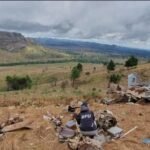
Over the years, these states have received substantial security support from the federal government, but many communities remain too unsafe for farming and normal economic activity to resume.
The National Emergency Management Agency (NEMA), which should coordinate emergency responses during crises of this scale, has also maintained only a limited public presence as the latest hunger figures emerged.
The consequences extend far beyond empty stomachs. Section 14(2)(b) of Nigeria’s constitution declares that the security and welfare of the people shall be the primary purpose of government.
A situation in which thousands of citizens face catastrophic hunger because humanitarian funding has declined raises fundamental questions about how that constitutional obligation is being fulfilled.
Nigeria also ratified the International Covenant on Economic, Social and Cultural Rights, whose Article 11 recognises every person’s right to adequate food and freedom from hunger.
Women and girls are paying an especially heavy price for the funding crisis, with WFP directly linking the suspension of food assistance in displacement camps to rising exploitation and gender-based violence, reinforcing a pattern humanitarian organisations have documented for years whenever food becomes scarce.
Pregnant and breastfeeding women face increased nutritional risks, while mothers caring for young children are often forced to make impossible choices about who eats first when assistance disappears.
The impact on children is equally severe. Funding shortages previously forced WFP to suspend about 150 nutrition clinics across Borno and Yobe states, placing hundreds of thousands of children at greater risk of acute malnutrition.
The latest funding gap threatens to deepen that crisis even further, with persons with disabilities living in displacement camps facing additional barriers because food distribution systems often fail to account for their mobility needs, leaving some of the most vulnerable people even further behind.
WFP Regional Director for West and Central Africa, Kinday Samba, warned that ‘what concerns us most is how this crisis is expanding’. Perhaps even more disturbing is the agency’s own assessment that funding shortages have contributed directly to increasing exploitation and gender-based violence in displacement camps.
That finding should concern far more than humanitarian organisations because it demonstrates that hunger is fuelling broader insecurity and human suffering in ways that extend well beyond nutrition.
The Ministry of Humanitarian Affairs should immediately publish a funded domestic response showing how Nigeria intends to reduce its dependence on shrinking international assistance, while the National Assembly’s Joint Committees on Humanitarian Affairs and Finance should hold a public hearing requiring the ministry to present the size of the funding gap, the amount government is prepared to contribute, the agencies responsible for implementation and the timeline for delivering assistance before conditions deteriorate further.
Citizens also have an important role to play. Nigerians can use the Freedom of Information Act to request details of federal allocations for humanitarian food assistance in the northeast and demand to know whether supplementary funding has been approved to respond to WFP’s warning.
Nigeria cannot continue to treat humanitarian organisations as a permanent substitute for government. International partners can provide emergency support, but they were never meant to carry the constitutional responsibility of feeding and protecting Nigerian citizens.