


Nigeria cannot afford a military whose officers cite the same insecurity, corruption and economic hardship troubling civilians when explaining an alleged plot to overthrow an elected government.
Development Diaries reports that Colonel Mohammed Ma’aji, who has been accused of involvement in an alleged plot against President Bola Tinubu’s administration, said his actions were driven by patriotism and concern over Nigeria’s worsening condition rather than personal ambition.
He cited economic hardship, poor governance, corruption, nepotism and declining welfare among civilians and military personnel, and said discussions about military intervention began in 2023 towards the end of the Muhammadu Buhari administration.
He also referred to the use of excessive force by security agencies during the #EndSARS and #EndBadGovernance protests.
A coup attempt cannot become a legitimate response to bad governance simply because the grievances used to justify it are familiar. Military intervention violates the constitutional order, and Nigeria’s own experience between 1966 and 1999 showed how quickly military rule can deepen the failures it claims to correct.
Ma’aji’s account therefore does not justify the alleged plot, but it raises questions about why complaints that are common among civilians are now being voiced from within the officer corps.
The Defence Headquarters has described the arrests of the officers as part of a routine internal disciplinary process, without publicly addressing the substance of Ma’aji’s allegations.
That leaves an important gap because when questions about military loyalty, welfare and political activity arise, silence leaves citizens to fill the space with speculation at a time when Nigeria is already dealing with insurgency, banditry and the political tensions ahead of 2027.
Ma’aji said the group was still mobilising when the alleged plot was uncovered and that no date had been fixed for any action. He also said a Major Iliyasu proposed using Civilian Joint Task Force members, claiming that the fighters already had personal rifles.
The claim raises a separate question about Nigeria’s reliance on armed civilian auxiliaries created to support counter-insurgency operations and the safeguards governing their weapons, command structures and eventual demobilisation.
Inside the armed forces, the welfare question cannot be brushed aside simply because it appears in the account of an accused officer. Soldiers have spent years deployed against insurgents, bandits and other armed groups, often for extended periods, making allowances, equipment, casualty support and conditions of service matters of operational effectiveness as much as employee welfare.
If an officer can cite these grievances while describing an alleged attempt to mobilise colleagues for political action, the military command and its civilian overseers need to establish what complaints existed, how they were handled and whether failures in the system created room for discontent to grow.
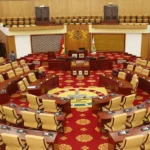
The National Assembly has a role in that examination, as Sections 88 and 89 of the 1999 constitution give the legislature powers to investigate matters within its legislative competence, including the administration of funds appropriated to government institutions.
Based on those constitutional provisions, the Senate and House of Representatives committees responsible for defence and the armed services have a responsibility to examine how funds allocated for personnel welfare, equipment and operations are being used and whether the complaints now being raised were previously brought before them.
As for the presidency, which is the civilian authority headed by the commander-in-chief, it must determine the political response and preserve the constitutional order, while the Defence Headquarters must account for the disciplinary process and provide accurate information about the allegations.
Due process also applies to soldiers accused of plotting against the government. Section 36 of the constitution guarantees fair hearing and the presumption of innocence to anyone accused of a criminal offence, while the Armed Forces Act provides the framework for military trials.
The state cannot suspend those protections because the allegation is politically explosive. Establishing the legal status of detained officers, the charges against them and the forum in which they will be tried is part of protecting the constitutional order that any alleged coup plot would have threatened.
For communities in Borno, Zamfara, Katsina, Sokoto and Benue, the consequences of instability inside the military are far less theoretical. These are communities that depend on soldiers to hold territory, protect farms and markets and respond when armed groups attack.
Women and girls in displacement settings are even more dependent on disciplined security forces for protection from violence. If command structures become distracted by internal political disputes or distrust, the people living closest to insecurity are the ones who pay first.
Ma’aji’s references to economic hardship also connect the military controversy to a much wider national problem, which involves families facing high food prices, transport costs and reduced purchasing power.
Nigeria therefore needs two conversations to happen at the same time. The alleged plot must be investigated and, where evidence supports criminal charges, prosecuted under the law.
The grievances cited by the accused must also be examined through the institutions responsible for addressing them, as dismissing the grievances because they came from an accused officer would be as unhelpful as using them to excuse an alleged attempt to overthrow an elected government.
Citizens should follow the proceedings and demand that any trial arising from the case is conducted according to law and reported publicly. They should also ask their senators and members of the House of Representatives what oversight they have conducted on military welfare, equipment and operational spending, while rejecting calls for military intervention as a solution to civilian governance failures.
The Defence Headquarters should publish the legal status of every officer detained in connection with the case and identify the legal forum handling each matter, while the National Assembly committees on defence and the armed services should hold hearings on military welfare and the use of appropriated funds and publish their findings.
On its part, the presidency should commission a public review of the Civilian Joint Task Force covering its numbers, weapons, command arrangements and plans for eventual demobilisation.
An elected government cannot answer allegations of military discontent by simply insisting that the military must remain loyal.