



From Zambia to Osun and Homa Bay, violence, vote-buying and voter suppression are making political participation harder for citizens while weakening the credibility of elections.
Development Diaries reports that Zambia’s 13 August presidential election was followed by an armed police raid involving opposition figures, two people were killed and 46 injured when violence disrupted an opposition rally in Kenya’s Homa Bay on 16 August, while Nigerian police reportedly found an Osun State lawmaker with more than 200 permanent voter cards after the state’s 15 August governorship election.
The three incidents show that violence, intimidation, vote-buying and interference with voters are making it harder for political opponents and their supporters to participate freely in elections across Zambia, Nigeria and Kenya.
Zambia’s turnout collapse
President Hakainde Hichilema won a second term with about 60 percent of the vote against roughly 38 percent for his main challenger, Brian Mundubile. The result is official, but the circumstances surrounding the election deserve separate attention.
On election night, authorities arrested 11 people, including senior opposition figures, during a raid involving an exchange of gunfire while Mundubile was present.
The following day, the Electoral Commission of Zambia suspended vote counting for several hours following reports of violence against polling staff and stolen ballot papers. European Union observers had also reported seeing a person seized by armed personnel three days before voting.
Turnout fell to 56.4 percent from about 70 percent at the previous general election. That 14-point decline deserves more attention than it has received because an election can produce a clear winner while fewer citizens are willing or able to participate in choosing one.
Osun’s narrow mandate
In Osun, the Independent National Electoral Commission (INEC) declared Ademola Adeleke of the Accord Party winner with 511,067 votes against 444,815 for the All Progressives Congress (APC) candidate, Bola Oyebamiji. The state had 2,339,544 registered voters, but only 1,010,684 were accredited.
The result therefore represents a mandate built on about 22 percent of registered voters. Another 20,721 ballots were rejected, accounting for about 2.06 percent of votes cast across 3,763 polling units.
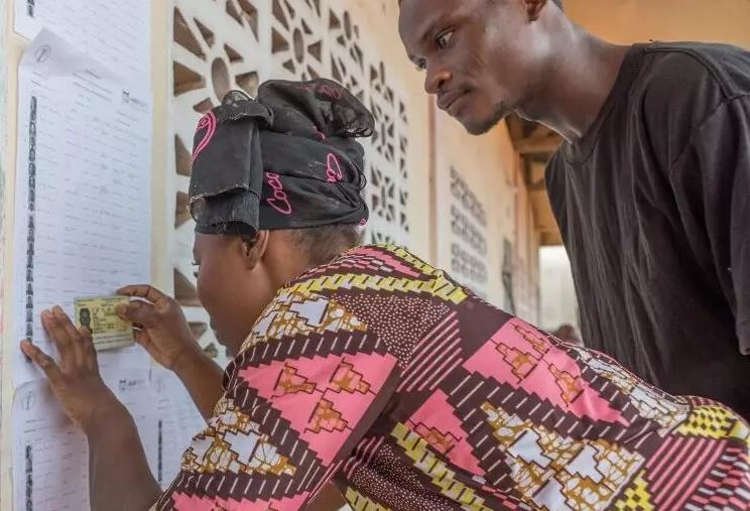
Conduct concerns also emerged around the election, as police reportedly found an Osun lawmaker with more than 200 permanent voter cards (PVCs) and 143 alleged vote buyers at his residence.
Observers also reported BVAS malfunctions that delayed accreditation at several polling units, while Dataphyte confirmed that a party member possessed multiple PVCs.
Homa Bay’s roadblock
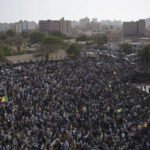
Kenya offered another version of the same problem when violence disrupted an opposition rally in Homa Bay Town on 16 August. Two people, including a police driver attached to the Nyando command and a Ugandan woman allegedly run over during the chaos, were killed, while 46 others were injured.
At least one vehicle was burnt, and 17 suspects were arrested, with journalists covering the rally also assaulted, their equipment stolen and media vehicles damaged.
A blocked road can therefore become an electoral issue even when no ballot is being cast. If supporters cannot reach a political gathering safely, candidates cannot campaign freely and journalists cannot document what happens, the cost of political participation has already been raised.
Where the system breaks down
Electoral integrity is often reduced to what happens between the opening and closing of polling units, but these three cases show why that is too narrow.
In Zambia, the pressure appeared around the opposition and the election count. In Osun, it appeared through voter cards, alleged inducements and accreditation problems, while in Homa Bay, it appeared on the roads leading to an opposition gathering.
Zambia’s Electoral Commission, Zambia Police Service and Ministry of Home Affairs and Internal Security are responsile for election-related arrests, security operations and disruptions.
In Nigeria, INEC administers the election and refers offences, while the Nigeria Police Force investigates arrests and the attorney-general’s office determines whether cases proceed.
In Kenya, the Inspector General of Police, the Independent Policing Oversight Authority and the National Cohesion and Integration Commission have specific responsibilities for policing and political violence.
Nigeria’s enforcement gap is particularly familiar, as INEC can record and refer electoral offences but cannot prosecute them, while the National Assembly has still not passed a standalone Electoral Offences Commission law.
For Kenya, it already has legislation against political incitement, but the existence of a law means little when enforcement does not follow.
The African Union also has a responsibility beyond congratulating winners. Its Department of Political Affairs, Peace and Security should be interested in whether voting was completed and intimidation, violence and administrative failures affected who could participate.
What citizens are entitled to
Article 25 of the International Covenant on Civil and Political Rights protects the right to participate in genuine periodic elections through universal and equal suffrage.
The African Charter on Democracy, Elections and Governance also requires states to provide an environment in which electoral bodies can operate independently and to prevent state resources from being used for partisan advantage.
Nigeria’s constitution makes the principle even clearer, as Section 14(2)(a) places sovereignty in the people, from whom government derives its authority. That sovereignty does not disappear when turnout falls, but a sharp decline in participation should force governments to ask why citizens are becoming less willing or able to exercise it.
The burden is particularly heavy for rural voters, who often face longer distances, higher transport costs and greater insecurity before they can reach a polling unit or political gathering.
Women in low-income households are also especially exposed to vote-buying because a cash inducement can answer an immediate need that a political manifesto does not.
Persons with disabilities face another barrier because rejected ballots are rarely disaggregated to show whether voters with visual, physical or literacy-related difficulties were adequately assisted. The 20,721 rejected ballots in Osun therefore represent more than a statistic unless INEC can show who lost those votes and why.
Journalists face a different but equally important risk because when reporters covering a political rally are assaulted and their equipment destroyed, the public loses part of the independent record needed to establish what happened.
What should happen next
In Zambia, civil society groups and party agents should obtain polling-station result forms for the constituencies declared last and compare them with parallel counts, while the Electoral Commission should publish turnout by province, age and sex within 30 days.
Nigeria needs the same scrutiny after the Osun election, with observer groups asking the police for the case numbers and charging status of everyone arrested over PVC possession and vote-buying and publishing whatever response they receive.
Beyond the arrests, INEC should publish a ward-level breakdown of Osun’s 20,721 rejected ballots within 45 days, including available information on assistance provided to voters with disabilities. The National Assembly should also bring the Electoral Offences Commission Bill back to the floor before the end of the 2026 session.
Kenya’s Homa Bay violence requires a similar public accounting, with residents, journalists and affected businesses lodging individual complaints with the Independent Policing Oversight Authority and demanding case numbers and written responses. The National Cohesion and Integration Commission should investigate reported political incitement and publish its findings.
These cases also expose a gap in how African elections are observed. The African Union should require future election observation missions to record intimidation before polling, analyse changes in turnout against previous elections and publish both within 30 days of an election result.
When voters have to weigh the risk of attending a rally, the immediate need for cash against the value of their vote or the possibility that their ballot will be rejected, the damage to democracy has already happened before anyone announces the winner.