



The Democratic Republic of the Congo’s (DRC) latest Ebola outbreak has become its deadliest because too many patients are reaching treatment centres after the window for saving them has already narrowed.
Development Diaries reports that the World Health Organisation (WHO) has confirmed that the outbreak has killed 2,325 people from 4,945 confirmed cases since the government declared it on 15 May, surpassing the 2,299 deaths recorded during the 2018 to 2020 Ebola epidemic.
UN humanitarian chief Tom Fletcher described it as the fastest-growing Ebola outbreak on record, with one person dying roughly every 30 minutes.
The death toll is alarming, but the more revealing figure is the 46 percent case fatality ratio reported by the Congolese government, roughly twice the rate recorded in early June and a sign that too many infected people are reaching care too late.
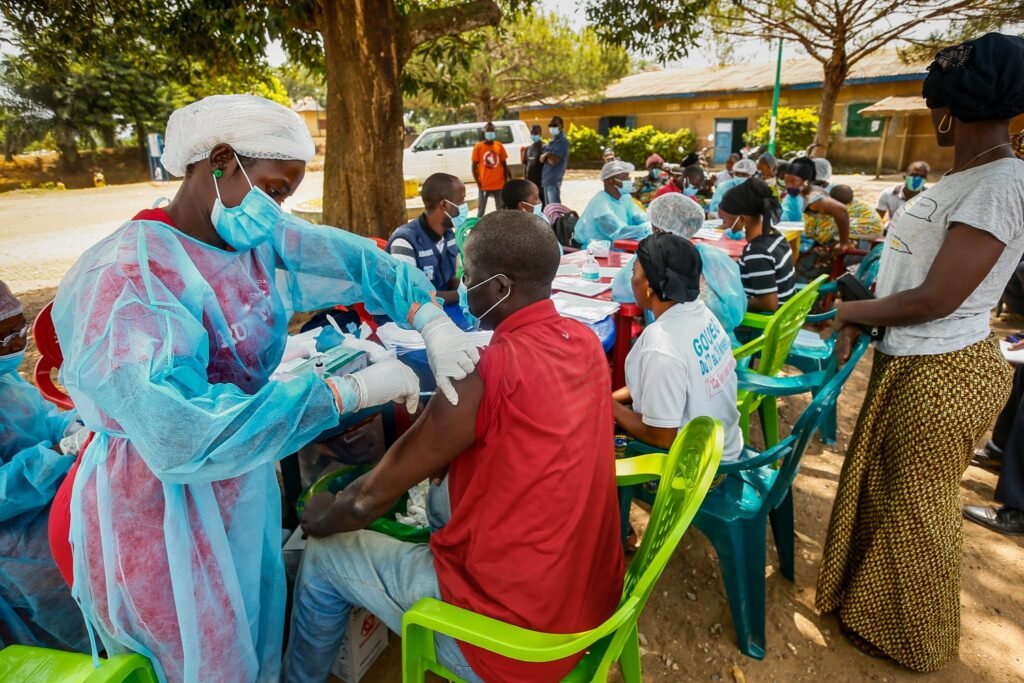
Ebola is deadly, but its fatality rate is not fixed. People who receive timely supportive care have a better chance of surviving, making early detection, isolation and treatment critical to keeping deaths down.
A public health specialist with Médecins Sans Frontières (MSF) working in the DRC, Thomas Parisch, has said that many cases are being identified only after patients have died in their communities, when treatment is no longer possible.
The outbreak is moving faster than the response, with 579 cases and 304 deaths recorded between 03 and 09 August, the highest weekly figures since the outbreak began, while about 100 new cases were being recorded every day by 12 August.
WHO officials have said that the number of cases is doubling roughly every 20 days.
The speed becomes clearer when compared with previous outbreaks, as the 2014 to 2016 West African Ebola epidemic took almost five months to reach 1,000 deaths, while the current outbreak passed 2,000 deaths in less than three months.
Six of the DRC’s 26 provinces are now affected, with more than 3,400 cases recorded in Ituri, where the outbreak began.
The outbreak is caused by the Bundibugyo species, for which there is no approved vaccine or treatment, making early detection and supportive care even more important in communities where weak health infrastructure, insecurity and mistrust make it harder to identify cases and trace contacts.
Uganda offers a useful comparison because the outbreak crossed its border but was contained at 20 confirmed cases and two deaths before the country declared it over last month.
The two countries did not face identical circumstances, but Uganda’s experience shows how quickly identifying cases and tracing contacts can change the course of an outbreak.
The DRC’s biggest failure is the weakness of community surveillance and contact tracing, particularly in conflict-affected areas where too many patients are being identified only after the disease has progressed beyond the point where treatment can save them.
The 1,040 people who have recovered and the 730 still receiving care or remaining in isolation show that survival is possible when patients reach treatment in time.
That puts a clear responsibility on the DRC Ministry of Public Health, Hygiene and Prevention and the National Public Health Institute, which oversee surveillance and community response.
WHO and the Africa Centres for Disease Control and Prevention (Africa CDC) are responsible for technical support and deployment, while the UN Office for the Coordination of Humanitarian Affairs coordinates humanitarian financing, with Fletcher releasing another $30.5 million from the Central Emergency Response Fund after $24 million had already been allocated to the DRC and neighbouring countries.
The health consequences also raise a rights question, as the DRC has ratified the International Covenant on Economic, Social and Cultural Rights, whose Article 12 recognises the right to the highest attainable standard of physical and mental health, and is bound by Article 16 of the African Charter on Human and Peoples’ Rights, which requires states to take measures to protect the health of their people.
The International Health Regulations also require states to maintain core surveillance and response capacities.
A surveillance system that identifies Ebola patients only after they have died is failing to detect cases early enough for treatment and contact tracing to prevent more deaths.
Women are carrying much of that failure into their homes because they perform much of the unpaid care for sick relatives and are central to burial practices in many communities across Ituri.
Children are also paying a heavy price, with four children from one orphanage in Bunia already dead and Red Cross and Red Crescent teams carrying one of their small coffins to Mbiyo cemetery in June.
More children are likely to be left without parents or caregivers at this scale of adult mortality, but there is still no published plan showing how affected children will receive the psychosocial and educational support they need.
The burden is hardest for rural and low-income families in Ituri, Nord-Kivu and the other affected provinces, where families without money for transport or access to functioning roads can lose critical hours getting sick relatives to treatment centres.
Those delays are increasingly reflected in the 46 percent fatality rate.
Community groups can help close part of this gap by demanding weekly updates from health zone officials on how long it takes to move suspected cases from symptom onset to isolation.
Churches, women’s groups and community health committees should insist on health-zone figures rather than broad provincial numbers that can conceal areas where contact tracing is barely functioning.
Community radio also has a practical role to play by broadcasting the location, contact number and available transport arrangements for nearby Ebola treatment centres every day in Swahili, Lingala and other local languages.
The response agencies also need to make the detection gap measurable. WHO should publish a health-zone map showing the median time from symptom onset to isolation, while the DRC National Public Health Institute should update the information weekly.
Africa CDC should identify the health zones with the longest detection delays and publish the number of additional contact-tracing personnel deployed there, while the UN Office for the Coordination of Humanitarian Affairs should also publish how the $54.5 million already allocated to the response has been disbursed, including when each tranche reached the organisation responsible for using it.