

Burkina Faso is steadily removing the people and institutions that record abuses almost as quickly as it is removing the institutions that can prosecute them.
Development Diaries reports that the Office of the United Nations High Commissioner for Human Rights announced on 30 June that it would permanently close its operations in Burkina Faso by the end of November after months of failed attempts to engage the military government following the suspension of its mandate in February.
Less than 24 hours later, Burkina Faso, Mali and Niger jointly notified the United Nations Secretary-General of their decision to withdraw from the Rome Statute of the International Criminal Court, with the withdrawals set to take effect in one year.
The timing deserves more attention than it has received because within 48 hours, one international institution that documents abuses was pushed out while another that prosecutes the gravest international crimes was formally placed on notice that its jurisdiction would soon end.
Both decisions point to a deliberate effort to shrink the number of independent witnesses and accountability mechanisms available when serious abuses occur.
The picture becomes even clearer when viewed alongside developments over the past two years. Since Captain Ibrahim Traoré seized power in September 2022, Burkina Faso has steadily narrowed the country’s civic space.
The UN Human Rights Office, which had operated since 2019 and trained thousands of security personnel on international human rights and humanitarian law while documenting abuses and supporting victims, is now leaving.
Around 118 civil society organisations were dissolved by government decree in April alone, many of them working on human rights and community advocacy. Recall that TV5 Monde was suspended over allegations of disinformation, while the country’s largest student union was also suspended after criticising the junta.
The treatment of investigative journalist Atiana Oulon illustrates the climate that has emerged. Oulon, editor of L’Événement, disappeared into detention in June 2024 after previously publishing investigations into alleged military corruption.
While authorities insist he was conscripted into military service, investigations by Reporters Without Borders indicate he has instead been held in a secret detention facility under abusive conditions.
Whether viewed through the government’s explanation or that of international investigators, his continued disappearance sends a powerful message to journalists considering similar investigations.
The same pattern has increasingly become visible across the Alliance of Sahel States, with Mali and Niger also witnessing media restrictions, shrinking civic space, and deteriorating relations with international accountability institutions.
The joint withdrawal from the International Criminal Court therefore appears less like three independent national decisions and more like a coordinated political project unfolding across the military-led bloc.
Although government officials present the withdrawals as an assertion of sovereignty, the timing raises questions.
Earlier this year, Human Rights Watch documented allegations of war crimes, crimes against humanity and ethnic cleansing against Burkina Faso’s Fulani communities, while United Nations investigators have continued documenting serious abuses across the three countries.
Under the Rome Statute, the International Criminal Court retains jurisdiction over crimes committed before withdrawal becomes effective but loses jurisdiction over future crimes afterwards unless other legal conditions apply.
That means the one-year notice period establishes a deadline after which one of the world’s most important accountability mechanisms becomes unavailable for future offences.
Burkina Faso’s Foreign Minister, Karamoko Jean Marie Traoré, defended the government’s position by arguing that international organisations had begun acting as ‘super police’ and interfering with national sovereignty. Every sovereign state is entitled to defend its independence, but sovereignty has never meant immunity from scrutiny over genocide, crimes against humanity or war crimes.
The institutions now being rejected were created because governments around the world concluded after the atrocities of the 20th century that some crimes are too serious to be investigated only by the authorities accused of committing them.
The silence of regional institutions has also become part of the story. ECOWAS responded firmly to the military coups that brought the three juntas to power, imposing sanctions and suspending membership.
However, it has been far quieter as the same governments collectively dismantle international accountability mechanisms, even though ECOWAS’s own Protocol on Democracy and Good Governance requires member states to uphold democratic governance and respect for human rights.
The African Union has been similarly restrained. Despite the obvious regional implications, its Peace and Security Council has not publicly convened around what increasingly resembles a coordinated retreat from international oversight.
The consequences fall hardest on citizens with the least protection, and these are women, as women-led organisations providing legal support to survivors of sexual violence, promoting girls’ education and documenting abuses have disappeared alongside many other civil society groups dissolved this year.
Women living in rural communities affected by both extremist violence and military operations now face an additional burden because the institutions that once documented abuses against them are steadily disappearing.
Citizens and civil society organisations still have a narrowing opportunity to act because the withdrawals only become effective after one year; documented crimes committed before that deadline may still fall within the ICC’s jurisdiction.
Regional human rights organisations should therefore preserve evidence and submit well-documented case files while that legal window remains open rather than waiting until it closes.
As for ECOWAS, it should invoke its Protocol on Democracy and Good Governance to examine the coordinated withdrawal from international accountability mechanisms, while requiring each government to explain publicly how citizens will obtain justice once the institutions they have dismantled are no longer available.
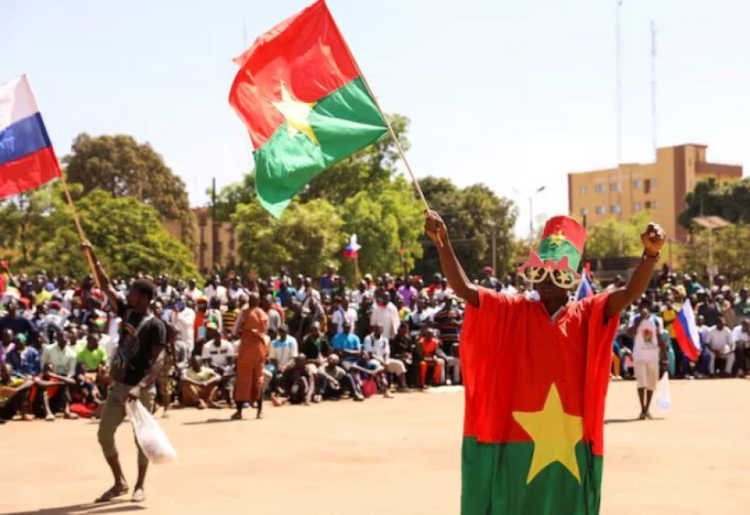
Photo source: Reuters/Vincent Bado