





South Africa’s failure to respond quickly to fake government notices has allowed misinformation about undocumented migrants to fuel panic, violence and attacks on journalists.
Development Diaries reports that fake pamphlets falsely bearing the name of South Africa’s Department of Home Affairs have circulated on WhatsApp and other social media platforms, warning undocumented migrants to leave the country or face arrest, detention and deportation.
It is understood that the notices, which appeared in English, Zulu and Xhosa, were not issued by the government, but they reportedly triggered panic that forced thousands of migrants to flee their homes.
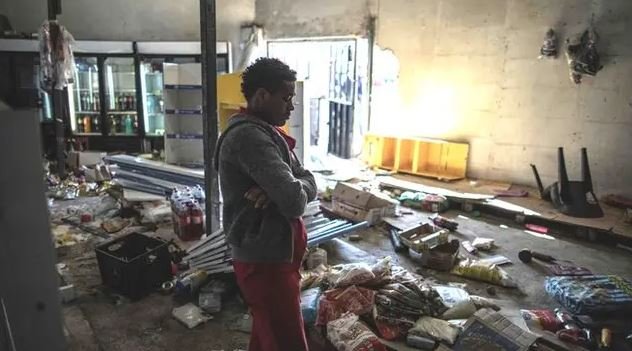
The consequences quickly extended beyond misinformation, as three foreign nationals were killed during anti-immigrant protests linked to the crisis, while more than a dozen journalists covering the unrest were assaulted between 28 and 30 June, according to the Committee to Protect Journalists and partner organisations.
It was gathered that as frightened migrants searched for safety, journalists trying to document what was happening also found themselves under attack.
Disinformation stopped being ‘just social media content’ the moment those fake pamphlets pushed people out of their homes. A document that looks like an official government notice carries a different kind of power because people naturally assume the state is speaking. And when criminals discover they can impersonate government more convincingly than government can correct them, democracy has a communication problem.
Africa Check identified four major forms of false information circulating during the crisis, including AI-generated images falsely depicting violence, fabricated quotes attributed to senior public officials, recycled videos presented as recent events and the fake government pamphlets that gave anti-migrant groups the appearance of official backing.
AI-generated images can spread fear and fabricated quotes can create confusion, but fake government notices pose a far greater danger because they impersonate the state, using its authority to frighten vulnerable people into abandoning their homes in response to directives that never existed.
Not every piece of false information causes the same harm, as AI-generated images can spread fear and fabricated quotes can create confusion, but fake government notices pose a far greater danger because they impersonate the state, using its authority to frighten vulnerable people into abandoning their homes in response to directives that never existed.
South Africa now faces two accountability challenges of protecting citizens and migrants from dangerous disinformation, and protecting journalists trying to report the truth while such crises unfold.
The fake pamphlets spread widely because no institution responded quickly enough to overtake them with credible information, as false information moves at remarkable speed, especially when it confirms existing fears. Government corrections, unfortunately, often arrive after the rumour has already completed several shifts and earned overtime.
The problem is that South Africa still lacks a rapid public communication system capable of identifying fake government notices, warning citizens immediately and working with digital platforms to limit their spread before panic turns into displacement.
It is also understood that more than a dozen journalists were reportedly assaulted while covering the anti-migrant protests, showing that South Africa needs clear operational protocols to protect media workers during public demonstrations because citizens depend on independent reporting to separate facts from rumours when misinformation is spreading rapidly.
When journalists are attacked, the public loses independent witnesses capable of verifying competing claims during moments when rumours are spreading faster than facts.
The anti-migrant protests also demonstrate how easily economic frustration can be manipulated through false information. Migrants are often portrayed as competitors for jobs, housing and small businesses, making fabricated government notices especially effective because they appear to legitimise hostility that would otherwise have no legal foundation.
Women working in township markets are particularly vulnerable because many depend on informal businesses for survival and often operate with limited legal protection. False information portraying migrants as economic threats can quickly inflame tensions among people who are themselves struggling to make ends meet, turning neighbours into perceived competitors almost overnight.
South Africa’s constitution protects freedom of expression, but freedom of expression does not include impersonating government institutions to spread fear or incite violence. Laws designed to address cybercrime, digital communications and public safety should therefore be applied decisively against those responsible for producing and distributing fake government notices.
Citizens have a duty to verify any message claiming to come from the government before sharing it because one forwarded rumour can send frightened families fleeing their homes, inflame public tensions, and give criminals the credibility they could never earn on their own.
For their part, South African authorities should establish a rapid crisis communication mechanism capable of publicly debunking dangerous falsehoods within hours, while security agencies should adopt clear operational protocols that protect journalists covering protests.
South Africa should never allow criminals impersonating government institutions to speak more convincingly than the government itself because every fake official notice that goes unanswered places lives at risk, fuels violence and weakens public trust in the state.
Photo source: AFP