



The African Union weakens its own credibility when governments across the continent restrict citizens’ rights almost simultaneously without receiving a clear and public response from the organisation established to defend democratic governance.
Development Diaries reports that between 28 June and 01 July, governments in the Democratic Republic of the Congo, Zimbabwe, Kenya and Uganda each took actions that reduced citizens’ ability to hold leaders accountable or freely exercise their rights.
Although the incidents unfolded under different national circumstances, they all weakened the democratic protections citizens depend on to hold those in power accountable.
The Democratic Republic of the Congo banned mass gatherings in Kinshasa despite the capital recording no Ebola cases. As for Zimbabwe, its parliament completed a constitutional amendment that removes direct presidential elections and allows parliament to choose future presidents, while Kenya’s security agencies allegedly tortured seven activists during the second anniversary of anti-government protests, with Uganda keeping opposition leader Kizza Besigye in detention under a legal framework its own Supreme Court had already declared unconstitutional before parliament restored it.
Each government used a different legal or security mechanism, but citizens experienced the same result, as governments became more powerful while citizens became less able to question, challenge, or replace those exercising that power.
The African Union was created partly to prevent exactly this kind of gradual erosion of democratic governance. Through the African Commission on Human and Peoples’ Rights, the Peace and Security Council and the African Peer Review Mechanism, it already has institutions responsible for promoting constitutional governance, protecting civic freedoms and encouraging member states to uphold democratic standards.
Those institutions become far less effective when they remain silent during moments that clearly deserve continental attention. Governments naturally pay closer attention to continental standards when continental institutions consistently defend them.
Africa’s changing international environment makes that silence even more consequential. International pressure on democratic governance has weakened as global powers increasingly prioritise security partnerships, migration agreements and geopolitical interests over governance standards.
That leaves African institutions with greater responsibility to defend the democratic principles they were established to protect.
The African Union should take the lead in defending democratic governance because fewer international actors are willing to do so. Vacuums rarely remain empty, and when institutions established to defend democracy fall silent, those with little regard for democratic accountability are usually the first to occupy the space.
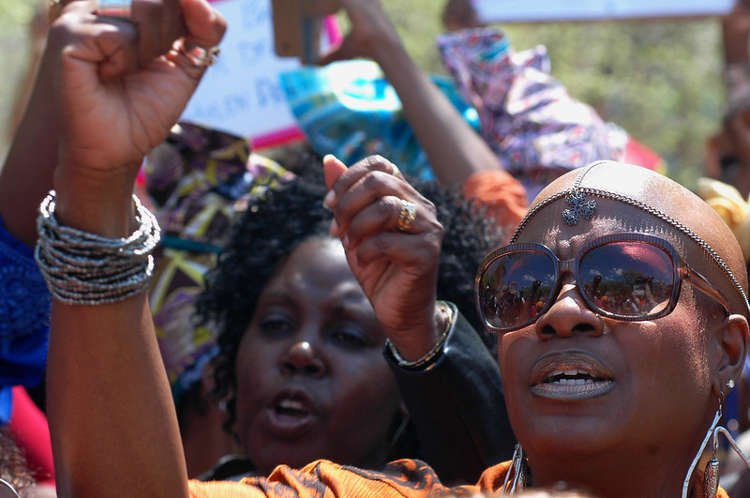
The consequences also reach women differently across the four countries. Christine Walubengo was among the Kenyan activists reportedly tortured, while Zimbabwe’s constitutional changes remove the Gender Commission, weakening an institution created to monitor women’s rights.
Similarly, restrictions on public gatherings in the Democratic Republic of the Congo make it harder for women’s organisations to organise around conflict and Ebola-related challenges, while the continued detention of Besigye also carries personal and professional consequences for his wife, who leads the Joint United Nations Programme on HIV/AIDS.
African civil society organisations should jointly present these developments before the African Commission on Human and Peoples’ Rights rather than treating them as separate national concerns. A coordinated continental response would better reflect the continental nature of the challenge.
The African Union Peace and Security Council should also convene a formal session to examine these developments and publicly state whether they are consistent with the democratic commitments member states have already accepted.
African citizens expect the African Union to speak when democratic governance weakens across the continent because defending democracy is one of the reasons the institution exists.