
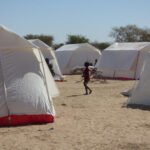



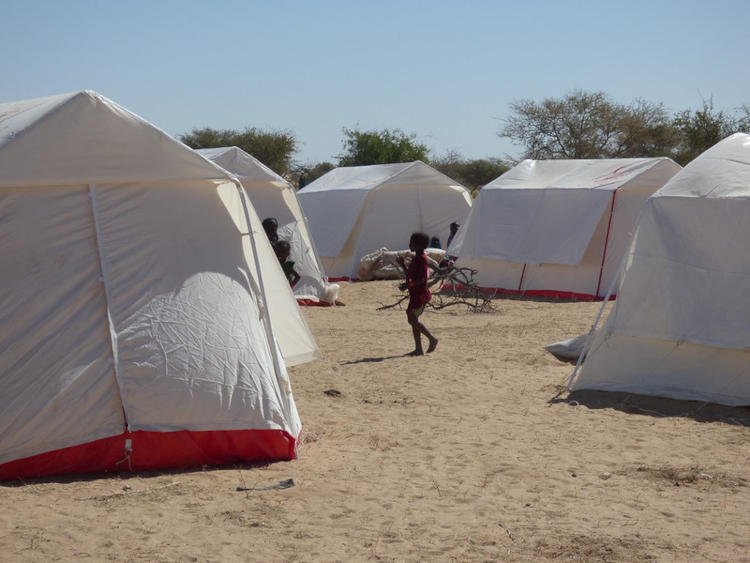
Sudanese refugees who crossed into Chad to escape war have now had to walk 20 kilometres from a refugee camp to ask for food after going about four months without assistance.
Development Diaries reports that dozens of Sudanese refugees walked from Marra refugee camp in eastern Chad to Amliouna to demand food or cash support after going about four months without either.
The refugees arrived between five and eight months ago and said they were seeking help from authorities responsible for refugee reception.
The timeline raises a question about what happened after they arrived. People who have been in the camp for up to eight months have gone roughly four months without assistance, suggesting that support was either never established for this group or was stopped after registration.
Registration in a refugee camp is supposed to turn a person into a countable beneficiary in a distribution system. But when a registered population goes months without food, something has broken between registration, funding, procurement and delivery, and the people waiting for food should not have to work out which part failed.
The timing also calls for concern, as Eastern Chad is entering a rainy season that can make roads difficult to use, leaving humanitarian supplies even more dependent on planning and pre-positioning.
It is understood that the regional refugee response is usually reported through figures for people reached and money raised against an appeal. Those numbers can show the scale of the crisis without explaining why a family in Marra has gone months without a food distribution.
There are several possible explanations, and each should be measurable. If the response is underfunded, the funding gap should be published. If registration for recent arrivals is incomplete, the backlog and its cause should be disclosed; and if logistics are responsible, the agencies should state where the supply chain failed and what has been pre-positioned before the rains.
Chad is also carrying a burden that stretches far beyond what its own resources can comfortably absorb because it is among the world’s poorest countries and hosts a large Sudanese refugee population, while its national refugee reception structures have to respond to a caseload created by a war outside its borders.
That burden is recognised in African refugee law, with Article 2(4) of the 1969 OAU Convention allowing a state struggling to continue providing asylum to appeal to other African states and calling on them, in the spirit of African solidarity, to take measures to lighten the burden.
The agencies responsible should therefore be able to account for what happened at camp level. UNHCR handles registration and protection, WFP is responsible for food assistance, Chad’s Commission Nationale d’Accueil et de Réinsertion des Réfugiés is responsible for refugee reception, and donor governments determine how much money reaches the response.
The refugees have already supplied one piece of evidence themselves, as they walked 20 kilometres because the existing channels had failed to provide food or cash support.
WFP and UNHCR should publish the distribution records for Marra and Mile camps for the past six months, including the dates on which food or cash was distributed and the number of people covered. They should also state the funding gap and when regular assistance will resume.
UNHCR and the Chadian refugee commission should also publish the registration backlog for people who arrived during the past year and explain how long unresolved cases are expected to take.
For donor governments, they should publish what they pledged to the Sudan Regional Refugee Response Plan, what they have actually disbursed and when outstanding funds are expected to arrive, while the African Union Commission should also use Article 2(4) of the OAU Refugee Convention to press member states to share Chad’s refugee burden and publish what comes from that engagement.
For the refugees in Marra and Mile, food, clean water, medicines, medical supplies and shelter materials should not require another 20-kilometre walk.