






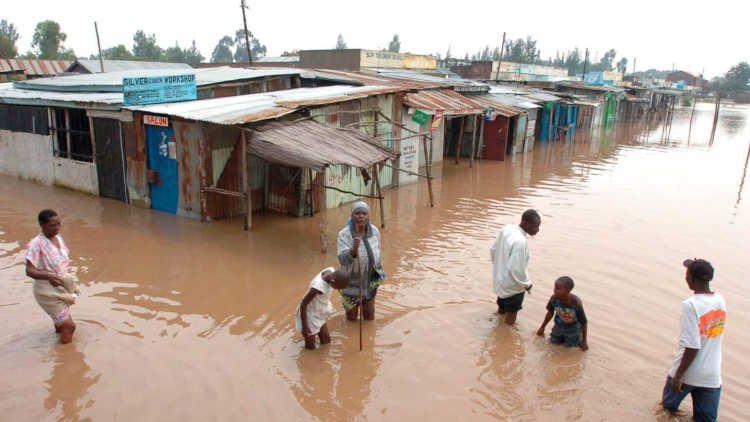
Flood warnings have become a yearly ritual in Nigeria, but so has spending billions of naira without stopping the same communities from losing lives and livelihoods.
Development Diaries reports that the Nigeria Hydrological Services Agency (NIHSA) warned that 17 states face a medium flood risk between 21 and 27 July, 2026, following rising river levels, prompting the issuance of the National Flood Advisory (NFA-2026-200) and an immediate evacuation order for vulnerable communities.
The National Emergency Management Agency (NEMA) has also advised residents in flood-prone areas to relocate to safer locations as heavy rainfall continues across parts of the country.
The repeated flood warnings are raising fresh questions about how billions of naira released for flood prevention have been spent, even as the same communities continue to face the same disaster every year.
Despite the disbursement of N99.3 billion in ecological funds to states, communities across the country are once again preparing for floods, even though NEMA recorded 241 flood-related deaths in 2025.
Blocked drainage channels, rapid urban expansion and the destruction of wetlands all contribute to flooding, but the annual cycle persists because ecological funds are released without a public record of what was built, cleared or maintained before the rains returned.
NIHSA warns communities about approaching floods, NEMA coordinates emergency response, state governments receive ecological funds, the Ecological Fund Office approves their release and the Federal Ministry of Environment sets national policy.
The same communities flood every year despite repeated forecasts, emergency responses and billions of naira in ecological spending, raising fresh questions about how flood-prevention funds are used before disasters strike.
Section 33 of Nigeria’s constitution guarantees the right to life, but that protection cannot depend on evacuation warnings issued only after rivers begin to overflow. Protecting lives requires flood-control projects, proper drainage systems, erosion control and planned relocation long before the rainy season begins.
The burden falls most heavily on riverine, rural and low-income communities along the Niger, Benue and their tributaries because they often live in the most exposed locations with the weakest public infrastructure, while women and children, who make up a large proportion of displaced populations, face heightened risks from contaminated water, interrupted schooling and lost livelihoods whenever flooding returns.
The Human and Environmental Development Agenda has warned that climate change is increasing Nigeria’s flood risks, but climate alone cannot explain why communities repeatedly face the same disasters after billions of naira have already been allocated to prevent them.
Citizens should request ecological fund utilisation reports from their state governments through the Freedom of Information Act, while documenting blocked drainage channels and illegal developments on floodplains and demanding responses from their local councils.
The auditor-general should conduct performance audits of ecological fund spending in the ten states most affected by flooding and publish the findings within 90 days, while the Ecological Fund Office should require every beneficiary state to publish project-by-project utilisation reports before receiving future disbursements.