


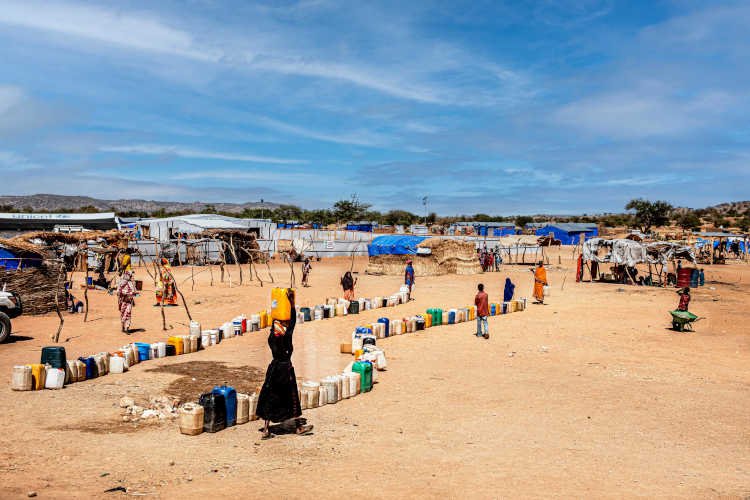
Millions of Africans still walk long distances for clean water, making every new continental promise sound painfully familiar.
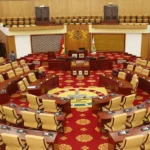
Development Diaries reports that the Pan-African Parliament has inaugurated its seventh parliament with access to clean water, sanitation and accountability at the centre of its agenda, while South African President Cyril Ramaphosa urged the institution to strengthen democratic oversight and advance the continent’s development priorities.
The agenda reflects some of Africa’s most urgent challenges, but communities without clean water have heard similar promises before and are still waiting for functioning boreholes, reliable water systems and safe sanitation facilities.
That expectation collides with the parliament’s own limitations because, as part of the African Union’s democratic architecture, it remains largely an advisory institution whose resolutions depend on member states choosing to act. Governments can endorse its recommendations without implementing them, leaving the Parliament with influence but little authority to enforce compliance.
The same gap has defined Africa’s water and sanitation crisis for decades, with weak local governance, inadequate investment and mounting climate pressures leaving millions of Africans without reliable access to clean water and basic sanitation despite repeated continental commitments to change the situation.
While it is expected to hold governments to continental commitments, national governments control the budgets, approve the projects and determine whether water infrastructure is built, maintained and expanded.
The African Charter on Human and Peoples’ Rights and the African Union’s Agenda 2063 recognise development that meets people’s basic needs, placing access to clean water and sanitation at the centre of the rights to health, dignity and life. Those commitments matter only when governments can show that public investment is reaching the people it is meant to serve.
The burden of failure falls unevenly across the continent, with women and girls still spending hours every day fetching water instead of attending school or earning an income, while poor sanitation continues to expose children to preventable diseases and increase health risks for pregnant women.
Persons with disabilities are routinely excluded from water facilities and sanitation systems designed without accessibility in mind, while rural communities, where poverty is often deepest, continue waiting longest for infrastructure that wealthier urban areas receive first.
The parliament now faces a credibility test. It can continue to adopt resolutions that governments applaud and quietly ignore, or it can publish regular country-by-country reports showing which governments are expanding access to water and sanitation and which continue falling behind.
Citizens can strengthen that accountability by tracking the work of their countries’ representatives in the Pan-African Parliament and demanding measurable progress instead of symbolic declarations, while civil society organisations can use the parliament’s stated priorities to press governments for concrete action at home.
The Pan-African Parliament should adopt a continent-wide accountability framework that tracks every member state’s progress towards Agenda 2063 water and sanitation targets through regular public reporting, while national governments should publish costed implementation plans and report annually on completed projects, maintenance spending and access outcomes.
Africans will ultimately judge the parliament less by the speeches delivered in its chambers than by whether clean water finally reaches the communities that have waited the longest.