


The Democratic Republic of Congo (DRC) is trying to contain its worst Ebola outbreak in years with money that governments have promised but largely failed to release.
Development Diaries reports that the Bundibugyo strain of Ebola, for which there is no approved vaccine or specific treatment, has continued spreading in the DRC since May 2026, with health authorities confirming 1,274 infections and 360 deaths as of 27 June, while neighbouring Uganda had recorded 20 cases and two deaths.
It is understood that France confirmed an imported case on 24 June, making this the DRC’s 17th Ebola outbreak and the third largest in the country’s history.
Containing the outbreak requires a response that reaches infected communities before the virus does. Instead, contact tracers, surveillance teams and frontline health workers are trying to interrupt transmission with funding that exists mostly on paper.
In the first week of June, the Africa Centres for Disease Control and Prevention (Africa CDC) and the World Health Organisation (WHO) launched a continental Ebola response plan requiring 518 million dollars.
International donors subsequently announced commitments of about 910 million dollars, almost twice the amount requested. However, by the end of June, Africa CDC Director-General Jean Kaseya disclosed that only 13 percent of those pledged funds had actually been released.
That funding gap is already visible in the outbreak response, with only about 58 percent of identified Ebola contacts currently being traced in the DRC, well below the 90 to 95 percent generally required to break chains of transmission.
Contact tracing depends on trained personnel, transport, protective equipment, laboratory support and community engagement. Every delayed disbursement therefore leaves response teams operating below the level needed to contain the virus.
The consequences extend far beyond public health, with a Rapid Socioeconomic Assessment published by the United Nations Development Programme (UNDP) on 30 June estimating that even if the outbreak remained confined to the DRC and Uganda, the Congolese economy could lose more than one billion dollars and about 55,000 jobs.
If the virus spreads further into countries such as Rwanda and Angola while fuel prices remain elevated, the report projects continental losses of 3.6 billion dollars, 328,000 jobs and nearly one million additional people falling into poverty.
The weakness reflects changes in global health financing because for years, the United States Agency for International Development (USAID) served as one of the principal mechanisms for rapidly financing disease outbreaks across Africa.
But its effective dismantling under the America First Global Health Strategy in 2025 left a system increasingly dependent on bilateral agreements and negotiated funding arrangements that move far more slowly than an epidemic.
Although the Trump administration subsequently requested 1.4 billion dollars from Congress for Ebola preparedness, much of that funding is intended to strengthen domestic preparedness in the United States through quarantine facilities, hospital readiness and evacuation capacity rather than supporting the frontline response in Africa that would reduce the risk of international spread in the first place.
The human cost is becoming increasingly visible. Children account for about 15 percent of confirmed Ebola infections in the DRC but more than one-quarter of recorded deaths, making them significantly more likely than adults to die after infection.
More than 130 children in Ituri Province have already lost one or both parents, while UNICEF says it requires 70.7 million dollars for its six-month Ebola response, with 20 million dollars still unfunded.
Researchers began clinical trials of two potential treatments for the Bundibugyo strain in early July, including Gilead Sciences’ oral antiviral drug obeldesivir. That progress offers hope, but experimental medicines cannot replace the contact tracing, safe burials, laboratory surveillance and community mobilisation that remain underfunded today.
The outbreak also raises important human rights concerns, as Article 16 of the African Charter on Human and Peoples’ Rights recognises every person’s right to the highest attainable standard of health, while Article 14 of the African Charter on the Rights and Welfare of the Child extends similar protection to children.
Women and girls continue to shoulder a disproportionate share of the burden because they are often the primary caregivers within households, placing them in direct contact with infected relatives during outbreaks.
UNICEF has also documented increased risks of sexual violence during health emergencies as displacement, poverty and weakened protection systems expose women and girls to additional harm. The more than 130 children already orphaned by the outbreak illustrate how quickly a health emergency becomes a wider social crisis affecting entire families and communities.
African citizens should formally request from their ministries of finance or treasury the exact amount their governments have contributed to the Africa CDC-WHO Ebola response, the date those funds were released and the budget line from which they were drawn.
For the African Union Commission, it should publish a continent-wide Ebola funding tracker identifying every government and institution that pledged support, how much each promised, how much has actually been disbursed and when the funds were released.
Future continental emergency appeals should also include mandatory disbursement timelines so that funding announcements no longer create the illusion of a response while frontline health workers continue to wait for resources.
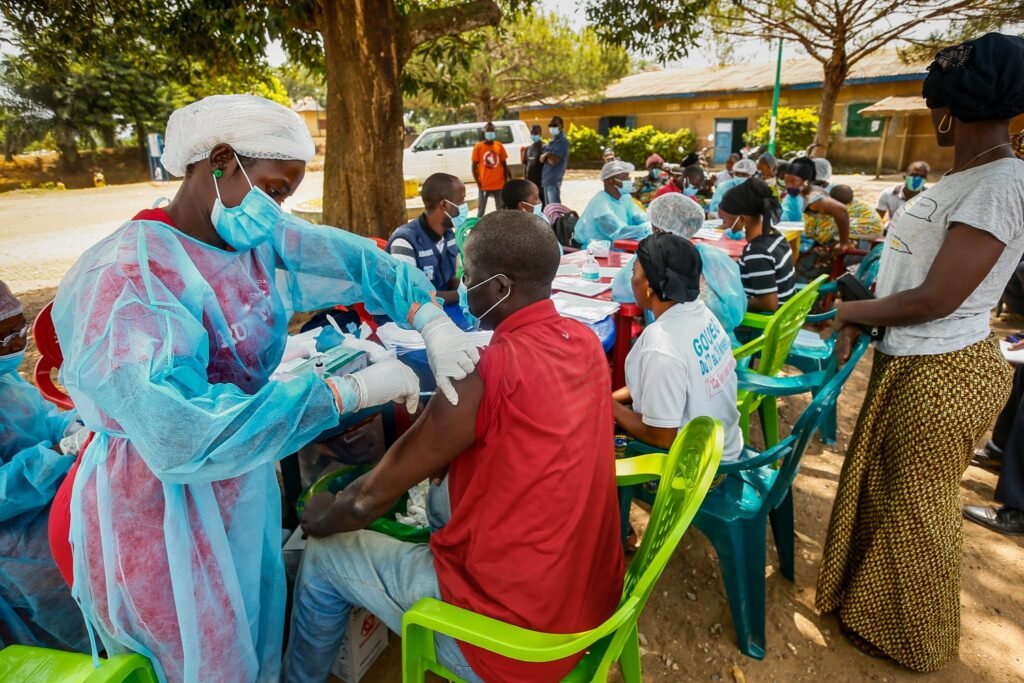
Photo source: WHO