





Zimbabwe’s constitution may be heading for one of its biggest changes in decades, while allegations that lawmakers were bribed to support it remain unanswered.
Development Diaries reports that war veteran Reuben Zulu recently filed an urgent application before the High Court in Harare, seeking to stop the certification and presidential signing of Constitutional Amendment Bill No. 3 (CAB3).
In his affidavit, Zulu argues that the amendment process was tainted by alleged inducements offered to legislators as parliament debated proposals to keep President Emmerson Mnangagwa in office until 2030 and replace direct presidential elections with a parliamentary vote.
One sentence in the affidavit captures the heart of the dispute: ‘The constitution cannot be amended by cash and keys. A constitutional majority must be a constitutional majority’.
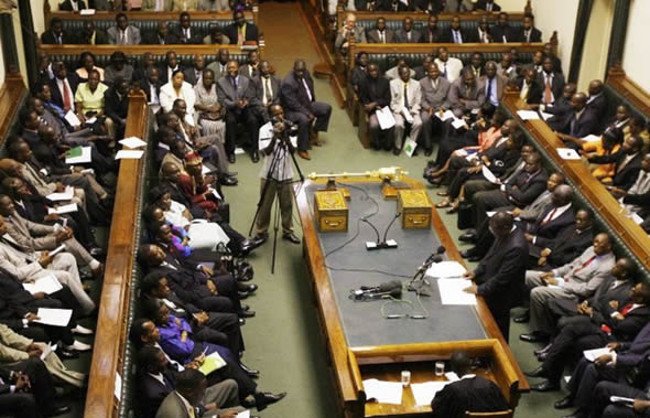
CAB3 has already passed the National Assembly by 216 votes to 42 and the Senate by 75 votes to four. It now awaits President Mnangagwa’s signature, meaning Zimbabwe could fundamentally alter how its citizens choose their president before the courts determine whether the legislative process itself was compromised.
The proposed amendment goes far beyond extending political terms; it would increase presidential and parliamentary terms from five to seven years, pushing the next general election from 2028 to 2030.
It would also transfer the power to elect the president from Zimbabwean voters to parliament, where the ruling ZANU-PF already holds a commanding majority. Citizens who currently elect their president directly would lose that right under the proposed system.
That prospect has drawn strong criticism from constitutional lawyers and opposition figures. Following the Senate’s approval of the bill on 24 June, opposition politician and constitutional lawyer David Coltart argued that any proposal extending the tenure of an incumbent president should first be approved through a national referendum. No referendum was conducted.
Zulu’s court application introduces another dimension to the debate by questioning whether parliament reached its constitutional majority fairly. His affidavit alleges that Citizens Coalition for Change proportional representation legislator Samantha Murenyanyi and ZANU-PF Member of Parliament for Bindura South, Remigious Matangira, received 2026 Toyota Fortuner vehicles from businessman Wicknell Chivayo while parliament was considering the amendment.
It further alleges that Murenyanyi received an additional 50,000 United States dollars described as constituency funds despite representing no geographical constituency and that 10,000-dollar payments were distributed to several legislators through parliamentary chief whips under the guise of constituency development funding.
The allegations are particularly significant because Chivayo has repeatedly made high-value gifts to influential public figures, including donating Toyota Fortuner vehicles to 12 Johanne Masowe prophets earlier this year.
He has also previously been linked to a 100-million-dollar election procurement controversy involving a South African company.
Zimbabwe’s parliamentary rules require legislators to declare financial interests and gifts that could create conflicts of interest before participating in legislative decisions. If the allegations contained in the affidavit are accurate, those safeguards were ignored while parliament considered one of the country’s most consequential constitutional amendments.
That accountability failure extends beyond parliament itself, as the Zimbabwe Anti-Corruption Commission has not announced an investigation into the allegations. Parliament’s Committee on Privileges and Ethics has not opened an inquiry, while Speaker Jacob Mudenda has not publicly addressed whether lawmakers complied with disclosure requirements before voting.
The absence of action raises broader questions about whether Zimbabwe’s accountability institutions can independently investigate allegations involving a constitutional amendment backed by the governing party.
The courts have already considered one challenge to CAB3 after the Constitutional Court dismissed an application filed by war veterans on procedural grounds in June.
Zulu’s latest case takes a different legal approach by arguing that the integrity of parliament’s voting process was compromised through alleged inducements rather than challenging the amendment solely on constitutional interpretation.
The legal questions also extend beyond Zimbabwe’s domestic courts. Section 328 of Zimbabwe’s constitution sets out the procedures for constitutional amendments and places restrictions on extending the tenure of an incumbent president without meeting specific constitutional safeguards.
The Law Society of Zimbabwe argued during parliamentary submissions that some provisions of CAB3 require approval through a referendum. Article 13 of the African Charter on Human and Peoples’ Rights also guarantees citizens the right to participate freely in the government of their country.
Replacing direct presidential elections with parliamentary selection fundamentally alters how that right is exercised.
The proposed changes carry important implications for women and marginalised communities. Women voters make up a substantial share of Zimbabwe’s electorate, but women occupy fewer than 35 percent of seats in parliament.
Transferring presidential elections from millions of citizens to a legislature where political outcomes are dominated by one party therefore reduces women’s direct influence over executive leadership.
Rural and low-income communities, which already face significant barriers to accessing courts and other accountability mechanisms, would also lose one of the few opportunities available to hold the country’s highest political office directly accountable through the ballot box.
Zimbabwean citizens can submit formal complaints to the Zimbabwe Anti-Corruption Commission based on the allegations contained in Zulu’s affidavit, requesting investigations into whether lawmakers declared the alleged gifts before participating in the constitutional vote.
Even where institutional responses are uncertain, formal complaints create an official public record that can support future accountability efforts.
Also, the Southern African Development Community should request Zimbabwe to suspend presidential assent to CAB3 until the High Court determines whether the legislative process was compromised by alleged inducements.
Constitutional amendments that fundamentally reshape democratic governance should not proceed while credible allegations questioning the integrity of parliament’s vote remain before the courts.
Photo source: AFP