

Some political appointments in Nigeria are increasingly succeeding where evidence never did, transforming yesterday’s fiercest critics into today’s loudest defenders.
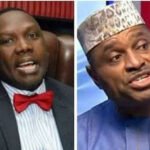
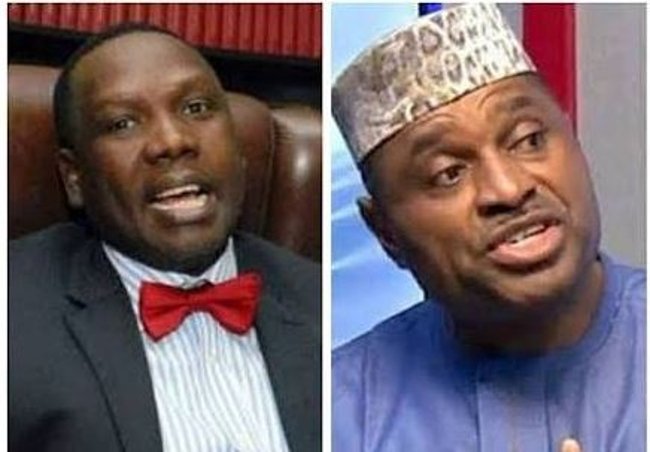
Development Diaries reports that on 02 July, 2026, barely a day after accepting an appointment as spokesperson to the African Democratic Congress (ADC) 2027 presidential candidate, Kenneth Okonkwo appeared on Channels Television, describing Atiku Abubakar as ‘a talent discoverer’ and a pleasant, patriotic statesman.
The praise stood in sharp contrast to what Nigerians had heard from the same man in the same television studio. In October 2022, Okonkwo had described Atiku as ‘unfit’ and ‘a threat to our democracy’, urging the Independent National Electoral Commission (INEC) to prosecute him under Section 97 of the Electoral Act.
Even in June 2026, only weeks before accepting the appointment, Okonkwo criticised Atiku’s choice of Rotimi Amaechi as running mate, calling it a ‘crude marginalisation of the southeast’ and insisting he would not campaign for any presidential ticket that excluded the region.
The timing has attracted even greater attention because Okonkwo is currently facing a defamation suit filed by the 2027 presidential candidate of the Nigeria Democratic Congress (NDC), Peter Obi, at the Anambra State High Court after alleging during a television appearance that Obi and members of his political camp collected ten million naira from House of Representatives aspirants.
It is understood that Obi’s lawyers have demanded a retraction, a public apology and five billion naira in damages.
The aspirant Okonkwo identified as his source, Obunike Ohaegbu, has since publicly denied making the allegation. Whatever the courts eventually decide, the sequence illustrates the concern that when public statements become instruments of political positioning rather than expressions of genuine conviction, legal disputes multiply while citizens are left wondering which version of the truth they were supposed to believe.
Okonkwo’s case is also not occurring in isolation because before joining President Bola Tinubu’s administration as special advisor on policy communication in November 2024, Daniel Bwala spent much of the 2023 election season criticising Tinubu’s fitness for office and condemning the ruling party’s same-faith ticket as a threat to national unity.
Since receiving his appointment, he has become one of the administration’s most visible defenders; different politicians, different governments, but remarkably similar journeys from fierce criticism to enthusiastic endorsement after appointment letters arrived.
Changing one’s mind is not the issue because democracies benefit when public figures openly acknowledge they were wrong, explain what new evidence persuaded them, and allow citizens to judge that reasoning for themselves.
What raises accountability concerns is something different, as neither Okonkwo nor Bwala has publicly explained what new evidence fundamentally altered their earlier assessments.
Instead, previous condemnations have simply been replaced with glowing endorsements delivered almost immediately after assuming paid political communication roles. Citizens are therefore left to decide whether these reversals reflect newly discovered truths or newly acquired responsibilities.
Many Nigerians would argue that this is simply how the country’s politics has always worked. Political parties often have weak ideological identities; politicians regularly change platforms, and loyalty frequently follows opportunity rather than policy. That diagnosis is difficult to dispute.
But explaining the system does not remove its consequences. Patronage may explain why politicians switch sides so easily; still, it does not require citizens to suspend critical thinking whenever those politicians suddenly begin praising the same people they previously condemned.
The repeated reversals also weaken the information environment ahead of the 2027 elections. If campaign spokespersons can completely reverse their assessments immediately after changing employers, voters gradually lose confidence in political communication itself.
The issue therefore extends beyond Okonkwo or Bwala, as it concerns whether Nigeria is gradually normalising a political culture where yesterday’s condemnation automatically becomes today’s praise once an appointment letter changes hands.
Several institutions can help to strengthen accountability. The Nigerian Institute of Public Relations (NIPR) should adopt enforceable disclosure standards requiring members serving in paid political communication roles to openly declare that status during media appearances, while the Advertising Regulatory Council of Nigeria (ARCON) should also consider extending verification standards to political endorsements presented as independent commentary.
Broadcast stations equally have responsibilities. Whenever guests appear in paid political roles, viewers deserve to know that relationship immediately. Where guests substantially contradict earlier on-record positions, broadcasters should replay those earlier statements and invite them to explain what changed rather than allowing contradictory claims to exist without scrutiny.
Civil society organisations and fact-checking platforms also have an opportunity to strengthen democratic accountability by building searchable public archives documenting major political statements alongside the appointments that followed them because public memory should not depend on viral social media clips alone.
Ultimately, democracy depends on citizens being able to distinguish between conviction and convenience. And if political credibility becomes something that changes with employment rather than evidence, public trust will continue to decline, and elections themselves will become contests over personalities instead of informed choices built on consistent public records.