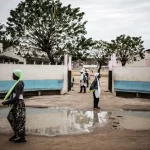







A woman selling food in Maiduguri’s Monday Market does not know the people making decisions in Washington, Tehran, or Tel Aviv, but the consequences of their conflict have already reached her stall, where a bag of maize has become 23 percent more expensive in just three months.
Development Diaries reports that the increase in maize prices in Borno State is associated with an increase in diesel prices, making it more expensive for trucks to move food from farms to markets.
It is understood that the diesel price increase itself is linked to disruptions in global oil supply caused by the conflict between the United States, Israel, and Iran around the Strait of Hormuz, thousands of kilometres away.
The irony is that the people making decisions in Washington, Tehran, and Tel Aviv will not be the ones adjusting food portions in Maiduguri. That responsibility has fallen on a woman who had no role in starting the conflict but must now decide whether to reduce what she serves, delay restocking, or accept smaller profits because a distant geopolitical fight has arrived at her market stall.
The United Nations World Food Programme (WFP) has warned that the economic consequences of the conflict could push up to 45 million people across Africa into acute hunger, showing how a geopolitical dispute far from the continent can quickly become a food crisis inside African homes.
How a Middle East conflict reaches African markets
The journey from the Strait of Hormuz to a food stall in Maiduguri is shorter than many people realise. The strait carries about 20 percent of the world’s traded oil, meaning any disruption immediately affects global energy prices. Once oil prices rise, African economies feel the impact through fuel costs, food prices, and agricultural production.
Transport is the first impact, as diesel and petrol power the trucks that move goods across African countries, meaning higher fuel prices quickly increase the cost of transporting food, medicines, school supplies, and almost everything else that depends on road networks.
The second impact is household energy, as cooking gas and kerosene become more expensive, forcing families already struggling with rising living costs to spend more money simply preparing meals.
Agriculture occupies the third impact position because fertiliser production depends heavily on natural gas, meaning higher energy prices often translate into higher farming costs. Smallholder farmers, who already operate with limited resources, are forced to reduce input use, affecting future harvests and pushing food prices even higher.
The 45 million people identified by the WFP are therefore caught in a global system where the cost of distant conflicts travels quickly into the homes of people with the least ability to absorb the shock.
Africa’s oil problem not about oil
Nigeria, Angola, Libya, and Gabon are among the continent’s major oil producers, but the problem is that producing crude oil has not translated into energy security for African households.
Nigeria provides perhaps the clearest example. For decades, the country has exported crude oil while importing refined petroleum products because its refining capacity has remained inadequate. Billions have been spent on refinery rehabilitation projects, but ordinary Nigerians have repeatedly waited for the promised relief while fuel prices continue to respond to global market pressures.
A continent that could refine more of its own crude would still feel global oil price increases, but it would have more options to reduce the impact on citizens during international supply disruptions.
The same problem exists with food security. Africa lacks continental strategic food reserves that can be deployed when global shocks threaten household affordability. While emergency food reserve ideas exist, they have not been developed at the scale required to protect millions of vulnerable citizens.
The people paying the highest price
Women managing household food budgets are often the first to make difficult adjustments, such as reducing meal frequency, choosing cheaper, less nutritious alternatives, or eating less so children have enough.
For women working in informal businesses, rising food and transport costs also directly affect income, as a market trader who spends more to transport goods has fewer options because she cannot simply increase prices without losing customers who are facing the same economic pressure.
Children under five face the greatest health risks when food insecurity worsens because their bodies are most vulnerable to nutritional shortages, and in communities where families are already struggling, a rise in food prices can quickly become a health crisis.
This reality is particularly serious in northeast Nigeria, where communities in Borno, Adamawa, and Yobe are already dealing with years of insecurity, displacement, and disrupted farming activities. For these communities, the latest global shock is landing on an existing wound.
What needs to happen
Citizens should demand clear emergency plans from their governments showing how they intend to protect households from the current food and energy shock. Such plans should include specific measures on fuel prices, food supply chains, targeted support for vulnerable households, and timelines for implementation rather than broad promises that disappear after public attention moves elsewhere.
At the continental level, the African Union must move beyond repeated declarations about food security and energy independence by developing practical frameworks for strategic food and energy reserves that countries can rely on during global disruptions.
African governments must also accelerate investments in domestic refining capacity, agricultural processing, and diversified energy systems.
Photo source: Alliance of Bioversity International and CIAT