





Uganda’s Supreme Court ruled that civilians should not be tried by military courts, but one of the country’s most prominent opposition figures remains in prison after being prosecuted through exactly that system.
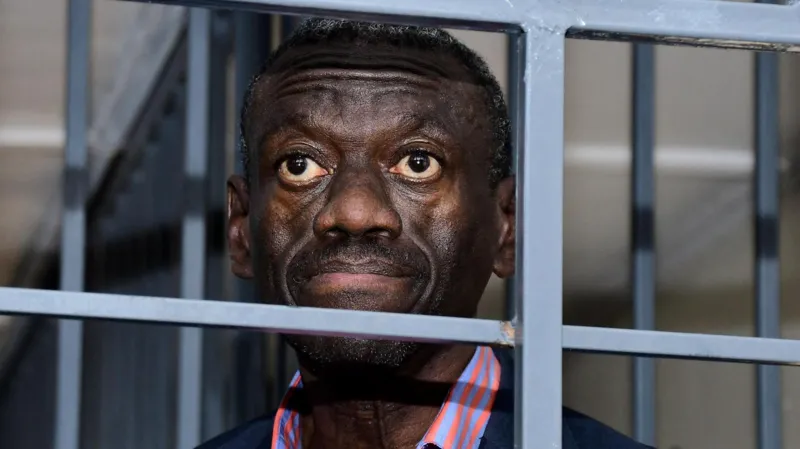
Development Diaries reports that opposition leader Kizza Besigye has spent more than 400 days in prison after being abducted from neighbouring Kenya, transferred to Uganda by military personnel, prosecuted before a military court, and then kept behind bars even after Uganda’s Supreme Court ruled that civilians should not face military trials.
Besigye recently filed a fresh High Court application against senior military officials, including General Muhoozi Kainerugaba, President Yoweri Museveni’s son and Uganda’s Chief of Defence Forces, seeking accountability for what he describes as grave human rights violations linked to his abduction, rendition, detention, and prosecution.
This development has become a striking example of how a government can lose in court and still get the outcome it wanted.
How Besigye remained in prison
Besigye was arrested in Nairobi, Kenya, in November 2024, and taken across the border to Uganda without any publicly known extradition process or judicial authorisation. He was subsequently charged before a military court with treason and illegal possession of a firearm.
The situation became even more controversial when his lawyer, Eron Kiiza, was sentenced to prison for contempt by the same military court, creating the impression that legal representation itself had become part of the offence.
In January 2026, Uganda’s Supreme Court ruled that civilians could not be tried by military courts and ordered such cases transferred to civilian courts. Ordinarily, that decision should have represented a major victory for Besigye and dozens of other civilians facing military prosecution.
Instead, Besigye remained in prison, with his bail applications repeatedly denied, and in June 2026, President Museveni signed the Uganda Peoples’ Defence Forces Amendment Act, which effectively reopened the door for military trials of civilians despite the Supreme Court’s ruling.
The Kenya question
Ugandan security personnel carried out the operation in Nairobi, while Kenya has remained publicly silent on the use of its territory for the detention and transfer of a political figure without an evident judicial process.
That silence matters because it turns what should have been a regional diplomatic issue into an accepted precedent. If one government can remove a political opponent from another African country without consequence, the implications extend far beyond Uganda.
Regional institutions watching, not acting
The East African Community Treaty commits member states to principles of good governance, democracy, and the rule of law. Similar obligations are tied to the African Charter on Human and Peoples’ Rights.
Every major regional institution has documented Besigye’s abduction, detention, and prosecution, but he remains in prison because none has the power, or has chosen, to enforce accountability.
The human cost
Besigye’s wife, Winnie Byanyima, Executive Director of UNAIDS, has repeatedly raised concerns about his health and prison conditions. Her international profile has helped keep attention on the case.
Most of the more than 40 other civilians affected by military court prosecutions in Uganda do not have someone with her global platform speaking on their behalf.
That disparity highlights the reality that cases that attract international attention remain visible, at least, while many others disappear into reports, court records, and prison registers without generating the same level of scrutiny.
What needs to happen
Citizens and civil society organisations should formally submit the documented record of Besigye’s abduction, detention, military prosecution, Supreme Court ruling, and continued imprisonment to the African Commission on Human and Peoples’ Rights while the case remains active in public consciousness.
At the institutional level, the East African Court of Justice should urgently hear a challenge on whether Uganda’s military court amendment is compatible with the East African Community Treaty’s governance obligations. Kenya should also publicly clarify its position on the use of its territory for Besigye’s abduction and transfer.
Africa has spent decades building courts, commissions, protocols, charters, and oversight bodies. Citizens can judge for themselves whether those institutions are guardrails against power or spectators watching power drive past.
Photo source: Reuters