



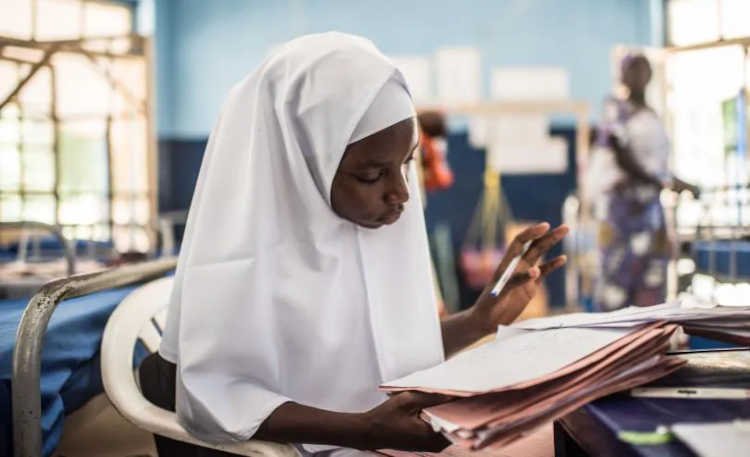
Nigeria asking parents to send their children to school is becoming difficult to defend when many of the schools those children are expected to attend remain unsafe, closed or without enough qualified teachers.
Development Diaries reports that the United Nations Children’s Fund (UNICEF) has again identified Nigeria as the country with the world’s largest population of out-of-school children, estimating that about 18.3 million children remain outside the classroom.
According to the report, about 10.2 million children of primary school age and another 8.1 million at junior secondary level are not receiving an education, with nearly two-thirds of them living in the northwest and northeast.
The crisis is particularly severe in Borno, Adamawa and Yobe states, where about two million children remain out of school.
More than half of displaced children in those states do not attend school at all, while only 29 percent of schools have teachers meeting minimum professional standards.
The infrastructure tells an equally troubling story, as at least 802 schools remain closed across the northeast, while hundreds of classrooms have been destroyed by conflict, leaving many parents with little confidence that sending their children to school is safe.
The Minister of Education, Tunji Alausa, recently argued that the number of out-of-school children has fallen from earlier estimates and pointed to programmes, including conditional cash transfers, that have reportedly supported more than one million girls to enrol in school.
Those interventions matter, but the issue is whether government can continue urging parents to enrol children while many schools remain closed, understaffed or vulnerable to attack.
Free and compulsory education begins with schools that are open, safe and properly staffed.
Responsibility therefore extends beyond parents to state governments, the Universal Basic Education Commission (UBEC) and the Federal Ministry of Education, which are responsible for providing the classrooms, teachers, funding and security needed to make compulsory education possible.
Nigeria’s laws leave little room for uncertainty, with the Universal Basic Education Act making basic education free and compulsory, while the Child Rights Act guarantees every child’s right to education. Section 18 of the constitution also directs government to provide free education.
Those promises become difficult to uphold when millions of children remain outside the classroom because schools have not been rebuilt, secured or adequately staffed.
Girls in northern Nigeria continue to face the combined effects of poverty, insecurity and harmful social norms, while the fear of school abductions has made many parents reluctant to send daughters back to class.
Displaced children in conflict-affected communities and children living with disabilities remain even further from the education the law promises because many schools still lack the facilities and support they require.
Parents and community groups should demand that state governments publish the number of functional schools, teacher deployments, and school safety arrangements in every local government area while monitoring progress against enrolment targets.
State governments and UBEC should equally publish regular reports showing how many schools have reopened, how many qualified teachers have been deployed and how security improvements compare with the number of children expected to return to school.
Nigeria’s education crisis will not be solved by asking parents to send children to school until government ensures there are safe schools ready to receive them.