




Africa keeps preaching continental unity in summit halls and diplomatic speeches, while African migrants in South Africa continue facing threats, violence, and forced displacement simply because of where they come from.
Development Diaries reports that tension has continued rising in South Africa after fresh waves of anti-migrant violence and intimidation forced Ghana and Nigeria to begin evacuation processes for some of their citizens, while several disturbing videos circulated online showing African migrants being harassed by vigilante groups in parts of the country.
In one of the widely shared videos, a Ghanaian man walking through a neighbourhood in KwaZulu-Natal was stopped by a group demanding to know his nationality before telling him to leave the area.
Around the same period, reports also emerged that five Ethiopian migrants were killed in Johannesburg, including three reportedly shot inside a McDonald’s restaurant.
For many Africans watching from across the continent, the scenes felt painfully familiar because South Africa has developed a troubling reputation for returning to this same crisis every few years, almost like a country trapped inside a dangerous rerun nobody wants to cancel.
This latest round of hostility has become serious enough for Ghana’s President John Mahama to approve the evacuation of hundreds of Ghanaian nationals who registered with the country’s high commission in Pretoria, while Nigeria also began arranging voluntary repatriation for some citizens.
Nigeria’s foreign affairs minister reportedly described the attacks as something deeper than ordinary xenophobia because the hostility appeared heavily targeted at fellow Africans.
In simpler language, many Africans are now asking how a continent can keep speaking proudly about African unity while Africans are increasingly unsafe in another African country.
What makes this crisis more frightening is that the violence no longer looks like random street anger exploding without structure, with groups such as Operation Dudula and other anti-migrant movements having become organised enough to coordinate protests, mobilise supporters, and influence conversations around migration and jobs inside South Africa.
This changes the conversation completely because organised hostility is far more dangerous than isolated mob attacks. Once movements begin deciding who deserves healthcare and business opportunities, and who deserves to remain in communities, the crisis stops being ordinary criminality and becomes a direct threat to human rights, constitutional protections, and social stability.
South Africa’s government has repeatedly condemned the attacks publicly, with President Cyril Ramaphosa insisting there is no place for xenophobia in the country.
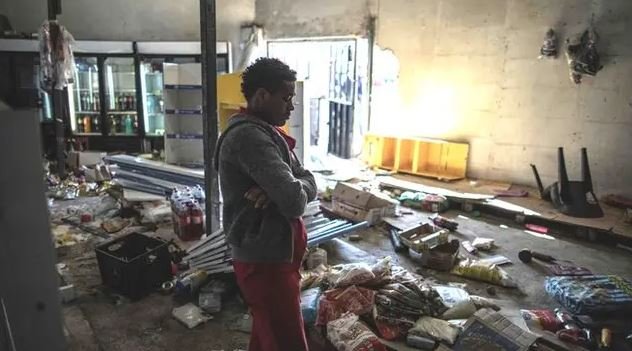
But many Africans across the continent are struggling to reconcile those statements with repeated reports of migrants being attacked, businesses being destroyed, and foreign nationals being blocked from accessing services.
Several human rights organisations and media reports have documented cases where migrants were prevented from entering clinics and public facilities, with one particularly disturbing case reportedly involving the death of a Malawian child after healthcare access was obstructed during anti-migrant actions.
For many citizens, this is where official statements begin sounding like a fire service announcing concern while the building is still burning.
The deeper tragedy is that South Africa’s democratic freedom was built partly on African solidarity during apartheid, with countries across the continent hosting South African exiles, supporting liberation struggles, and carrying economic and diplomatic burdens to isolate apartheid rule.
Nigeria, Ghana, Tanzania, Zambia, Zimbabwe, and several others contributed to that struggle in different ways. That history is why many Africans now see the attacks as a painful betrayal of the very solidarity that once protected South Africa itself.
The African Union now faces a serious credibility test after Ghana formally requested that the attacks be placed on the agenda of the AU Mid-Year Coordination Meeting scheduled for Cairo.
This meeting may determine whether the AU truly functions as a continental institution capable of protecting African citizens beyond speeches and ceremonial communiqués.
Citizens are increasingly tired of a system where African leaders gather for photographs, issue declarations about unity, and then return home while migrants continue living in fear across borders, inside the same continent.
Women and children remain among the most vulnerable victims of these attacks, as migrant women already face exploitation, harassment, and economic exclusion in many informal sectors, and anti-migrant violence only deepens those risks.
The crisis also raises urgent human rights questions under both national constitutions and continental agreements. The African Union must now move beyond sympathy statements and create enforceable continental standards protecting African migrants inside member states.
The AU Commission should urgently develop a continental migrant protection framework with clear enforcement measures, rapid-response mechanisms during anti-migrant violence, and accountability systems for governments that fail to protect African nationals within their borders.
Without consequences, every future condemnation risks sounding like another expensive microphone announcement made while ordinary Africans continue running for safety.
African governments also have responsibilities beyond diplomatic complaints. Countries whose citizens are affected must strengthen consular protection systems, provide legal and emergency support for victims, and publicly track cases of violence involving their nationals abroad.
At the centre of all this are ordinary Africans who moved across borders looking for work, safety, business opportunities, or better lives, only to discover that the idea of African brotherhood can sometimes disappear the moment economic frustration and political scapegoating enter the conversation.
The continent now faces a difficult but necessary question about whether Pan-Africanism is merely something leaders mention at summits or something African governments are truly prepared to defend when African lives are under threat.
Photo source: AFP