




The opposition rally in Ibadan may have delivered another presidential declaration, but the growing number of opposition candidates continues to raise serious questions about whether the opposition is preparing to defeat the ruling party or simply preparing to split votes and lose separately again.
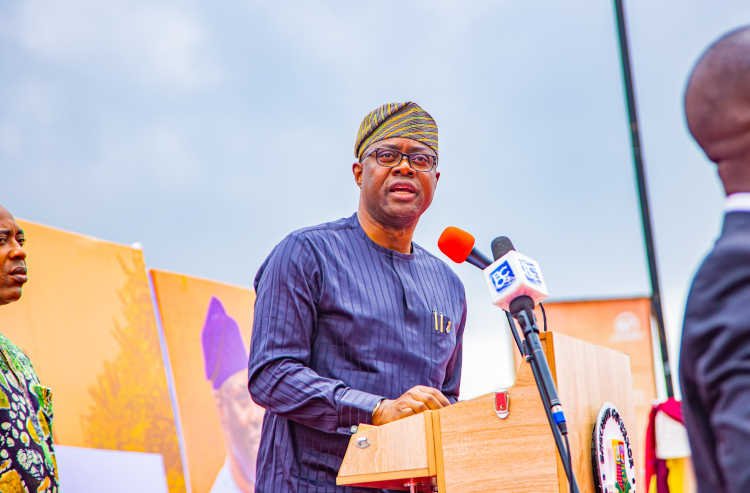
Development Diaries reports that Governor Seyi Makinde used the ‘Unity Mega Rally Ibadan 2026’ at Mapo Hall to formally signal his presidential ambition while unveiling a new political understanding between the Peoples Democratic Party (PDP) and the Allied Peoples Movement (APM), adding yet another major figure to Nigeria’s already crowded opposition field ahead of the 2027 election.
The atmosphere at the rally carried all the familiar ingredients of Nigerian politics, as there was music, there were promises, speeches about rescuing Nigeria, and supporters shouting slogans with the confidence of people already planning inauguration outfits.
But once the noise settled, the arithmetic waiting outside the rally ground still refused to disappear, as opposition parties in the country continued to speak about unity while simultaneously building separate presidential structures around different men who all believed they should be the one carrying the ticket.
Meanwhile, the ruling All Progressives Congress (APC) continues to strengthen its control across the country with governors, lawmakers, and political heavyweights defecting towards federal power, like people rushing to board the last bus before fuel scarcity begins.
Makinde’s entry into the race does not happen in an empty political field because former Vice President Atiku Abubakar remains linked to a troubled African Democratic Congress (ADC) coalition conversation; Peter Obi continues commanding a loyal support base through the Nigeria Democratic Congress (NDC), while Rabiu Kwankwaso is also still politically relevant in northern calculations, with each camp believing it has the popularity, structure, or regional advantage to negotiate from a position of strength.
The problem is that Nigerians have seen this film before.
In the 2023 presidential election, the opposition actually received more combined votes than President Bola Tinubu. Atiku and Obi together secured over half of the total votes cast, but because those votes were divided between separate platforms, the APC retained power with about 37 percent of the vote.
So, the opposition actually lost because everybody wanted to become the saviour at the same time, and that lesson still appears not to have fully entered Nigeria’s political bloodstream.
Makinde’s supporters argue that, unlike some opposition figures whose campaigns rely mainly on emotional frustration with the ruling party, the Oyo governor enters the conversation with a governance record that many citizens in the state can point to.
According to them, roads have improved in several areas, healthcare investments have become more visible, and his administration has maintained a relatively stronger public image compared to many governors across the country.
For many young voters tired of recycled political arguments, Makinde offers the image of a technocratic governor who speaks less dramatically and governs more quietly.
But popularity within Oyo State and parts of the southwest is not the same as building a nationwide coalition capable of defeating an incumbent government controlling most state structures in the country.
That is where the real opposition crisis begins.
The reality is that Nigeria’s electoral system does not naturally encourage opposition cooperation, as political parties are built around personalities, not ideology. That is why many politicians prefer remaining in the race until the final moment, hoping others will eventually surrender first.
Citizens are therefore watching another familiar cycle unfold as opposition parties speak the language of unity publicly while practising the mathematics of division privately.
There is also an uncomfortable truth many political conversations continue to avoid, which is that despite endless speeches about inclusion, representation, and democratic renewal, Nigeria’s opposition field remains overwhelmingly male.
For Nigerian women, especially younger women seeking meaningful political representation, the opposition’s so-called rescue mission increasingly resembles another elite gathering where ordinary citizens are invited to clap while decisions are made elsewhere.
The greater danger is that citizens may once again enter another election cycle believing change is possible, only to discover that opposition fragmentation has already weakened that possibility before campaign posters even fully appear on the streets.
That is why Nigerians must stop accepting vague promises of unity without concrete commitments attached to them. Citizens should demand that Makinde, Obi, Atiku, Kwankwaso, and every serious opposition figure publicly state whether they are willing to participate in a transparent opposition primary or step aside if another candidate demonstrates broader national viability.
Nigerians also deserve clear answers about what exactly differentiates these opposition platforms beyond personalities and regional calculations.
Citizens facing inflation, insecurity, unemployment, and collapsing public services are not merely searching for another politician with a microphone, but for evidence that someone has learnt from the mistakes that helped produce the current crisis.
The Independent National Electoral Commission (INEC) also has responsibilities here because transparency around voter distribution, party strength, and electoral data will help citizens assess whether the opposition truly has a viable path or is simply rehearsing another divided performance ahead of 2027.
At the moment, the opposition conversation still feels like several rescue boats arguing about leadership while drifting in different directions.
And for millions of Nigerians watching from the shore, the fear is growing that if the opposition cannot unite against one ruling party, it may once again unite only in explaining why it lost after the election is over.