






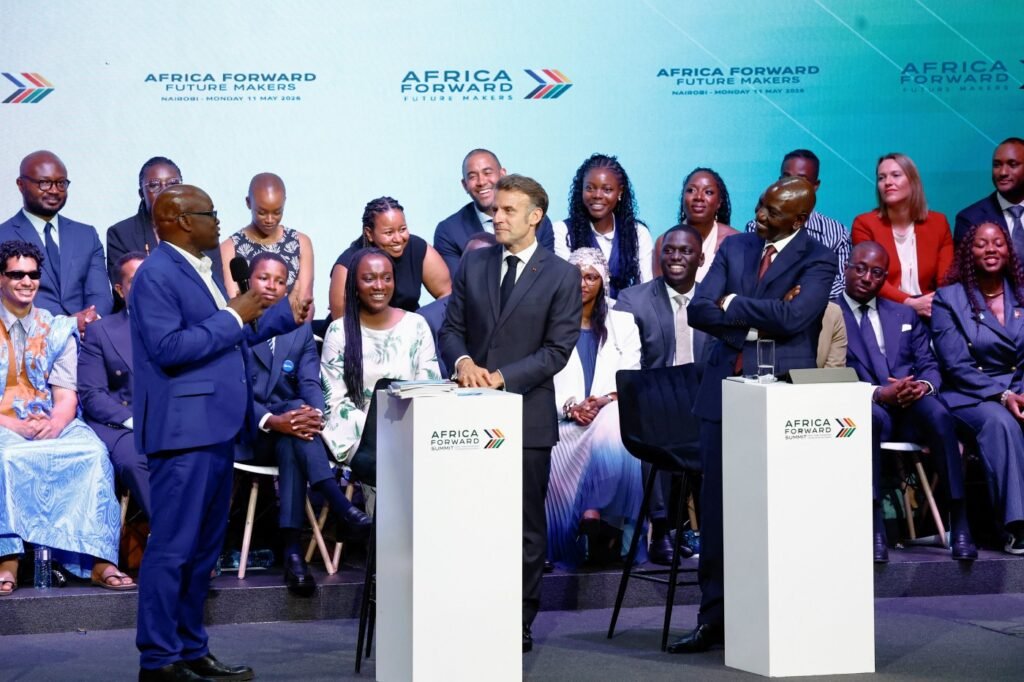
Africa’s leaders gathered in Nairobi with billions of euros, diplomatic handshakes, and promises of a ‘new partnership’, but the actual test of any international declaration is whether it eventually improves the well-being of the ordinary citizens.
Development Diaries reports that more than 30 African heads of state joined French President Emmanuel Macron, United Nations Secretary-General António Guterres, and other global leaders at the Africa-France Summit in Nairobi, where the Nairobi Declaration was adopted alongside announcements of €23 billion in mobilised investments and fresh promises of cooperation between Africa and France.
Kenyan President William Ruto described the summit as a turning point away from aid dependency towards sovereign equality and investment-driven partnerships.
However, for many African citizens, international summits now feel like those family meetings where everybody takes group photographs, speaks big grammar about the future, and promises transformation, only for people to return home and discover that nothing has changed except the number of communiqués printed in colour.
The figures announced in Nairobi sounded impressive enough to trend across headlines, as €23 billion is not a little money anywhere in the world.
But Africans have also learned that summit mathematics can sometimes behave like campaign promises during election season, where billions are announced loudly while the details arrive quietly later, if they arrive at all.
Part of the summit discussion focused on a proposed first-loss guarantee mechanism that could reduce lending risks for investors and lower borrowing costs for African governments.
In simple terms, this means public institutions would absorb the first layer of financial losses if investments fail, making investors more willing to finance projects in Africa.
The idea itself is important because African governments have long complained that investors treat the continent like a permanently dangerous neighbourhood where everybody must pay ‘fear money’ before entering.
But even this proposal remains at the discussion stage, with president Macron promising to lobby for the idea during the upcoming G7 summit in France.
Africans listening carefully understand the difference between ‘supporting a proposal’ and ‘implementing a solution’. One reduces borrowing costs immediately, while the other produces another diplomatic sentence.
Citizens are also right to remember that this is not the first time Africa-Europe summits have produced huge investment announcements.
The 2022 Africa-European Union summit unveiled €150 billion under the Global Gateway initiative, but independent assessments later showed that much of the figure included previously announced programmes, projections from private investors, and financing arrangements that many African governments struggled to access.
This recurring pattern is part of the deeper governance problem surrounding international development summits, as big numbers are announced publicly, but there are often weak systems for tracking implementation afterwards.
In fact, many African governments do not consistently publish detailed records showing which summit pledges were fulfilled, how much money arrived, where projects were located, and who benefited. The African Union itself does not maintain widely accessible public dashboards tracking delivery of major summit commitments.
That absence of transparency has real consequences for ordinary people, particularly women in rural communities, who still walk long distances searching for electricity alternatives because energy infrastructure remains weak.
Farmers continue losing income because transport and storage systems remain poor, while young Africans continue struggling for decent jobs as governments discuss digital transformation inside heavily air-conditioned conference centres protected by multiple security convoys.
The irony is difficult to ignore because African leaders now regularly speak the language of sovereignty, equality, and partnership while many citizens still experience the daily realities of economic vulnerability.
There is also a major gender dimension hidden beneath summit diplomacy, with women forming a significant part of Africa’s agricultural workforce, informal trade economy, and small business sector.
Under Article 22 of the African Union Charter on Human and Peoples’ Rights, African citizens have the right to development and to benefit from economic and social progress generated through government actions and international engagements.
This is why Africans should now demand to know exactly which projects are expected to benefit their countries from the Nairobi Declaration, the timelines for implementation, the funding structure behind the announced €23 billion, and the mechanisms available for reporting non-delivery if commitments quietly disappear after media attention fades.
The African Union Commission should urgently establish a publicly accessible implementation tracker showing every commitment announced, the amount disbursed, the country receiving support, and the measurable outcomes achieved.
France, for its part, should publish the detailed breakdown behind the €23 billion announcement so Africans can distinguish between genuinely new public financing, private sector projections, and already existing commitments being repackaged for summit headlines.
Too many summits have already come and gone while poverty, debt pressures, weak infrastructure, and unemployment remain behind to greet citizens at home after the cameras stopped flashing.
Photo source: ISPI