






A preventable cholera outbreak has infected thousands of people and killed dozens in Borno State, northeast Nigeria, exposing how nearly two decades of emergency interventions have still not delivered the clean water and sanitation infrastructure needed to stop the disease from returning year after year.
Development Diaries reports that more than 7,800 people have been infected and at least 74 have died in a cholera outbreak affecting 14 of Borno State’s 27 local government areas (LGAs) since early May 2026, according to information released by Doctors Without Borders (MSF).
Among those receiving treatment was a young girl admitted to an MSF treatment centre in Maiduguri after arriving severely dehydrated and unable to eat.
Her story reflects a larger crisis unfolding across communities where access to clean water remains limited despite years of humanitarian interventions, government programmes, and reconstruction promises.
It is understood that cholera spreads through contaminated water and poor sanitation, making its continued presence a reminder that many communities still lack the most basic public health infrastructure.
The infrastructure that never arrived
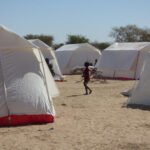
Government data shows that only about 14 percent of Nigerians have access to safely managed drinking water services. Conditions in conflict-affected parts of Borno are often worse, particularly in displaced communities, informal settlements, and camps where access to safe water and sanitation facilities remains extremely limited.
Sadly, for many families, clean water is still something they must search for rather than something that flows from a tap.
The communities now battling cholera are largely the same communities that have endured years of attacks by Boko Haram and ISWAP, repeated displacement, loss of livelihoods, and the collapse of local services.
In many of these areas, organisations such as MSF have become the frontline health system because the public infrastructure that should provide those services either does not exist or cannot meet demand.
So, if humanitarian organisations are still performing functions that should ordinarily be handled by public institutions after nearly two decades of emergency response, what exactly has all the reconstruction spending achieved?
What 17 years should have built
Borno has spent much of the last 17 years under one form of security emergency or another, and during that period, multiple interventions, such as the Presidential Committee on the Northeast Initiative and the Northeast Development Commission (NEDC), were launched to rebuild the subregion.
The expectation was that years of intervention would gradually replace emergency responses with functioning systems.
But what remains missing in many communities are the fundamentals, such as reliable boreholes, water treatment facilities, sanitation systems, drainage infrastructure, and functional primary healthcare centres.
The recurring appearance of cholera suggests that while money may have been budgeted and projects announced, the infrastructure required to protect vulnerable communities has not been delivered at the scale needed.
What is failing
The Federal Ministry of Water Resources carries responsibility for national water access levels that remain among the lowest in the world, as years of programmes and allocations have not produced the level of improvement needed in vulnerable communities.
As for the Borno State Government, it also bears responsibility for ensuring adequate investment in water, sanitation, and hygiene infrastructure, particularly in rural communities and displacement-affected areas where cholera risks are highest.
Concerning the NEDC, it was specifically established to rebuild the area after years of conflict, and water and health infrastructure fall squarely within that mandate. However, recurring outbreaks continue to raise questions about whether investments are reaching communities at the scale and quality required.
Citizens’ rights
Access to clean water and basic healthcare is linked directly to the right to health recognised under both African and international human rights frameworks that Nigeria has ratified.
Cholera is both preventable and treatable, and when thousands of people become infected because communities lack safe water and sanitation, the issue extends beyond public health and enters the territory of governance and rights.
The presence of humanitarian organisations helping patients survive does not remove the state’s responsibility to prevent those patients from becoming infected in the first place.
Women and children carry the burden
In communities without reliable water systems, women are usually responsible for collecting water, a task that consumes hours each day and often exposes them to additional risks in insecure environments.
The absence of proper sanitation facilities also affects women and girls disproportionately, particularly adolescents whose education and mobility can be disrupted by a lack of safe and private facilities.
Children under five remain among the most vulnerable during cholera outbreaks because dehydration can become fatal within a short period if treatment is delayed.
And for many mothers, the outbreak means spending days caring for sick children while losing income, missing work, and coping with the anxiety of watching a preventable illness threaten their families.
What needs to happen
Communities affected by cholera should document their access to water sources, the condition of available infrastructure, and the number of households without sanitation facilities, creating evidence that can be used to demand action from authorities.
The NEDC should publish a detailed breakdown of water and sanitation projects funded since its establishment, including locations, budgets, completion status, and independent verification of whether the facilities are functioning.
As for the federal and Borno State governments, they should also provide clear public updates on investments made to improve water access in communities repeatedly affected by cholera.
A disease that spreads through contaminated water should not continue to return to the same communities after 17 years of emergency interventions, reconstruction programmes, and development promises.
Photos source: Dan Mitler