





The African International Documentary Festival Foundation (AFIDFF), a non-governmental organisation (NGO), has taken a bold step to equip 100 youths in Adamawa State with the knowledge and skills needed to participate meaningfully in Nigeria’s growing carbon market.
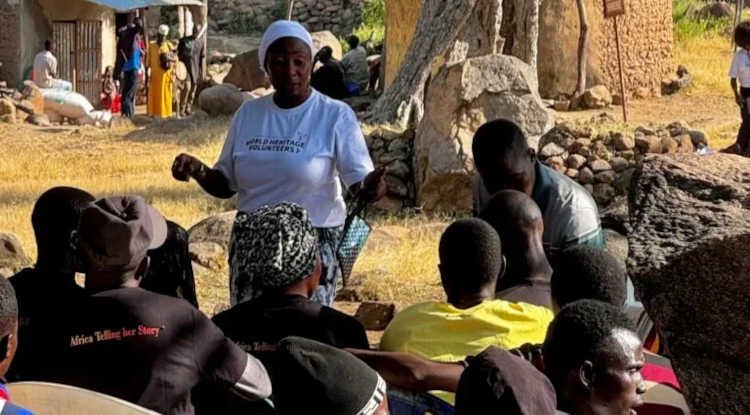
Development Diaries reports that the training involved 70 youths from the local community and 30 UNESCO World Heritage Volunteers (WHV) for 2025, according to the News Agency of Nigeria (NAN).
At the launch of the training in the Sukur Landscape Community, the Director-General, Malame Mangzha stressed that the initiative is designed to ensure that local communities are not left behind as climate solutions evolve.
‘The initiative seeks to promote environmental stewardship through climate education, tree planting, and awareness of carbon market opportunities for sustainable income and conservation.
‘The training will empower youths with practical skills in sustainable livelihoods, cultural heritage preservation, and environmental protection’, she said.
With 70 youths drawn from Sukur and 30 UNESCO World Heritage Volunteers, the programme is pushing for community inclusion in environmental decision-making, an area where rural communities in Nigeria are often overlooked.
The training, tagged ‘Sukur Heritage, Carbon Market Initiative; Empowering Communities, Balancing the Carbon’, builds on partnerships with the North-East Development Commission (NEDC), National Commission for Museums and Monuments (NCMM), Nigeria Tourism Development Authority, and the Red Cross.
This collaboration is crucial in a region where environmental degradation has been severe.
According to a Liason Officer with the Forestry Research Institute of Nigeria (FRIN), Christopher Nwabuike, studies show that Sukur has lost nearly 60 percent of its tree cover, with agricultural output dropping by 40 percent, underscoring the need for urgent restoration efforts.
Mangzha noted that the project will drive ‘environmental stewardship through climate education, tree planting, and awareness of carbon market opportunities for sustainable income and conservation’, while strengthening community leadership aligned with the sustainable development goals (SDGs).
Beyond awareness, the programme provides hands-on skills in climate-smart practices, cultural heritage preservation, and sustainable livelihoods.
Nwabuike also explained carbon credit as ‘a reward for resilience, and for adopting climate-compliant practices’, adding that communities can generate economic value by committing to regenerative activities such as agroforestry, soil carbon sequestration, and tree planting.
With a cooperative already registered for the community, youths are being prepared to earn from the voluntary carbon market once their climate practices are validated and certified.
This initiative, the first of its kind in Nigeria, is positioning Sukur as a model for how heritage communities can lead in climate action while protecting their cultural identity.
Volunteers are also supporting the maintenance of stone walls and mountain trails, activities that preserve the UNESCO-recognised landscape.
As Mangzha noted, the long-term goal is to inspire ‘local initiatives in tree planting, waste management, and climate action’, demonstrating that when communities are empowered with the right tools, they can drive sustainable transformation from the ground up.
Photo source: NAN