


Governments across West Africa are steadily weakening the freedoms that allow citizens to hold power accountable.
Development Diaries reports that fresh restrictions introduced by Burkina Faso’s military authorities have added to growing concerns that civic space is shrinking across the region, with governments increasingly targeting journalists, civil society organisations and citizens who challenge official decisions.
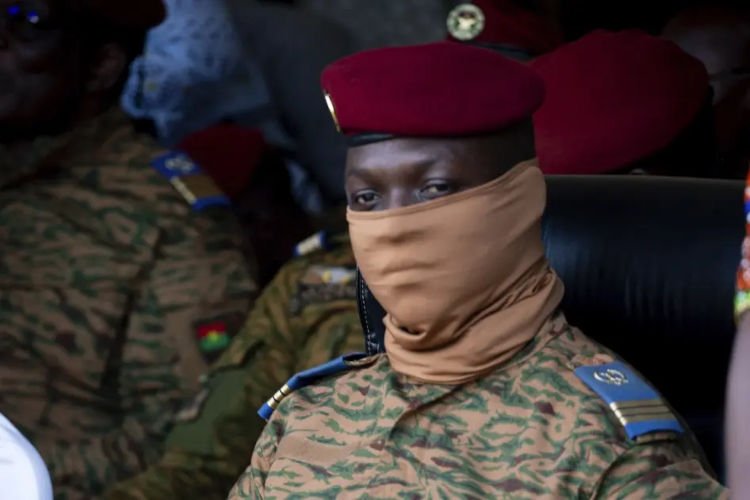
The military government in the country has tightened control over who can study abroad, while reports also accuse the authorities of restricting civilians from leaving besieged communities and continuing a crackdown on independent journalism.
The developments mirror a wider regional pattern where journalists disappear into detention, civil society organisations are shut down, protests are restricted and governments respond to criticism with repression instead of accountability.
That trend is becoming one of West Africa’s most serious governance challenges because governments are increasingly treating dissent as a security threat instead of recognising it as a democratic right.
Whether under military juntas or elected administrations, the result is often the same, as citizens lose the freedom to speak, organise and question those exercising public power.
Burkina Faso may be making headlines today, but restrictions on journalists, civic groups and peaceful activism continue to emerge across different parts of West Africa.
The governments responsible for these actions carry the first obligation to respect citizens’ rights, but regional institutions also face the challenge of the Economic Community of West African States (ECOWAS) and the African Union that continue to issue statements while civic space steadily contracts across member states.
Both institutions already have legal commitments requiring member states to uphold democratic governance and fundamental freedoms, while the African Charter on Human and Peoples’ Rights guarantees freedom of expression, association and peaceful assembly.
Those guarantees are therefore violated, as governments suspend organisations, detain journalists or make citizens fear the consequences of criticising public officials.
Women-led organisations, youth movements and independent journalists often become the earliest casualties because they are usually the loudest voices demanding accountability. Rural communities affected by conflict also lose when journalists cannot safely report from their communities, leaving suffering undocumented and government actions largely beyond public scrutiny.
Citizens should continue to support independent journalism, document violations of civic freedoms, strengthen regional solidarity among civil society organisations and amplify the cases of detained journalists and dissolved organisations so that governments cannot quietly erase them from public attention.
For their part, ECOWAS and the African Union should begin to enforce the democratic and human rights standards they already require of member states, demand the release of detained journalists, insist on the protection of civic organisations and establish an independent regional mechanism that regularly monitors and publicly reports the state of civic space across West Africa.