



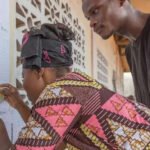

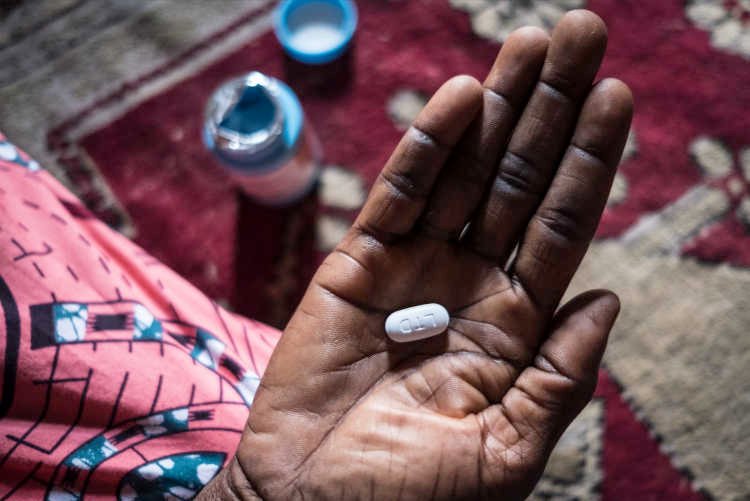
At 19, a young woman in Lagos State, southwest Nigeria, is already navigating marriage, pregnancy, and illness without the basic health information that could protect her, and that is how a public health failure quietly becomes a national crisis.
Development Diaries reports that new data released in April 2026 shows Lagos State and Benue State recording the highest rates of new HIV infections in the country, with young women emerging as the fastest-growing group affected.
It is understood that the trend is less about biology and more about the kind of policy choices that leave girls unprotected long before they ever step into a clinic.
Amara’s story makes this reality difficult to ignore because it is predictable, and when a teenager leaves school early, enters marriage before adulthood, and becomes a mother without access to basic sexual and reproductive health information, the system has already made several decisions on her behalf before she even understands what is at stake.
And the numbers only make the picture clearer, as Nigeria continues to carry millions of out-of-school children, most of them girls, while early marriage remains common across many regions, cutting short education and limiting the ability of young women to make informed decisions about their own bodies, their health, and their future.
At the same time, the health system that is meant to respond is struggling to keep up, with recent data from the National Bureau of Statistics (NBS) showing that diagnostic accuracy among health workers has dropped to 46.1 percent.
What that means is that even when young women find their way to a clinic, there is almost a coin-toss chance of getting the right diagnosis, turning what should be treatment into uncertainty.
What is driving this surge in infections among young women is structural, because child marriage removes girls from school and exposes them to partners whose health status they cannot verify, poverty limits access to testing and care, and gender-based violence continues to create risk that no amount of awareness campaigns can fix without legal protection and enforcement.
The system responding to this crisis is fragmented in a way that almost guarantees failure, because the Federal Ministry of Health leads the HIV response but cannot stop child marriage.
As for the Federal Ministry of Education, it handles schooling but cannot address violence, and the Federal Ministry of Women Affairs is tasked with protecting women and girls but remains underfunded and limited in reach.
Responsibility, however, does not disappear just because it is shared, as lawmakers continue to approve health budgets far below agreed continental benchmarks, state governments struggle to deliver accessible community-level services, and international partners scale back HIV prevention funding without fully replacing what they are withdrawing.
With respect to Nigeria’s legal and moral obligations, it is a signatory to the Convention on the Elimination of All Forms of Discrimination Against Women, the African Charter on the Rights and Welfare of the Child, and the Maputo Protocol, all of which require the protection of women’s health, education, and safety. However, the current data shows a widening gap between those commitments and lived reality.
Another concern is that the burden of that gap is not evenly shared, as young women in rural communities, those living with disabilities, and those displaced by conflict face even greater barriers to accessing care, information, and protection, making them more vulnerable in a system that already struggles to respond effectively.
The consequences are visible in everyday life, where preventable infections continue, treatment is delayed, and opportunities disappear, turning what should be a manageable public health issue into a cycle that affects education, income, and long-term well-being for millions of young women.
Breaking that cycle requires more than acknowledging the numbers; it demands coordinated action that treats young women as citizens whose rights must be protected across education, health, and justice systems at the same time.
Until that happens, stories like Amara’s will continue to repeat themselves, and each new infection will be evidence of a system that saw the risk coming and chose not to act early enough.
Photo source: WHO