





Africa just crossed a banking milestone worth celebrating, but while financial institutions are counting record revenues, the systems that keep ordinary people alive, educated, and protected are quietly breaking down.
Development Diaries reports that Africa’s banking sector has crossed the 100 billion dollar revenue mark for the first time, even as National Bureau of Statistics reports Nigeria’s health worker diagnostic accuracy at 46.1 percent, Tanzania records hundreds killed in post-election violence, Uganda moves to restrict an NGO sector employing about 700,000 people, and Nigeria still has about 18 million out-of-school children, all at a time being framed as economic progress.
These are not random headlines thrown together by coincidence, and it takes very little effort to see the pattern, because what is being celebrated at the top of the economy is happening alongside what is collapsing at the base.
The story of Africa’s $100 billion banking sector sounds impressive until you ask a simple question about who is actually feeling that growth, because the revenue is concentrated in a handful of countries.
Even within those countries, it is concentrated among those already connected to formal finance, leaving millions of people navigating broken schools, overstretched hospitals, and economic systems that offer access at a cost many cannot afford.
The deeper issue is that the drivers of banking growth are not neutral, because increased financial inclusion through digital services and retail banking has expanded access while also introducing cost structures that weigh heavily on low-income users.
At the same time, the broader economic signals are pointing in a different direction, with institutions like the International Monetary Fund (IMF) revising growth forecasts downward and currencies across the continent weakening, creating a strange contrast where financial sector profits rise even as the wider economy tightens, a gap that says more about distribution than it does about development.
The question that follows is whether Africa’s growth is being translated into functioning public systems, and the answer becomes clearer when you look at budget priorities, where profits in the banking sector continue to outpace investments in health and education.
That failure is not accidental, and it is not mysterious, because it reflects a governance model where private sector expansion is not matched with strong taxation, regulation, or social investment requirements, allowing wealth to accumulate at the top while public services struggle to keep up.
The consequences show up in everyday life, where a person can access a mobile loan in seconds but cannot access quality healthcare when they fall ill, where financial apps are more responsive than public institutions, and where economic inclusion comes with conditions that deepen vulnerability rather than reduce it.
This imbalance is even sharper when viewed through the lens of gender and inequality, because women, particularly in rural areas, remain less likely to access formal financial services and more likely to depend on informal systems that expose them to higher risks and fewer protections.
Africa is not short of capital, and reports from institutions like the Africa Finance Corporation have made that point clearly, but the challenge lies in how that capital is directed.
What this moment demands is more honesty, as a continent cannot measure progress by the performance of its banks alone while ignoring the condition of its classrooms, clinics, and communities, and until growth is tied more directly to public benefit, these milestones will continue to tell only half the story.
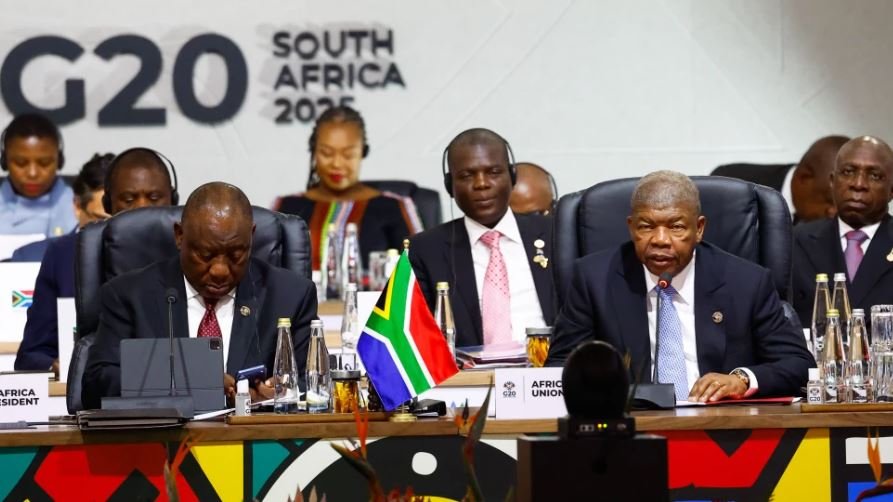
Photo source: Thamas Mukoya/AP