



Uganda is about to pass a law that claims to protect sovereignty but in practice reads like a plan to shut down the very systems keeping the country afloat, as if the government has looked at a struggling economy and decided the real problem is the people helping it function.
Development Diaries reports that the proposed Protection of Sovereignty Bill 2026, tabled in April, would criminalise individuals and organisations that receive foreign funding beyond a government-approved threshold.
The bill also seeks to impose fines running into billions of shillings, and introduce prison sentences of up to 20 years, all while requiring NGOs to register as foreign agents and restricting their role in anything remotely connected to elections.
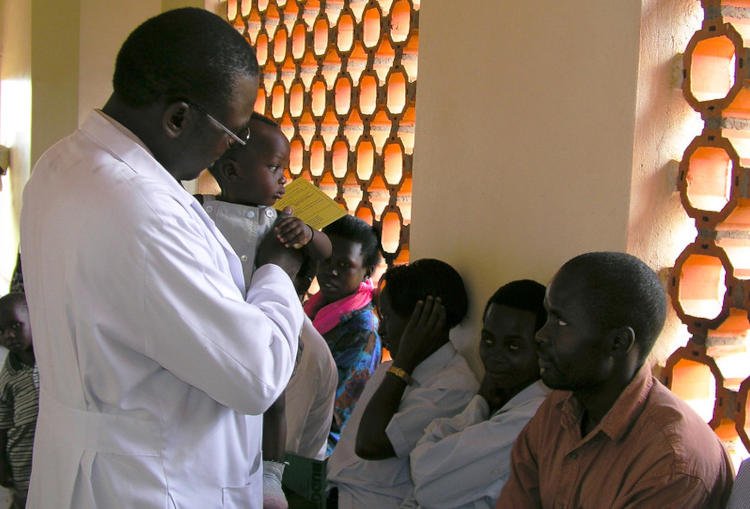
Walk through towns like Gulu, and the reality behind this policy begins to explain itself without needing translation, as the clinic treating patients is donor-funded, the school educating children survives on civil society support, the legal aid office helping families keep their land is backed by international grants, and the savings groups sustaining market women were built by the same organisations now being framed as a threat.
What that means is that removing those support systems does not produce a stronger state but exposes a vacuum that the government has not prepared to fill.
The numbers make the argument even harder to ignore, because Uganda’s NGO sector employs around 700,000 people compared to roughly 480,000 in the civil service, making it one of the country’s largest organised employers.
Even the basic arithmetic refuses to cooperate with the policy, as absorbing hundreds of thousands of displaced workers into the public sector is fiscally unrealistic, and expecting the private sector to take them in assumes a level of growth Uganda has not historically demonstrated.
The economic impact goes beyond jobs into the country’s financial stability, because NGOs bring in foreign exchange through grants, contribute to taxes through salaries and procurement, and played a stabilising role during crises like Covid-19 when other sectors slowed down.
The government’s argument leans heavily on protecting national independence, but that narrative becomes difficult to sustain when placed alongside Uganda’s political calendar, particularly with elections approaching and civil society organisations becoming more active in holding power to account.
The model behind the bill, often compared to frameworks used in places like Russia, has a clear track record of being less about shielding states from foreign control and more about managing dissent through legal language, turning regulation into a tool for limiting who gets to speak, organise, and question authority.
What emerges from this is a deeper governance problem, where the state has relied on NGOs for years to deliver services it could not adequately provide and is now attempting to restrict them without presenting a credible alternative, effectively choosing to remove the support system while hoping the absence will not be noticed too quickly.
The legal implications follow the same pattern, as the constitution of Uganda guarantees freedom of association, but the bill introduces conditions that make that right dependent on government approval, shifting the balance from constitutional protection to administrative control in a way that redefines how rights are exercised in practice.
The consequences will not fall evenly, and they rarely do, because women-led organisations working in maternal health, gender-based violence response, and girls’ education are heavily reliant on international funding and will be directly affected, while rural communities that depend most on NGO services will feel the absence first and hardest when those services begin to disappear.
Uganda is not short of institutions that can intervene, from parliament to regional bodies like the East African Community and financial actors such as the African Development Bank.
The major concern is whether those institutions will act before the consequences move from prediction to reality.
Photo source: World Bank