



Nigeria has allocated billions of naira to bring out-of-school children into classrooms, but the government still cannot show the public how many children are missing from the education system or where they are.
Development Diaries reports that the federal government allocated N35 billion in the 2026 budget to programmes targeting out-of-school children, amounting to roughly N2,333 for each of the estimated 15 million children currently out of school.
The funding comes as the Universal Basic Education Commission (UBEC) moves to introduce annual grants for public primary schools under the $152 million HOPE-EDU programme.
UBEC recently announced that the programme, which became effective on 27 February, 2026, would release funds to states based on their performance against agreed targets.
The government’s education spending plans are full of impressive figures, with the 2026 budget allocating a record N3.52 trillion to education, while the federal government secured $552 million for a basic education programme targeting 29 million children, more than 500,000 teachers and 65,000 public schools.
The Nigerian Education Loan Fund has also processed 1,659,853 student loan applications and disbursed N372.62 billion.
UBEC is also pursuing school construction through its ‘Build a New School’ model; the commission expects private-sector partners to build 2,200 schools, potentially benefiting more than 900,000 learners.
But for all these programmes and funding commitments, Nigeria has no publicly available national count of out-of-school children, with checks on the websites of UBEC, the National Commission for Almajiri and Out-of-School Children’s Education (NCAOOSCE) and the National Senior Secondary Education Commission (NSSEC) finding no published figures.
The country is therefore spending money to address a crisis it cannot publicly account for, and this problem goes beyond the absence of a figure on an agency website.
When states receive funding after meeting performance targets, the public needs access to the baseline and results used to determine whether those targets have been achieved. Otherwise, officials can report progress, commissions can approve payments and funds can be released, while parents and citizens are left to take everyone’s word for it.
Without a reliable national count, it is difficult to establish whether the situation is improving or deteriorating, who should explain any increase in the number of out-of-school children, or what evidence supports a reported decline.
So without publicly available data showing which children have returned to school and remained there, the government’s claims of progress cannot be independently verified.
The data gap also hides who is being left behind, as there is no published national breakdown showing out-of-school children by state, sex, disability or reason for exclusion. This makes it harder to direct funding towards the barriers keeping particular children away from classrooms.
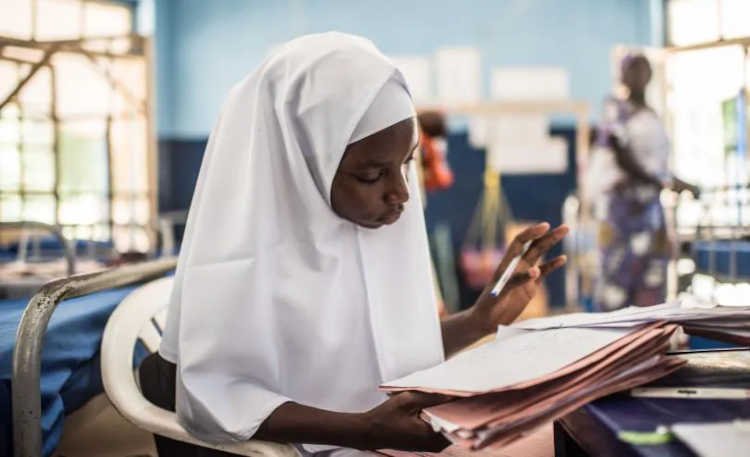
Girls in the north-west and north-east face obstacles including long distances to school, insecurity, early marriage, shortages of female teachers and the absence of separate, functional toilets. For adolescent girls, inadequate sanitation can mean missing school during menstruation or eventually dropping out.
Children with disabilities are even less visible when education data does not identify their needs. Inaccessible classrooms, missing ramps, unusable toilets and the absence of sign language or Braille support can keep children out of school without those barriers appearing in the figures used to plan education spending.
Almajiri children also remain within NCAOOSCE’s mandate, but the commission has yet to make a national count publicly available. Meanwhile, low-income and rural families still bear the costs of uniforms, transport and school levies, even where tuition is officially free.
UBEC has acknowledged the pressures facing the sector, including the high number of out-of-school children, inadequate infrastructure, shortages of qualified teachers and limited public resources.
Its Board Chairman, Umaru Al-Makura, has also stressed the importance of transparency and accountability at community level. That transparency must begin with information the public can access, including how many children need support and which schools receive funding.
Nigeria’s legal commitments already establish its duty to provide education, with the Universal Basic Education Act of 2004 guaranteeing nine years of free basic education, while Section 18 of the constitution directs government to eradicate illiteracy and provide universal primary education.
The Child Rights Act also recognises every child’s right to free and universal basic education. Nigeria has further committed to Sustainable Development Goal 4 on inclusive and equitable quality education and endorsed the Safe Schools Declaration.
Those commitments require more than budget announcements.
UBEC should publish a state-by-state count of out-of-school children, disaggregated by sex and disability, alongside the schools receiving annual grants and the amounts allocated to them.
It should also make the performance targets under HOPE-EDU’s Disbursement Linked Indicator 7 available for public scrutiny. These disclosures should begin by the end of the first quarter of 2027 and be updated quarterly.
NCAOOSCE should publish the method it uses to identify and count out-of-school and Almajiri children, together with its current figures, or publicly explain if it does not have a national register, while the Federal Ministry of Education should also make disability-disaggregated enrolment data a condition for accessing UBE intervention fund support from the 2027 funding cycle.
Citizens have a part to play in ensuring that the money reaches the children it is meant to support. So parents and civil society organisations can use the Freedom of Information Act to request the latest figures from UBEC and NCAOOSCE, as well as the performance targets states must meet to access school grants.
Residents can also ask their State Universal Basic Education Boards for the names of schools receiving annual grants and the amount allocated to each.
And for school-based management committees, they should display the grants received and how the money was spent on school notice boards every term.
Until the government of Nigeria publishes reliable data and makes education spending traceable, the country will struggle to show whether its growing budgets are bringing children into classrooms or merely keeping the promises on paper.