


Across Uganda, Nigeria and Tanzania, people are spending months or years in detention while court proceedings drag on, release orders go unheeded and families struggle to get answers about their loved ones.
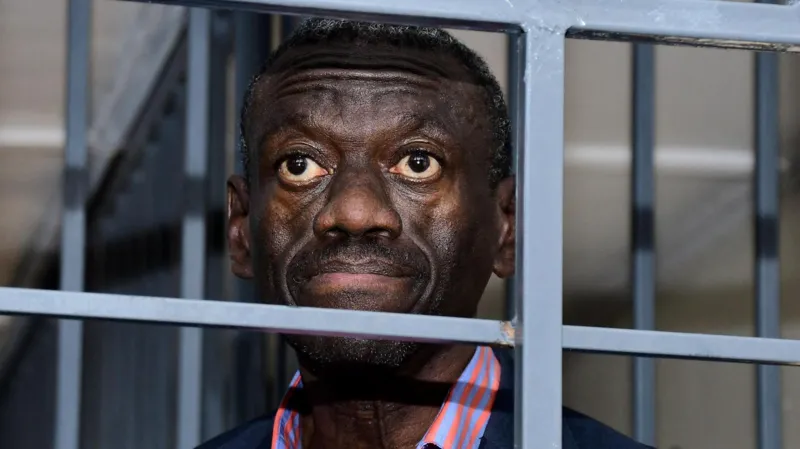
Development Diaries reports that Ugandan opposition figure Kizza Besigye remains in detention nearly two years after security operatives seized him in Nairobi.
He collapsed at the Kampala High Court in July 2026, and his wife, Winnie Byanyima, says he has since lost the ability to write, with little movement in his right hand.
Byanyima has also said she fears she may be called to collect her husband’s body rather than see him released.
In Nigeria, two men whom a court ordered released – James Oghoroko, president-general of Okuama community in Delta State, and Dennis Okugbaye, the community’s 81-year-old treasurer – have reportedly died in military custody.
Recently, the Federal High Court in Warri issued a Form 48 notice warning the Attorney-General of the Federation that failure to obey the release order could lead to contempt proceedings and imprisonment.
Meanwhile, in Tanzania, Chadema chairman Tundu Lissu was sentenced to four years in prison for incitement by the High Court in Dar es Salaam, after being acquitted of treason. He had already spent 19 months in detention before the verdict.
The laws in all three countries are supposed to protect people from arbitrary detention and guarantee a fair hearing, with Section 35 of Nigeria’s constitution setting limits on how long an arrested person may be held without being brought before a court.
Articles 6 and 7 of the African Charter on Human and Peoples’ Rights also protect liberty and the right to a fair hearing, while Article 9(3) of the International Covenant on Civil and Political Rights, ratified by all three countries, states that detention pending trial should not be the general rule.
The Nelson Mandela Rules also require prisoners to receive healthcare equivalent to that available in the community. Besigye’s condition makes that obligation particularly urgent.
The people most likely to disappear from public attention are those without prominent names, lawyers or families able to organise press conferences, with Mabel Owhemu, the only woman among the Okuama applicants, receiving little public attention; likewise Coletha Ntidyicha, who is among those facing charges in Tanzania.
Nigerians can use the Freedom of Information Act to ask the Ministry of Defence for the legal basis, authorising officers and duration of each Okuama detention, and make the response public.
Civil society groups and lawyers in all three countries should also document cases of prolonged detention and submit them to the African Commission on Human and Peoples’ Rights, where the conditions for individual complaints are met.
Legal aid support should also reach junior and women officials whose cases receive less attention than those of prominent political figures.
The authorities must also act, and this is where the Attorney-General of the Federation needs to comply with the Warri court release order, while the National Human Rights Commission should investigate the reported deaths of Oghoroko and Okugbaye and publish its findings within 60 days.
The African Commission should seek urgent information from Tanzania and Uganda on pre-trial detention and access to medical care, and Uganda’s judiciary should also determine Besigye’s outstanding bail application on medical grounds, supported by an independent medical assessment placed before the court.
Governments cannot claim to uphold the rule of law while treating court orders as optional, keeping people in detention without timely hearings or allowing their health to deteriorate behind prison walls.
Photo source: Reuters