


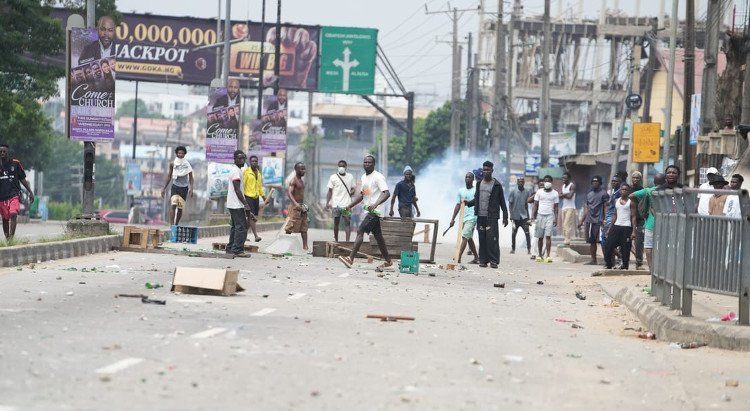
Nigerians should not have to dodge machetes to attend political meetings, support a candidate or report on an election campaign ahead of the 2027 general election.
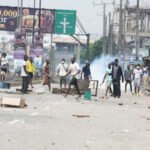
Development Diaries reports that a recent political town hall organised by the Lagos State chapter of the Nigeria Democratic Congress (NDC) at Classique Event Place in Oregun, Ikeja, was disrupted by about 200 attackers, according to the party.
The men, who reportedly arrived with axes and machetes, assaulted supporters, beat a journalist and seized his recording equipment, with the police eventually dispersing the crowd with tear gas.
On the same day, the House of Representatives adopted a motion of urgent public importance sponsored by Minority Leader Fred Agbedi and 16 other lawmakers, and constituted an ad hoc committee chaired by House Leader Julius Ihonvbere to investigate the immediate and underlying causes of political violence.
The committee, it is understood, has three weeks to report, with its deadline falling in early December.
During the debate, lawmakers cited an attack in Enugu on 12 September, violence in Katsina on 28 October that led to 14 arrests, an attack on an All Progressives Congress (APC) rally in Lafia, Nasarawa State, on 04 November, and a violent confrontation during a political procession in Asaba, Delta State, on 07 November, where police said one person was killed and five others injured.
Political leaders have been quick to condemn the violence, with Dele Alake, speaking for the All Progressives Congress (APC) Presidential Campaign Council, denouncing attacks on political gatherings and calling for prosecutions, while the Lagos APC denied involvement in the Oregun incident.
While condemnations are welcome, Nigerians have heard enough expressions of concern to know that a strong statement does not necessarily lead to a strong response, as an arrest that never becomes a charge is a brief inconvenience that political sponsors can price into a campaign budget.
So when people are arrested after one attack and another gathering is stormed days later, those planning political violence may conclude that the risks are manageable and the consequences negotiable.
Section 40 of the Nigerian constitution protects the right to assemble freely and associate with others, while Section 39 guarantees freedom of expression. Article 13 of the African Charter on Human and Peoples’ Rights also protects citizens’ right to participate freely in government.
Women candidates and voters, persons with disabilities and young first-time voters face particular barriers when political gatherings become unsafe, with the electorate then left to those who can afford the physical risk, while others quietly withdraw from the democratic process.
The Nigeria Police Force and its commands in Lagos, Delta, Nasarawa, Katsina and Enugu must account for their handling of these incidents, including the investigations conducted and the case files forwarded to prosecutors.
The Attorneys-General of the affected states must also explain the status of cases referred to them, while the Independent Electoral Commission (INEC) should press political parties to comply with campaign conduct rules.
For their part, party leaders must take responsibility for people who organise or carry out attacks in their name because they cannot claim ownership of supporters when they are mobilising crowds and suddenly become strangers to them when violence breaks out.
As for the House of Representatives committee under Ihonvbere, it now has three weeks to establish why these attacks keep happening and what has happened to those arrested. Agbedi relied on Section 88(1) of the constitution, which empowers the National Assembly to investigate matters within its legislative competence.
Nigerians should expect the committee to do more than assemble familiar facts, invite officials to explain themselves and produce another report that gathers dust.
Voters, civic monitors and party agents should send written submissions to the house committee before its deadline, documenting incidents with dates, locations and available police report or case numbers.
With the 2027 election approaching, Nigerians need to see arrests lead to prosecutions and political sponsors held responsible where evidence establishes their involvement.
Otherwise, the country risks entering another election season in which politicians campaign with promises of democracy while their supporters make it dangerous for ordinary people to participate.
Photo source: Sunday Alamba/AP Photo/picture alliance

