



Nigeria has spent four years responding to diphtheria outbreaks, but mothers in the northern states are still taking sick children to clinics that may not have the medicine needed to save them.
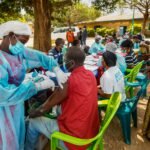
Development Diaries reports that Médecins Sans Frontières (MSF) treated 86 diphtheria cases in Katsina State between 26 October and 12 November 2026, 70 of which were severe.
In a statement, the humanitarian organisation warned that shortages of diphtheria antitoxin, combined with low immunisation coverage, are fuelling transmission and undermining efforts to control the outbreak in northern Nigeria.
MSF’s medical coordinator in Nigeria, Dr David Kizito, described the global shortage as a matter of life and death, warning that available stocks were dangerously low.
Africa’s most populous nation has been managing the outbreak since late 2022, meaning four federal budget cycles have passed without the country securing a reliable supply of a medicine that can neutralise the toxin produced by the bacteria.
As of August 2026, Nigeria had recorded 12,977 suspected cases, 10,476 confirmed infections, and 406 deaths, with Bauchi, Borno, Kaduna, Katsina, Kano, Plateau, Sokoto, and Zamfara among the worst-affected states, with several recording recent spikes.
MSF says global antitoxin supplies remain limited because manufacturers produce small quantities, citing unpredictable demand and low financial returns.
Most countries, including Nigeria, have no contingency stocks and depend on donations or procurement through United Nations agencies. MSF has also called for faster clearance of incoming supplies at ports and their prompt distribution to affected areas.
In other words, even when help is on its way, delays can stand between a child and treatment.
Diphtheria is vaccine-preventable, which makes Nigeria’s predicament especially frustrating, as the country struggles with not having a dependable reserve of antitoxin for children who become seriously ill, while routine immunisation is failing to protect enough children, particularly in rural communities in the north.
The problem points to gaps in both health policy and its delivery.
Section 17(3)(d) of Nigeria’s constitution directs the state to ensure adequate medical and health facilities for all, and the National Health Act 2014 established the Basic Health Care Provision Fund to support essential primary health services, including immunisation.
The country’s Child Rights Act 2003 and Article 14 of the African Charter on the Rights and Welfare of the Child also recognise every child’s right to the highest attainable standard of health.
Nigeria’s commitment under the 2001 Abuja Declaration to allocate 15 percent of its national budget to health adds another measure against which its response should be judged.
Rural children in the eight affected states are particularly exposed, as MSF says immunisation coverage is lowest in rural areas. Mothers often carry the burden of recognising symptoms, arranging transport and caring for sick children, sometimes travelling hours to reach a treatment centre.
Families already struggling with poverty or displacement face even greater barriers, as when a child falls ill, household resources are stretched further, and siblings, especially girls, may be withdrawn from school to help with care.
Communities should not have to rely on official assurances to find out whether their health centres have vaccines or essential medicines.
Ward development committees and civil society organisations in the affected states can use the Freedom of Information Act 2011 to request local government immunisation coverage figures for 2025 and 2026, alongside records of antitoxin stocks.
Parents can also ask their state primary health care agencies to publish how much Basic Health Care Provision Fund money reaches their local primary health centres.
The authorities must now provide answers and supplies. The Federal Ministry of Health and Social Welfare should publish within 30 days a state-by-state account of available antitoxin stocks and a costed plan for building a national reserve; the National Assembly’s health committees should provide a dedicated antitoxin procurement allocation in the 2027 budget, rather than leave the country’s supply dependent on donations.
NAFDAC and the Nigeria Customs Service should also establish and publish an expedited clearance procedure for emergency medical supplies, with a clear time limit.
A child who arrives at a clinic unable to swallow cannot wait for another emergency appeal or the next budget cycle.

