


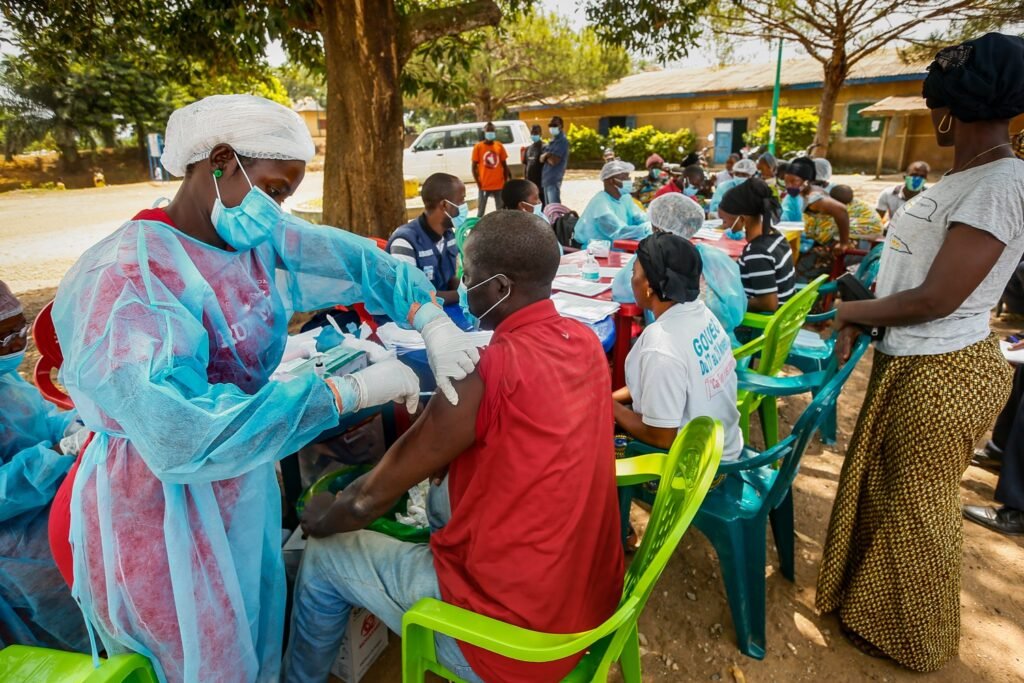
The Democratic Republic of Congo has millions of dollars allocated to its Ebola response, but in parts of the country, ambulances remain grounded for lack of fuel, health workers are going unpaid and families struggle to reach treatment centres.
Development Diaries reports that the country’s National Institute of Public Health recently published figures showing 11,042 Ebola infections and 5,387 deaths, making this the country’s worst Ebola outbreak and the second deadliest in Africa.
Médecins Sans Frontières (MSF) has warned that funds raised to fight the outbreak are not reaching frontline workers, who remain unpaid, poorly trained and short of essential supplies.
The warning follows concerns from the Africa Centres for Disease Control and Prevention (Africa CDC) about the accounting for $700 million of the $962 million allocated to response organisations.
In Bunia, the capital of Ituri province, an ambulance sits idle because there is no fuel, while the nurse expected to accompany patients has not been paid.
Elsewhere, families care for sick relatives at home because treatment centres are too far away or health workers have stopped reporting for duty – conditions showing how far the funding figures are from the services people need.
The disease has also been reported across East, Central and West Africa, giving the outbreak the widest geographical spread of any Ebola outbreak on the continent.
Africa CDC’s concerns about the $700 million do not establish that the money was stolen or misappropriated. However, the public deserves to know which organisations received the funds, how much they received and how they accounted for their spending.
This is particularly important when MSF reports that frontline workers remain unpaid and lack essential supplies, while insecurity in Ituri and North Kivu further restricts access to affected communities.
Article 9 of the African Charter on Human and Peoples’ Rights protects freedom of expression and the right to receive information, and during an epidemic, access to reliable information can determine whether families know where to seek treatment and how to protect themselves.
Article 16 also guarantees the right to the best attainable state of health, while the International Health Regulations require countries to maintain the capacity to detect and respond to public health threats.
But unpaid health workers and grounded ambulances make these obligations difficult to fulfil.
Women, rural communities and displaced families face particular risks, with women often caring for sick relatives at home, exposing themselves to infection, while many nurses and community health workers are also women.
As for communities in Ituri, Haut-Uélé and Tshopo, they depend on local radio for health information, making attacks on journalists especially damaging.
The funding concerns deserve a public answer, and Congolese health worker unions, journalists’ associations, including the National Press Union of the Congo, and public health advocates can press for one together.
Africa CDC should publish a breakdown of the $962 million allocation, showing the amounts committed and disbursed, the organisations that received the money and their reported expenditure.
Within 60 days, it should also provide a recipient-level account of the $700 million whose accounting it questioned, including which organisations are yet to submit expenditure reports.
That scrutiny should go hand in hand with action where the shortages are being felt. The Ministry of Public Health, Hygiene and Prevention should publish within 30 days a plan for clearing salary arrears in Ituri and North Kivu, identifying affected facilities and setting out when workers will be paid.
Communities can also help bring neglected facilities to public attention by documenting unpaid health workers and shortages, then sharing verified information through community radio.
Access to information also depends on journalists being able to report without fear. Provincial prosecutors in Tshopo and South Kivu should investigate the November attacks on journalists and make their progress public, while the National Press Union of the Congo and other media associations should continue pressing for the safety of journalists covering the outbreak.
The DRC cannot contain an outbreak of this scale while frontline workers lack salaries, supplies and protection.

