




Kenya’s Ebola quarantine project and its new health agreement with the United States have become one governance story because both raise questions about how major public health decisions are being made.
Development Diaries reports that the country’s High Court has found Health Cabinet Secretary Aden Duale in contempt after ruling that construction of an Ebola quarantine facility at Laikipia Air Base continued despite court orders directing that the project be halted.
The development comes days after Kenya and the United States signed a new five-year bilateral health framework worth up to $1.6 billion, with Kenya committing an additional $850 million in domestic health funding.
Although one development concerns an Ebola quarantine facility and the other relates to international health financing, both raise the same governance question about whether major public health decisions should proceed without meaningful public participation, parliamentary scrutiny and full respect for the courts.
The dispute over the Ebola facility illustrates that concern, as court records show that construction continued after the High Court ordered that work be suspended pending the hearing of the case.
The Health Minister initially defended the project and publicly indicated that it would continue before later ordering construction to stop after contempt proceedings commenced.
Courts exist for moments like this because governments cannot choose which judicial orders to obey and which to ignore. Selective obedience may be convenient for those in power, but it would quickly become inconvenient for every citizen expected to obey the same laws.
The new Kenya-US health agreement raises similar questions through a different route. The partnership promises up to $1.6 billion from the United States over five years for HIV, tuberculosis, malaria, maternal health and disease surveillance, while Kenya has committed to increasing its own health spending by $850 million during the same period.
There is nothing inherently wrong with bilateral health partnerships, as Kenya, like many countries, needs investment to strengthen its health system.
The important question is whether agreements of this scale should be negotiated largely within the executive arm of government without sufficient parliamentary engagement and public participation, especially when they involve public spending, health data, disease surveillance and long-term financial commitments.
Civil society organisations have raised concerns about issues including data governance, pathogen-sharing provisions and Kenya’s co-financing obligations. Those concerns deserve clear answers because health agreements shape how national health priorities are financed, public health information is managed, and how future governments allocate scarce resources.
Kenya’s commitment to provide $850 million also deserves closer public scrutiny because every additional shilling allocated to one programme inevitably competes with another priority. National budgets have a habit of reminding governments that money cannot be spent twice, no matter how optimistic the spreadsheet looks.
Women also have a direct stake in those decisions because HIV prevention, maternal healthcare and community health services disproportionately affect women and girls.
So, the benefits of any international health partnership will ultimately depend on how the money is distributed and whether it reaches the communities that need it most.
The National Assembly should therefore subject the agreement to public hearings so that citizens, health professionals and civil society organisations can examine its provisions before implementation gathers momentum.
The Ministry of Health should also publish the full agreement, including its financing arrangements, data governance provisions and implementation commitments.
Kenya’s health system needs investment, but public confidence in that investment depends on transparency, public participation and respect for the rule of law.
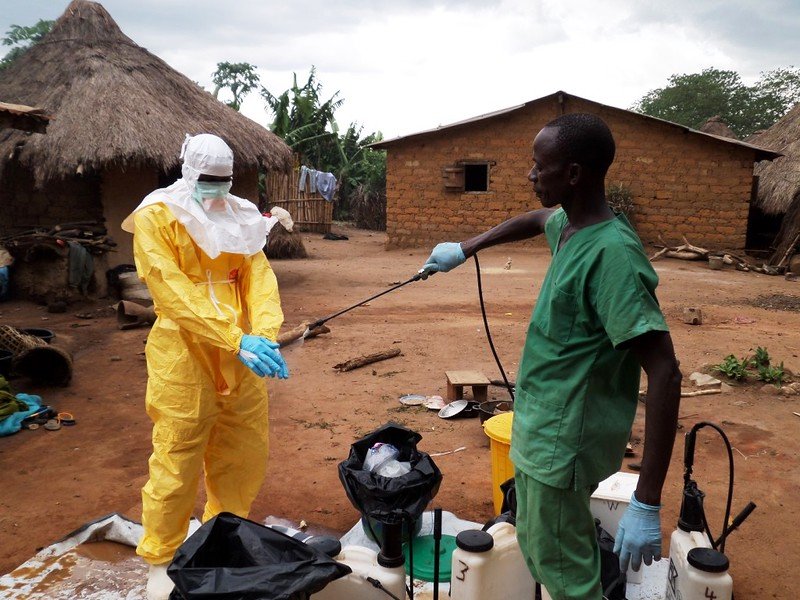
Photo source: EU Civil Protection and Humanitarian Aid