






Kenya’s growing mental health crisis is forcing many young people to navigate trauma, anxiety, economic uncertainty, and political instability largely on their own because the support systems meant to help them are either overstretched, underfunded, or simply too far away to reach.
Development Diaries reports that new data released by the World Health Organisation (WHO) during Mental Health Awareness Month in May showed that one in seven young people globally lives with a mental health condition, a figure that has renewed attention on the state of mental health services across Africa.
The concern is particularly significant in Kenya, where many young people continue to grapple with the emotional consequences of the 2024 Finance Bill protests, rising living costs, climate-related disasters, public health threats, and uncertainty about the future, all while mental health services remain scarce and difficult to access.
For a 22-year-old university student living in Kisumu, those challenges have become deeply personal. Media reports have it that she was among the thousands of young Kenyans who joined protests against the Finance Bill in 2024.
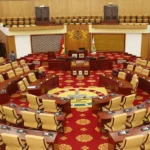
She remembers being at Parliament when security forces opened fire and holding a friend who had been shot. What she does not know is whether that friend survived.
Nearly two years later, she still struggles to sleep through the night, and concentrating on her studies has become difficult, while crowded places make her uncomfortable.
Her story reflects the reality facing many young Africans who are expected to keep moving forward even when their emotional well-being is quietly collapsing behind the scenes.
Compounding crises
The final week of May 2026 placed many young Kenyans under a level of psychological pressure that cannot be measured simply through economic indicators.
The Finance Bill 2026 was entering its final stages of public participation, with proposals that many young people feared could increase the cost of the phones, mobile money services, and digital tools that have become their primary means of earning a living.
For a young content creator, mobile money is the office, the bank, the payroll system, and sometimes the entire business model. Any threat to it feels less like policy and more like someone discussing how to tax breathing.
At the same time, Ebola outbreaks in neighbouring Uganda and the Democratic Republic of Congo placed several Kenyan counties on heightened alert, creating another layer of uncertainty for families already dealing with economic stress.
Research published in 2025 by Cambridge University’s Global Mental Health journal found that climate-related flooding in Kenya continues to produce lasting symptoms of anxiety, depression, and post-traumatic stress among young people.
Similar studies across Africa have shown that economic hardship increasingly affects young people’s ability to study, work, maintain relationships, and plan for the future.
The psychological baseline of an entire generation is shifting, yet public systems continue to behave as though mental health is a luxury concern rather than a survival issue.
Infrastructure that is not there
Kenya allocated Ksh702.7 billion to education in the 2025/2026 budget, making it the largest area of government spending.
Mental health funding, however, remains far less visible.
While Kenya’s health system serves millions of people living with mental health conditions, access to professional support remains severely constrained outside major urban centres. In many counties, mental health services operate with limited personnel, inadequate facilities, long waiting lists, and significant social stigma.
The WHO recommends that countries allocate at least five percent of health budgets to mental health services, but Kenya’s allocation remains significantly lower.
That gap helps explain why a young person struggling with anxiety can wait months for an appointment, why many conditions remain undiagnosed, and why families are often left to manage complex mental health challenges without professional support.
Although the government’s expansion of Community Health Promoters has strengthened frontline healthcare delivery in many areas, very few of these workers have received adequate training to identify mental health conditions or make appropriate referrals.
Ironically, the healthcare workers closest to communities are often the least equipped to respond to one of the fastest-growing public health challenges within those communities.
System analysis
Mental health continues to receive relatively low political attention because the consequences are less visible than other emergencies.
The effects emerge gradually through declining academic performance, reduced productivity, substance abuse, family instability, and worsening health outcomes. Because these consequences arrive slowly, governments often postpone the investments needed to address them.
This pattern has repeated itself across many African countries, with mental health appearing in strategic plans, receiving public recognition during awareness campaigns, and then returning to the bottom of budget priorities once financial decisions are made.
The Ministry of Health bears responsibility for allocations that remain disconnected from documented levels of need. County governments also carry responsibility for repeatedly prioritising visible infrastructure over mental health services that may be less politically rewarding but are no less essential.
Development partners share part of the accountability because health financing frequently prioritises physical diseases while leaving mental health programmes chronically underfunded.
Citizens’ rights
Article 43 of Kenya’s constitution guarantees every person the right to the highest attainable standard of health. The African Charter on Human and Peoples’ Rights and international human rights treaties ratified by Kenya recognise similar protections.
A health system serving a population where one in seven young people faces mental health challenges cannot realistically meet its obligations while allocating only a fraction of the resources required to address those needs.
The right to health includes the right to mental healthcare, not merely the right to a building labelled as a hospital.
Gender and equity lens
Young women often experience the mental health burden differently and more intensely, with research consistently showing higher rates of anxiety and depression among women and girls.
For young women living in informal settlements, the challenges are often layered on top of one another, as economic hardship, gender-based violence, unemployment, climate shocks, and political instability arrive together and demand to be managed simultaneously.
Girls in rural communities face additional challenges when schools experience traumatic events or climate-related disruptions. Many continue to attend classes while carrying untreated trauma that eventually appears in educational outcomes but is rarely recognised as a mental health issue requiring intervention.
What needs to happen now
Citizens can begin by demanding transparency about mental health spending within their counties. Every county government should be able to state clearly how much is allocated to mental health services and what outcomes those investments are expected to deliver.
County assemblies should hold public hearings examining mental health budgets, service availability, waiting times, staffing levels, and access gaps before future budget allocations are approved.
For institutions, Kenya’s Ministry of Health should establish a phased plan to increase mental health funding toward internationally recommended levels while integrating mental health identification and referral systems into Community Health Promoter training programmes nationwide.
Mental health has spent too many years being treated as an invisible crisis, and the longer governments continue to budget as though trauma, anxiety, depression, and psychological distress are minor concerns, the more young people will be left carrying burdens that public institutions were created to help them bear.
Photo source: UNICEF