




South Africans are once again being told that fellow Africans living beside them are the reason life is hard, while children are bullied in schools, migrant-owned shops are attacked, and families who crossed borders searching for survival now live with fear inside communities they also help to build.
Development Diaries reports that Catholic bishops across Africa recently condemned rising anti-foreigner violence in South Africa and called for the protection of migrants’ rights, including access to healthcare, education, dignity, and safety regardless of immigration status.
The statement arrived at a tense moment when the South African government was publicly disputing claims of xenophobic attacks, even as countries like Nigeria began evacuating citizens after reports involving the deaths of Nigerians during encounters with South African security forces and amid growing fears across the continent.
The bishops’ intervention matters because xenophobia in South Africa is no longer only a diplomatic issue discussed through official government statements and embassy press conferences.
It has become something happening inside neighbourhoods, churches, schools, taxi parks, markets, and township streets where ordinary Africans now look at one another with suspicion because politicians and organised groups have spent years turning frustration about unemployment, poverty, and insecurity into anger against foreigners.
This is why the bishops’ statement carries weight beyond religion itself because, in many communities, religious leaders shape social attitudes more directly than politicians do.
When priests and pastors begin openly challenging anti-immigrant hatred from the pulpit, they introduce moral pressure inside communities where violence is actually organised.
That matters because xenophobia rarely begins with mobs appearing from nowhere, and it grows gradually through conversations in taxis, jokes in marketplaces, rumours in barber shops, and speeches in community meetings where foreigners are slowly presented as less deserving of protection.
The deeper problem is that South Africa already has laws protecting the rights now being threatened socially. The country’s constitution guarantees access to healthcare and education regardless of nationality or documentation status.
What is failing is the environment around those rights, as politicians across different parties have repeatedly flirted with anti-immigrant rhetoric because they understand that frustration wins votes faster than honest conversations about governance failures.
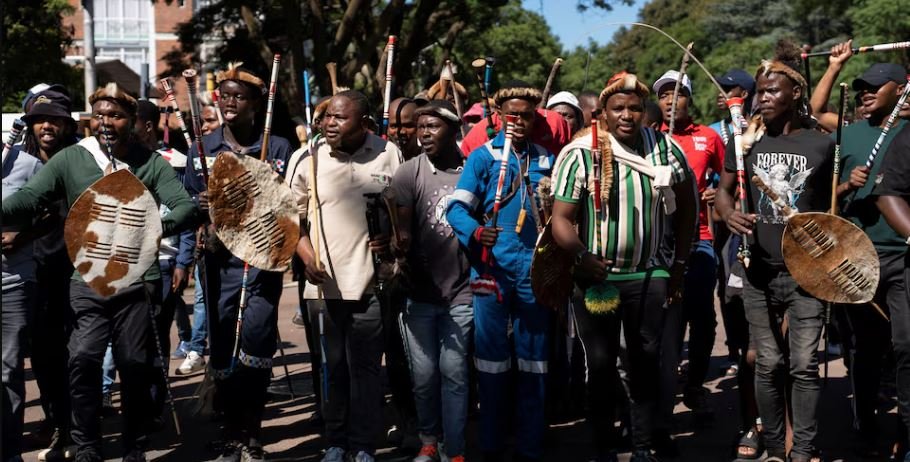
For example, groups like Operation Dudula and similar anti-immigrant movements emerged inside communities already exhausted by poverty, inequality, crime, and weak public services. The tragedy is that vulnerable migrants now carry the anger created by failures they did not cause.
Women and children suffer some of the worst consequences quietly, as female migrants working as domestic workers often live isolated lives without strong support systems or protection.
Also, women running small businesses in townships remain especially exposed during anti-immigrant protests because their shops are visible and easy targets, while children born to mixed South African and foreign families are increasingly bullied in schools and told to ‘go back home’ even when South Africa is the only country they know.
The bishops’ condemnation also places responsibility directly on South African religious institutions themselves. Recall that during apartheid, churches played visible moral roles in confronting injustice.
Many citizens now expect that same clarity against xenophobic violence instead of vague sermons about peace that avoid directly confronting what is happening in communities.
Citizens also have responsibilities beyond forwarding angry messages on WhatsApp and blaming foreigners for every social problem. South Africans must begin asking tougher questions about who benefits politically whenever anti-immigrant tensions rise before elections.
As a group, communities should demand honest conversations about jobs, corruption, inequality, housing, and public services instead of accepting migrants as convenient scapegoats for government failures.
Institutions like the South African Human Rights Commission should strengthen public education around migrants’ constitutional rights, while the Department of Basic Education must actively protect children facing nationality-based discrimination inside schools.
Religious leaders, civil society groups, labour unions, and community organisations must stop treating xenophobia as somebody else’s problem because hatred left unchallenged eventually expands beyond its first targets.
Africa cannot keep preaching unity at continental summits while ordinary Africans are hunted, threatened, and humiliated inside African communities simply because they crossed a border searching for survival.