




Kenya’s constitution promises journalists the freedom to report power without fear, but many reporters covering protests and politics still go home wondering whether carrying a press tag now feels more like carrying a target.
Development Diaries reports that World Press Freedom Day 2026 reopened conversations around the growing gap between the rights journalists have on paper and the dangers many of them face while simply trying to do their jobs.
Across Kenya, reporters covering protests, elections, corruption, and public accountability increasingly find themselves navigating intimidation from police officers, political actors, online mobs, and even courtrooms where legal threats are now being used like political weapons.
The problem is no longer whether Kenya has strong constitutional protections for the press because the country’s constitution already guarantees freedom of expression, media independence, and access to information under Articles 33, 34, and 35.
The issue is that many journalists still operate in environments where those constitutional guarantees suddenly disappear the moment a protest turns chaotic, a politician becomes uncomfortable, or a powerful institution decides a story should not reach the public.
Reports from the Media Council of Kenya, Amnesty International, and the International Press Centre have repeatedly documented attacks, intimidation, and harassment targeting journalists across East Africa, especially during politically tense periods.
Kenya’s election seasons already carry a history of heightened political hostility, and early signs ahead of the 2027 elections suggest the pressure on journalists may become even heavier as political alliances shift and public tensions rise.
The irony is that Kenya is often praised internationally for having one of the continent’s most progressive constitutional frameworks on media freedom.
The journalists most exposed are the local reporters covering ward politics, community protests, land disputes, police raids, and election violence in areas where power operates closest to the people and where retaliation can happen quietly without attracting international attention.
Female journalists face even harsher realities because political intimidation increasingly extends beyond physical threats into coordinated online harassment campaigns designed to humiliate, silence, and psychologically exhaust women reporting on public affairs.
Kenya’s institutions already know these problems exist. The responsibility now falls directly on the National Police Service, the Office of the Director of Public Prosecutions, the Independent Policing Oversight Authority, and the Media Council of Kenya to stop treating attacks on journalists like unfortunate side effects of politics instead of direct threats to democracy itself.
Police authorities must issue enforceable standing orders prohibiting officers from interfering with journalists covering protests and public events. Officers who assault or obstruct reporters should face visible disciplinary consequences because constitutional rights lose meaning when violations carry no punishment.
As for the Director of Public Prosecutions, he must also begin treating attacks on journalists as serious constitutional offences rather than low-priority incidents that disappear inside administrative paperwork.
For the Media Council of Kenya, they cannot stop at documenting violations after they happen because citizens already know journalists are being harassed. What citizens need now is visible accountability that shows who committed abuses, what investigations followed, and what punishment was imposed.
As Kenya gradually moves closer to another election cycle, citizens should begin paying closer attention to how journalists are treated at protests, political rallies, and accountability events because societies rarely lose democratic freedoms overnight.
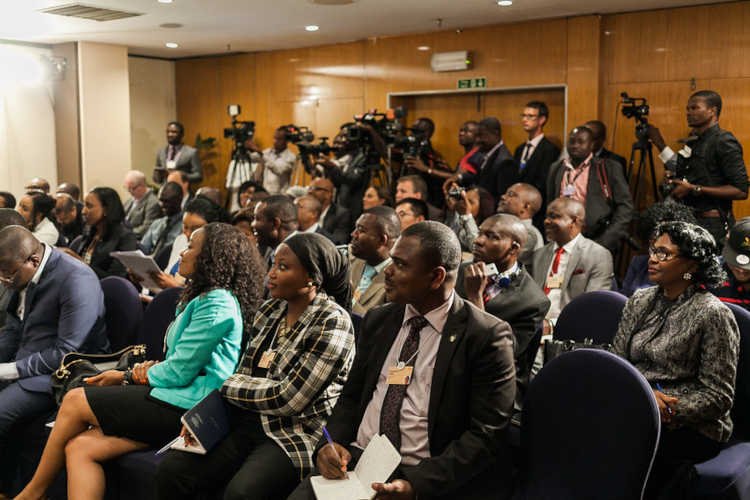
Photo source: World Economic Forum