





Nigerians who shouted ‘a new Nigeria is possible’ in 2023 are now watching the same opposition politics they tried to escape recycle itself under new party names, fresh logos, and familiar promises.
Development Diaries reports that when the Obidient movement emerged ahead of the 2023 elections, it felt different from the political culture many young Nigerians had grown tired of.
Thousands of first-time voters poured energy, money, social media campaigns, and street-level mobilisation into Peter Obi’s candidacy because they believed he represented a break from the old arrangements that had defined Nigerian politics since 1999.
The attraction was about frustration with a system where political parties often looked like temporary bus stops politicians entered and exited depending on where power appeared to be heading.
Obi eventually secured 25 percent of the presidential vote under the Labour Party, the strongest performance by a third-party candidate since Nigeria returned to democracy in 1999.
The movement cut across ethnic and regional lines in ways Nigerian politics rarely allows, with young Nigerians who had never attended political meetings suddenly becoming campaign volunteers, market women donating money, and professionals printing flyers.
Even students defended political arguments online like they were preparing for examinations, as many voters genuinely believed they were building something different from the Peoples Democratic Party (PDP) and the All Progressives Congress (APC) cycle they had spent years criticising.
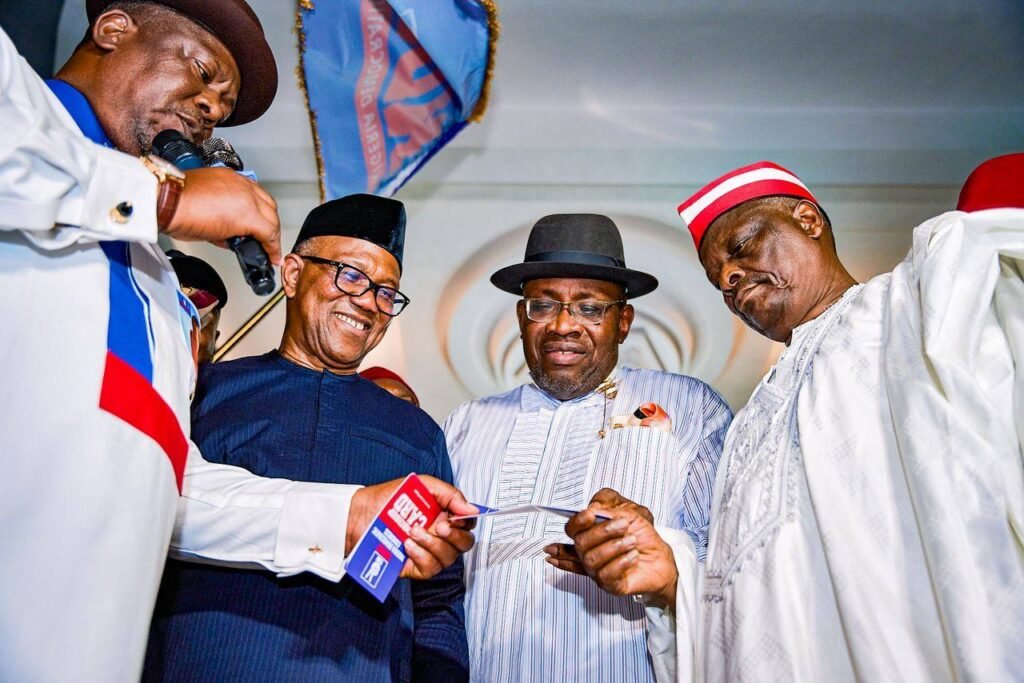
Three years later, the same movement is now watching Obi move from Labour Party to the African Democratic Congress (ADC) and then to the newly formed Nigeria Democratic Congress (NDC) alongside former Kano State Governor and leader of the formidable Kwankwasiyya Movement, Rabiu Kwankwaso.
Three parties in four years have now carried the same rescue-Nigeria message, and for many citizens, the confusion is now whether the structure carrying the promise changes anything at all.
Obi explained his latest move by pointing to worsening poverty, insecurity, hunger, and the internal crisis that swallowed the ADC. Nigerians already know those national problems exist because they are living with them daily.
The harder question many supporters are asking quietly is what exactly changed ideologically from Labour Party to ADC to NDC. If every vehicle claims the same mission, citizens naturally want to know what specifically made the previous platforms unsuitable for that mission.
The frustration becomes deeper because the ADC crisis itself reflects a larger sickness inside opposition politics, as the party that was expected to unite major opposition figures quickly broke into competing factions, leadership disputes, and organisational confusion.
Opposition leaders and several civic analysts have alleged infiltration by ruling party operatives determined to weaken any coalition capable of becoming a serious electoral threat ahead of 2027.
Whether every allegation is true or not, Nigerians are once again watching an opposition platform spend more time fighting internal battles than confronting the issues affecting ordinary citizens.
The newly formed NDC now faces the burden of proving it is more than another emergency shelter for displaced politicians because Nigerians still do not know its concrete policy direction on anti-defection laws, electoral reform, economic recovery, youth unemployment, or internal party democracy.
A political party cannot survive permanently on ‘we are not APC’ branding because citizens will eventually ask what exactly replaces the system being criticised.
The deeper problem underneath all this is that Nigeria’s political environment still rewards defections without demanding accountability. Section 68(1)(g) of the constitution already attempts to prevent party switching without consequence, except under genuine party crises.
Courts have interpreted that provision so loosely over the years that politicians now move across parties almost as easily as changing WhatsApp display pictures. The constitutional safeguard exists on paper, while political reality continues operating differently.
The Independent National Electoral Commission (INEC) also supervises a political system where parties can be created, fragmented, abandoned, and replaced within a single election cycle without serious consequences for the political actors involved.
Citizens are expected to repeatedly rebuild trust around structures that have no consistent ideological identity, no internal democratic stability, and enforceable accountability standards. In practical terms, voters are often campaigning harder for parties than the parties themselves appear committed to surviving.
Young women who formed a visible part of the Obidient mobilisation are among those carrying this disappointment most heavily, with many investing genuine civic hope into a movement they believed would create space for broader participation and representation.
That is why Nigerians should stop treating party defections like football transfer gossip and start demanding substance. Before rebuilding political loyalty around any new opposition platform ahead of 2027, citizens should demand published policy documents, internal democracy rules, financial transparency, and clear positions on electoral reform and anti-defection laws.
The National Assembly also carries responsibility because anti-defection laws remain weakly enforced despite years of political instability caused by serial party switching.
Democracy cannot become a revolving door where politicians move freely while citizens remain trapped in the same economic hardship regardless of which party banner is being waved on television.
Photo source: Peter Obi (Facebook)