






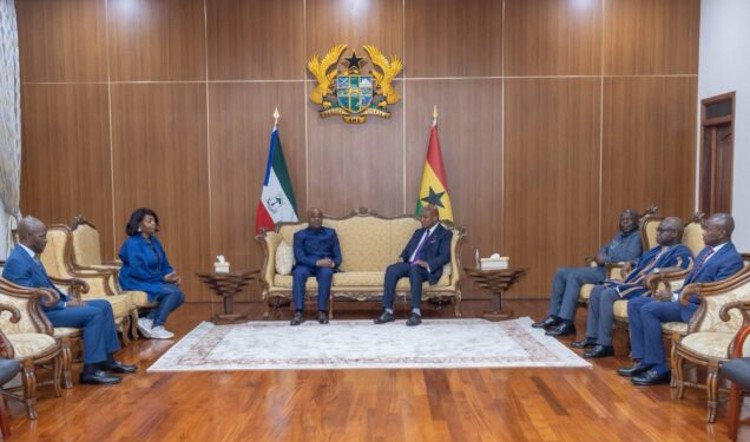
More than 150 years after slavery ended in much of the world, governments are still debating whether the descendants of enslaved Africans deserve more than apologies.
Development Diaries reports that representatives from over 80 countries are participating in a three-day conference on reparatory justice in Ghana’s Accra, the first major international gathering since the United Nations General Assembly adopted a landmark resolution describing the trans-Atlantic slave trade as ‘the gravest crime against humanity’.
For centuries, enslaved Africans were detained at the Christiansborg Castle, one of the most infamous sites in the history of the slave trade and venue of the conference.
While Christiansborg Castle served as a powerful reminder of the human cost of the trans-Atlantic slave trade, the conference itself was ultimately a test of whether governments were willing to move beyond historical acknowledgment and confront the enduring economic and developmental consequences of a system that generated wealth for some societies while impoverishing others.
The UN turning point
The Accra conference was made possible by a decision taken three months earlier at the United Nations. It is understood that on 25 March, the UN General Assembly adopted Resolution A/RES/80/250 by a vote of 123 countries in favour, three against, and 52 abstentions.
For the first time in the organisation’s history, the international community formally described the trans-Atlantic slave trade as one of humanity’s gravest crimes.
The significance of that vote lies in what it reveals about global politics, with the United States, Israel, and Argentina voting against the resolution, while the countries that abstained included Britain, France, Portugal, Spain, Belgium, and the Netherlands.
The latter countries have had their wealth and industrial development profoundly shaped by slavery, colonialism, and the extraction of African resources.
The accountability gap
The challenge facing the reparations movement is that a vast distance remains between moral recognition and practical justice.
A UN resolution cannot return stolen artefacts, close wealth gaps, build schools, hospitals, or infrastructure in communities whose historical underdevelopment is linked to centuries of extraction and exploitation.
Those outcomes require institutions, funding mechanisms, legal pathways, and political commitments that currently do not exist at the scale required. This is the accountability gap the Accra conference was expected to address.
Without answers to this accountability gap, reparatory justice risks becoming another international commitment that generates headlines without generating change.
Who pays?
If slavery generated wealth for states, institutions, and private actors over centuries, who bears responsibility for financing reparatory measures today? The answer matters because previous reparations programmes succeeded only when responsibility was clearly assigned.
Germany’s reparations for Holocaust survivors did not emerge from moral recognition alone, as they emerged from specific financial commitments backed by identifiable institutions and enforceable agreements.
Also, compensation for Japanese Americans interned during World War II followed a similar pattern, with governments acknowledging wrongdoing and allocating resources to address it.
The challenge confronting advocates of reparatory justice for slavery is significantly larger because the crime itself was transnational, spanning continents, empires, corporations, and generations.
Determining who pays, how much they pay, and how funds are managed will likely become the most contested aspect of the process, and that reality explains why many governments are comfortable discussing slavery’s history while remaining cautious about its financial implications.
Beyond compensation
Money is only one part of the reparations conversation. Another major issue concerns cultural heritage, as an estimated 90 percent of Africa’s historical artefacts remain outside the continent, housed in museums and private collections across Europe and North America.
Many of these objects were acquired during colonial campaigns, military invasions, and systems of exploitation directly connected to slavery and empire.
Unlike financial compensation, cultural restitution has immediate pathways for implementation, as governments can negotiate returns, museums can revise policies, and bilateral agreements can be signed.
The debate is how quickly institutions are prepared to act.
The same principle applies to broader demands emerging from Africa and the Caribbean, with advocates increasingly arguing that reparatory justice should include educational investment, technology transfer, debt relief, healthcare support, and economic partnerships designed to address inequalities rooted in historical exploitation.
If slavery and colonialism contributed to creating present inequalities, then addressing those inequalities should form part of any meaningful reparatory framework.
The missing voices
The descendants of enslaved Africans continue to experience some of the most persistent forms of inequality in many societies, including wealth disparities, educational disadvantages, and structural barriers linked to historical discrimination.
For these communities, reparations are about the present, the gap between the wealth accumulated through generations of exploitation and the conditions in which many descendants of the exploited continue to live.
Women occupy a particularly important place within this conversation. Enslaved women experienced forms of violence that combined racial exploitation with gender-based abuse, including sexual violence, forced reproduction, and the destruction of family structures. Those experiences created intergenerational consequences that continue to shape communities today.
A reparations framework that treats descendants as symbolic beneficiaries rather than central participants risks reproducing the same exclusions it claims to address.
From recognition to responsibility
The UN has formally recognised slavery as one of humanity’s gravest crimes, while governments have gathered to discuss justice as international attention grows.
What remains uncertain is whether the political will exists to build the institutions, allocate the resources, and accept the responsibilities necessary to transform recognition into action.
Photo source: Ghana Ministry of Foreign Affairs