





A government can declare a day ‘normal’ as many times as it likes, but for families still waiting for answers about children, siblings, and friends killed during protests, there is nothing normal about an anniversary marked by graves, missing persons, and two years of unanswered questions.
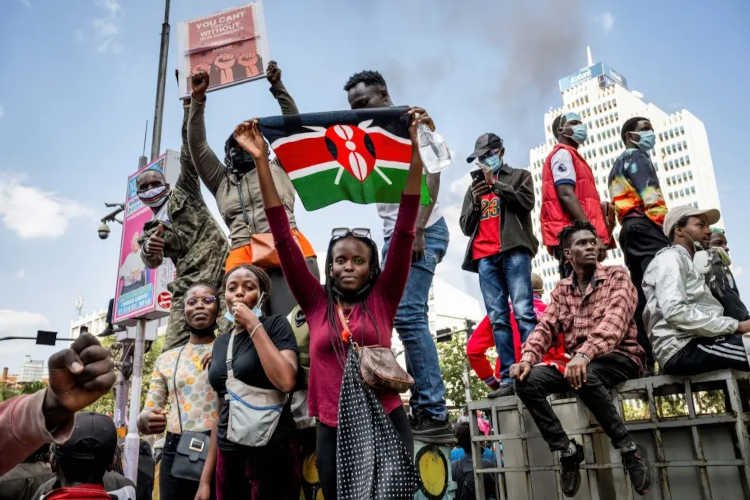
Development Diaries reports that families of victims killed during Kenya’s June and July 2024 anti-Finance Bill protests formally notified the Inspector General of Police of plans to hold memorial marches on 25 June, 2026.
Their request came days after President William Ruto warned against what he described as chaos and disorder while addressing a conference at State House in Nairobi.
The missing justice
According to the Kenya National Commission on Human Rights (KNCHR), at least 60 people were killed during the anti-Finance Bill protests, with more than 400 people injured, as protest activity spread across nearly half of the country’s counties. It is understood that 23 people who disappeared during the demonstrations remain missing.
With the KNCHR, human rights groups, journalists, and victims’ families all documenting the deaths, the accountability gap can be explained by the continued absence of prosecutorial action against those responsible.
Can compensation replace justice?
Ahead of the anniversary, President Ruto announced a compensation package reportedly worth Sh2 billion for victims of the protests, with some welcoming the move as recognition of the suffering experienced by affected families, while others rejected it outright, arguing that compensation without accountability risks treating justice as a financial transaction.
The challenge for government is that compensation cannot permanently silence demands for accountability because the two serve different purposes.
Controlling the story
During demonstrations marking the first anniversary of the protests in June 2025, authorities restricted live coverage of protest activities and reportedly interrupted some television broadcasts.
The move attracted criticism from media freedom organisations and human rights groups, with 16 people reportedly killed during those 2025 anniversary protests.
So, when governments limit real-time reporting during periods of public unrest, citizens lose access to journalism, as journalists become less able to document events as they occur, while families become more dependent on official narratives, and public scrutiny weakens.
For governments concerned about public order, controlling information may appear attractive, but for citizens concerned about accountability, it often produces the opposite effect by increasing suspicion and reducing trust.
What the law says
Kenya’s constitution guarantees citizens the right to assemble, demonstrate, and present petitions to public authorities. That protection exists precisely because protests are often inconvenient to governments.
Who bears the burden?
Young people made up a significant proportion of those participating in the anti-Finance Bill demonstrations. They were also among those most directly affected by the economic pressures that fuelled the protests.
In fact, many of the families still demanding answers are represented by mothers, sisters, daughters, and wives who have become long-term advocates because institutions responsible for delivering justice have failed to do so.
Women who played visible roles in organising and coordinating protest activities have also reported harassment and intimidation, particularly online.
What must happen next
If anything, delays increase the importance of transparency because public confidence declines whenever accountability appears selective or politically inconvenient.
For a government that insists 25 June should be treated as a normal working day, the challenge is that citizens are unlikely to move on from the events of 2024 until accountability moves as well. A memorial march may end in a few hours, but unanswered questions about 60 deaths and 23 missing persons have already lasted two years.
Photo source: Sipa/AP Images