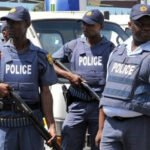


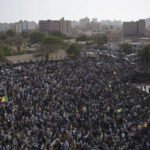



Mozambique is using an anti-terrorism law introduced to fight insurgency to keep more than 1,500 political protesters behind bars 18 months after a disputed election, exposing how security legislation can become a convenient substitute for democratic accountability.
Development Diaries reports that the detainees are among thousands arrested during the post-election crackdown that followed Mozambique’s October 2024 presidential election, an election whose outcome continues to face credibility questions from opposition parties, civil society organisations, and independent observers.
Many of those detained were arrested after joining demonstrations challenging an election result that large sections of the opposition and civil society refused to accept.
Nearly two years later, many remain in detention while the institutions responsible for safeguarding democratic rights continue to avoid the questions that triggered the protests in the first place.
A disputed mandate
Mozambique’s October 2024 elections produced a victory for FRELIMO candidate Daniel Chapo, extending the ruling party’s decades-long hold on power.
The declaration of results immediately generated controversy as opposition groups, election observers, and civic organisations questioned figures released by electoral authorities and argued that the official outcome did not align with evidence gathered during the electoral process.
Former presidential candidate Venancio Mondlane rejected the results and called for public mobilisation. The demonstrations that followed quickly evolved into one of the largest protest movements Mozambique had experienced in a generation.
The state’s response transformed an electoral dispute into a human rights crisis, with Amnesty International reporting that at least 277 people were killed during the post-election crackdown by January 2025.
Civil society organisation Decide documented more than 7,200 arrests and arbitrary detentions. Eighteen months later, approximately 1,500 people remain in detention while families continue to wait for answers about relatives who were arrested for participating in demonstrations that authorities insist threatened public order.
The government’s willingness to sustain mass detentions while avoiding a credible independent review of the election has created the impression that the priority is no longer defending electoral legitimacy but suppressing the consequences of public doubt.
The law doing the work
Mozambique’s anti-terrorism legislation was introduced in response to the insurgency in Cabo Delgado province, with authorities arguing that extraordinary security threats required extraordinary legal tools.
Human rights organisations warned at the time that the law’s broad provisions could eventually be used against political opponents rather than violent extremists.
The law allows authorities to hold suspects for extended periods before formal charges are filed. So, what was presented as a counterterrorism measure has become one of the state’s most effective instruments for managing political dissent.
Regional silence
The Southern African Development Community (SADC) and the African Union observed Mozambique’s elections and documented concerns about the electoral process and the violence that followed.
But neither has translated those concerns into meaningful consequences. So, the problem is not a shortage of information, as the details of the crackdown have been extensively documented by local and international organisations.
What appears to be the challenge is that regional institutions continue to behave as though documentation itself constitutes accountability.
SADC and the African Union have repeatedly described democratic governance as a continental priority. Mozambique’s post-election crisis is testing whether those commitments carry practical meaning when a member state faces allegations of electoral irregularities, mass arrests, and prolonged detention without trial.
So far, the answer has been disappointing.
Families paying the price
Behind every detainee is a family attempting to navigate legal uncertainty, economic hardship, and emotional trauma. Women frequently carry the heaviest burden as mothers, wives, sisters, and daughters become the primary advocates, providers, and visitors for relatives held in detention.
Many families cannot afford legal representation, public defenders are overstretched, and the longer detention continues, the more severe the economic consequences become.
Rights without protection
Mozambique has ratified major regional and international human rights instruments that protect individuals from arbitrary detention and guarantee fair trial rights.
The African Charter on Human and Peoples’ Rights protects liberty and security, with the International Covenant on Civil and Political Rights establishing similar protections. The country’s constitution also recognises these principles.
The problem is that rights become increasingly theoretical when governments can rely on expansive security legislation to delay accountability while regional institutions decline to intervene.
What must happen next
Mozambique’s government should immediately publish a comprehensive accounting of every individual detained in connection with the post-election protests, including the legal basis for detention, the status of investigations, and the timeline for either formal charges or release.
SADC should move beyond observation and use the accountability mechanisms contained within its own governance framework to address prolonged political detention.
The African Commission on Human and Peoples’ Rights should urgently examine the continued detention of protesters and request a formal explanation from Mozambican authorities.
Most importantly, the conversation must stop pretending this is exclusively a security issue.