





Freedom Month was supposed to remind South Africa what dignity looks like; instead, it exposed how easily that dignity disappears when xenophobia goes unpunished and the state looks the other way.
Development Diaries reports that while anti-immigrant groups marched through parts of Durban under the banner of ‘clean-up campaigns’, shutting down businesses and harassing foreign nationals, no one has been prosecuted for organising or directing these actions.
This happened despite the visible presence of the South African Police Service and the clear legal provisions that criminalise such behaviour.
Reports say an Ethiopian businessman, who chose not to be named, was forced to close his shops with employees of about 400 people.
‘Who will feed these workers?’ he asked.
That question has not been answered by the provincial government, the police, or the Department of Home Affairs, which is the very institution responsible for managing migration and documentation.
This pattern is not new, which is precisely why it is dangerous, as the 2008 South African xenophobic attacks, the violence of 2015, and the unrest of 2019 all followed the same script in which attacks occur, outrage follows, and accountability rarely materialises, allowing organisers to avoid prosecution, the system to reset, and the next cycle to begin with little consequence.
What sustains this cycle is not a lack of legal clarity but a failure of enforcement, because South Africa’s constitution guarantees dignity and equality regardless of origin.
The country also has in place the Prevention and Combating of Hate Crimes and Hate Speech Act, which provides mechanisms to prosecute incitement and targeted harassment.
But the absence of arrests or prosecutions when campaigns unfold publicly over days and weeks sends a clear message that the law exists but its enforcement is optional.
Political rhetoric has reinforced this environment by blurring the line between undocumented migration and criminality, creating a narrative in which harassment appears justified and shifting attention away from deeper structural issues such as unemployment, inequality, and failing public services, turning scapegoating into a convenient substitute for governance.
At the same time, the system responsible for managing migration continues to produce the very vulnerability it later condemns, as the Department of Home Affairs struggles with backlogs, delays, and corruption allegations that prevent eligible individuals from accessing legal documentation.
The burden of this failure falls on those least protected, including migrant women in informal work, street vendors, domestic workers, small business owners, and families navigating communities where protection is uncertain, as well as children who face exclusion in schools and workers whose livelihoods can disappear overnight when intimidation escalates into action.
The implications extend beyond South Africa’s borders, as the viral video circulated across the continent, including in countries that once supported South Africa’s anti-apartheid struggle, making the contrast between past solidarity and present hostility difficult to ignore.
South Africa does not lack institutions, as it has a Constitutional Court, a Human Rights Commission, and a National Prosecuting Authority, but the issue lies in the inconsistent use of these tools, because when laws are not enforced, they cease to deter and begin to exist merely as formalities.
These institutions must prosecute such actions to restore the credibility of the law, deter future violations, and make it clear that dignity and equality are not optional promises but enforceable rights.
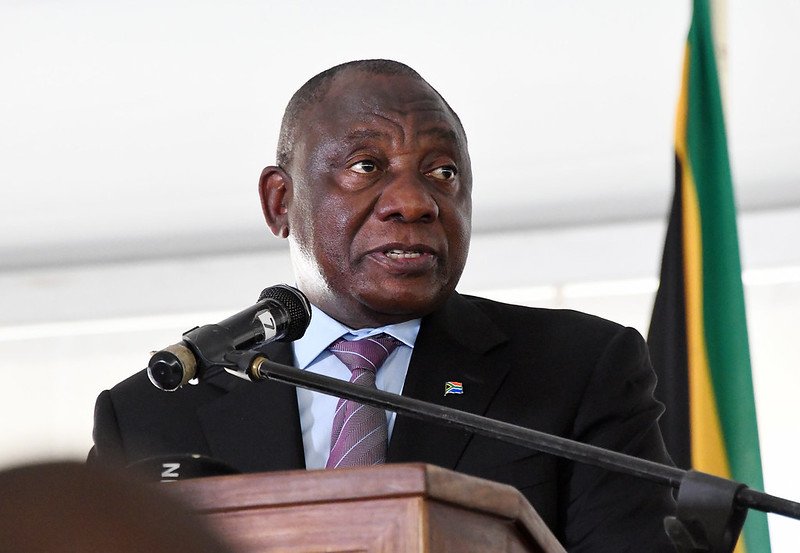
Photo source: GovernmentZA