






The hunger spreading across the Horn of Africa is no longer just about drought but about a system that saw the crisis coming and still failed to act in time.
Development Diaries reports that millions across Kenya and Somalia are facing severe food insecurity, with projections showing that nearly half of children under five in Somalia could require urgent treatment for acute malnutrition by mid-2026, despite months of early warnings from global monitoring systems designed to prevent exactly this kind of outcome.
Local media reports that in Mandera County on the Kenya–Somalia border, a local chief, Adan Molu Kike, recently explained that livestock began dying months ago and have not stopped since.
It is also understood that communities now depend on brown water delivered by aid trucks that arrive inconsistently, forcing families to share whatever comes with their animals and stretch survival across uncertain days.
What is happening here is often framed as a natural disaster, but that framing becomes difficult to defend when the crisis was forecast well in advance by institutions such as the Food and Agriculture Organisation (FAO), the World Food Programme (WFP), and the Integrated Food Security Phase Classification, all of which issued repeated alerts about worsening drought conditions and rising food insecurity long before the situation reached emergency levels.
The numbers alone should have triggered urgent action, as current estimates show that millions of people are already facing high levels of acute food insecurity across the region.
At the same time, crop production in parts of Somalia has fallen drastically below normal, reinforcing the reality that this crisis did not arrive suddenly but developed in plain sight.
This pattern has played out before, and that is what makes the current situation even more troubling, because during previous drought cycles, humanitarian appeals were consistently underfunded, with barely a fraction of required resources released, meaning that response efforts began from a position of limitation even when the scale of need was clearly documented.
Recent rainfall in some areas has provided slight relief, but it has not reversed the accumulated damage caused by consecutive failed seasons, as livestock losses, degraded soils, and weakened household resilience continue to define daily life, while shifting climate patterns threaten to introduce new stress before recovery is even possible.
At the heart of this crisis is a layered failure of systems that are meant to respond to it, starting with climate finance, where global commitments fall far below what African countries require to adapt to environmental shocks, effectively transferring the cost of climate change to those who contributed least to it.
Humanitarian funding follows a similar pattern, as appeals from aid organisations are repeatedly met with partial support, turning emergency response into a matter of negotiation rather than urgency and leaving critical gaps that translate directly into delayed assistance and preventable suffering.
At the regional level, institutions such as the Intergovernmental Authority on Development (IGAD) have the mandate to coordinate food security responses but lack the kind of pre-funded and automatic mechanisms needed to act quickly when early warnings are issued, creating a situation where action depends more on reaction than preparation.
The burden of this failure is not evenly shared, as women and girls in pastoral communities take on increased responsibility for sourcing water and sustaining households under increasingly difficult conditions, often at the expense of education and long-term opportunities, while young children face the most severe health risks, with malnutrition affecting both survival and development.
For pastoralist families, the impact goes even deeper, because the loss of livestock represents the collapse of an entire livelihood system, making recovery far more complex than waiting for rainfall, as rebuilding requires targeted support that is often delayed or insufficient.
What makes this situation harder to ignore is that it stands in clear contradiction to established rights frameworks, which guarantee access to food, health, and basic survival conditions, yet those guarantees remain difficult to reconcile with a reality where known risks are underfunded and predictable crises are allowed to escalate.
The question now is no longer whether the drought could have been anticipated, because the data has already answered that, but why the response continues to fall short even when the evidence is clear and the consequences are well understood.
What is unfolding across the Horn of Africa is not just a climate story but that of governance, where decisions made in budget rooms, policy meetings, and international negotiations determine whether early warnings translate into early action or simply become documentation of a crisis that was allowed to happen.
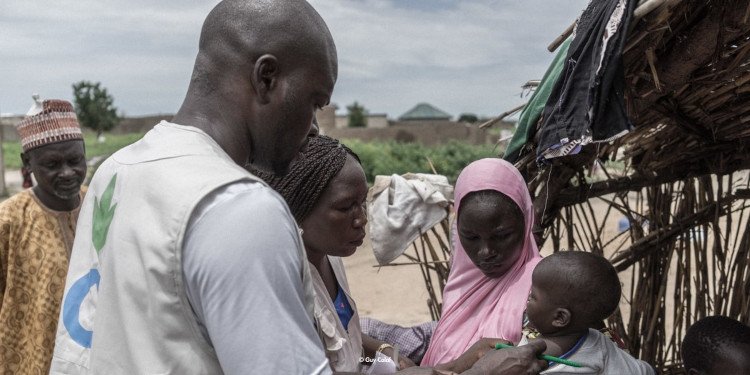
Photo source: Action Against Hunger