






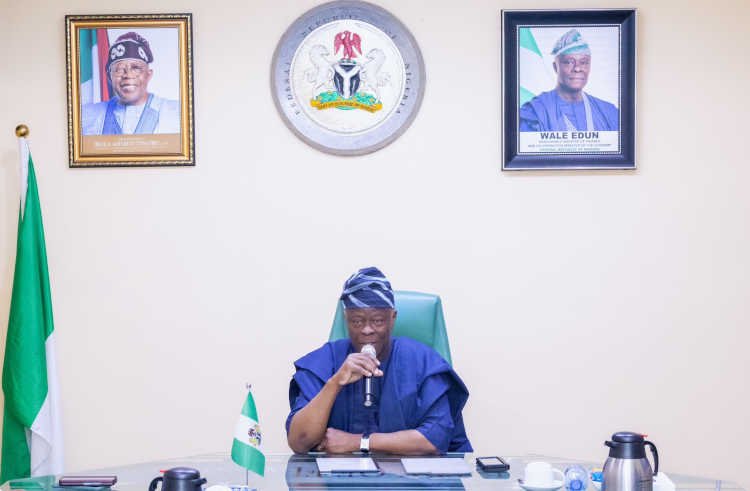
The Nigerian government recently announced the exit of the country’s finance minister, Wale Edun, without any clear explanation, and for many citizens already struggling to trust how government decisions are made, this development only deepens the suspicion that power, not public interest, is doing the real work behind the scenes.
Development Diaries understands that Edun was removed as Minister of Finance and Coordinating Minister of the Economy with barely 48 hours to hand over, even as reports suggest the decision followed pressure linked to a major road contract rather than any publicly stated performance issue.
In a country where over half the population is struggling to make ends meet and inflation continues to squeeze household income, the removal of a key economic manager would ordinarily come with detailed justification, but what Nigerians received instead was silence, and in that silence sits a louder story about who economic governance is really working for.
Edun was not an outsider to the system, having long-standing ties within government and a track record that included pushing for petroleum revenue remittances into the Federation Account, a move widely seen as an attempt to block leakages in the oil sector.
It is understood that he also maintained a cautious stance on external borrowing at a time when Nigeria’s debt profile remains a concern, and these were not minor policy choices but decisions that directly affect public revenue and long-term economic stability.
Yet the speed and manner of his exit suggest that performance alone may not be the deciding factor in how long a minister stays in office, raising uncomfortable questions about whether public interest or private influence carries more weight when key economic decisions are made.
The reported trigger, tied to dissatisfaction over the pace of releasing funds for a road project, shifts the conversation away from policy into something more familiar to Nigerians, where connections often move faster than process and where access can sometimes achieve what procedure cannot, leaving citizens to wonder whether governance is being run as a system of rules or a network of relationships.
This is where the real issue begins to affect everyday life, because decisions taken at that level do not remain in government offices, as they show up in how public funds are spent, infrastructure projects are executed, and whether resources meant for development actually reach the people they are intended to serve.
The appointment of Taiwo Oyedele as the new finance minister introduces a fresh face but not necessarily a new question, because the concern is no longer just about who holds the office but about the conditions under which that office operates.
For citizens, the implications are immediate even if they are not always visible at first glance, as a farmer waiting for better roads to transport produce, a trader dealing with rising costs, and a young graduate hoping for an economy that creates jobs are all affected by how public funds are prioritised and managed.
And when those decisions are influenced by interests that are not publicly accountable, the gap between policy and reality continues to widen.
The responsibility for addressing this does not sit in one place alone, because the National Assembly has the authority to question and scrutinise economic decisions but must choose to use that power consistently, while oversight bodies and transparency mechanisms must move beyond routine processes to actively ensure that public spending aligns with stated national priorities.
At the same time, institutions like the Nigeria Extractive Industries Transparency Initiative and procurement monitoring agencies must continue to track how reforms are implemented, particularly in areas like oil revenue and infrastructure spending where the stakes are high and the room for opacity remains wide.
Citizens also have a role that goes beyond observing events as they unfold, because asking questions about how and why such decisions are made, demanding clarity from elected representatives, and paying attention to how policies affect daily life are all part of keeping governance connected to the people it is meant to serve.
What this moment reveals is a deeper test of whether Nigeria’s economic management is guided by clear, accountable systems or shaped by pressures that operate outside public view.
Until that question is answered with transparency rather than silence, the real cost will continue to be carried by those who have the least influence over decisions that affect them the most.