





On Workers’ Day, speeches filled the air about dignity and labour, but the woman selling groundnuts in Kano still goes home counting coins instead of rights, because the system that celebrates workers was never really built for people like her.
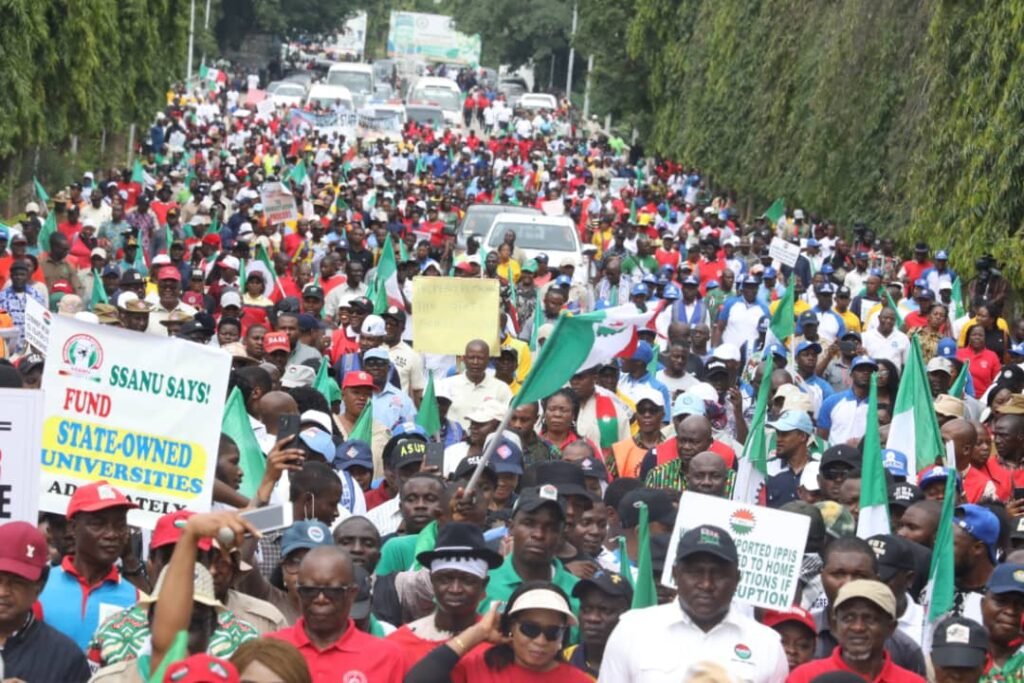
Development Diaries reports that as Workers’ Day was marked across Nigeria with rallies, speeches, and demands for better wages and conditions, millions of informal workers continued their daily hustle, unseen and largely unprotected, even though they make up the majority of the workforce.
Take Amara, for instance, who arrives at the market before sunrise and leaves after dark but has no contract, pension, sick leave, guaranteed wage, or union to defend her when things go wrong.
This is where the yearly celebration begins to look like a well-rehearsed play, because the labour laws being defended on Workers’ Day apply mostly to people with formal jobs, while more than 80 percent of workers in Nigeria operate outside that system entirely, meaning they are workers in practice but invisible in policy.
Across Africa, the story is not much different, as formal employment remains limited and increasingly fragile, while the informal economy continues to carry the weight of survival for millions who have no written agreements, legal protections, and access to the benefits that labour movements have fought for over decades.
Even in countries where labour unions remain strong, the reality is shifting, as the traditional workplace that unions were built around is shrinking, replaced by market stalls, ride-hailing apps, domestic work, and small-scale trading, where organising is harder and protection is weaker.
The impact is even sharper for women, who dominate many forms of informal work such as market trading, domestic labour, and small-scale enterprise, yet have little to no protection when they become pregnant, fall ill, or face exploitation, turning everyday work into a constant negotiation with risk.
Young people entering the workforce are also caught in this cycle, as many begin their working lives in informal roles and find it difficult to transition into formal employment, meaning the gap between protected and unprotected workers continues to widen with each passing year.
International commitments already recognise that all workers deserve fair conditions, not just those in formal jobs, but the reality on the ground tells a different story, where protections stop at the edge of formal employment and leave millions to navigate work without support.
What this means in practice is that when Amara falls sick, there is no income support; when she is injured, there is no compensation; and when she is harassed or displaced, there is no system that responds in her favour, even though she is part of the economy that keeps cities running.
Until labour policies begin to reflect the actual structure of work in Africa, Workers’ Day will continue to celebrate a version of labour that applies to a minority, while the majority carry on with their hustle, waiting for a system that finally recognises that work is still work, whether it comes with a contract or not.