




For people in riverine Bayelsa State, southern Nigeria, travelling by boat to attend a burial, visit a clinic or buy food should not come with the risk of never reaching home.
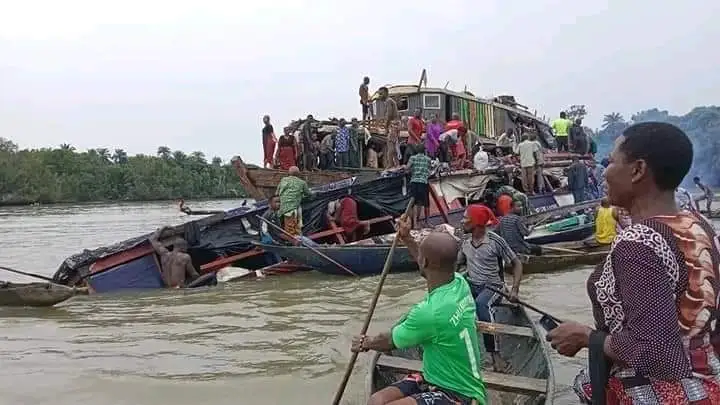
Development Diaries reports that at least 24 people died after a boat carrying mourners from Ayama to Ukubie in Southern Ijaw area of the state capsized last Friday.
The National Emergency Management Agency (NEMA) confirmed that 24 bodies had been recovered as search and rescue continued, while the state governor put the death toll at 29 and reported more than 50 survivors, with preliminary reports pointing to mechanical failure.
President Bola Tinubu expressed condolences to the affected families and approved N250 million in support, while Vice President Kashim Shettima announced plans for tighter waterway regulations.
The financial assistance may help families facing the loss of loved ones, but it cannot bring them back or prevent another boat from sailing without the safety measures passengers need.
Recall that after deadly boat accidents in Niger State, the National Inland Waterways Authority (NIWA) announced that passengers must wear life jackets.
The law also requires passenger capacity limits to be observed and clearly indicated, but boats continue to capsize in different parts of the country, often amid reports of overloading, poor maintenance and failure to follow safety rules.
A similar incident occurred in 2024, killing passengers in Rivers, Anambra, Sokoto and Kogi states, as well as in January 2026, when 52 passengers travelling from Jigawa died after a boat capsized in Nguru, Yobe State.
Bayelsa itself recorded two fatal boat incidents in November, before the latest tragedy, with each disaster bringing condolences and fresh instructions to operators, but passengers still have little assurance that anyone is checking whether the rules are being followed.
A life jacket requirement means little if passengers board without life jackets and nobody stops the boat from leaving; the same applies to passenger limits and engine maintenance.
NIWA is responsible for regulating Nigeria’s inland waterways, including vessel registration, licensing and safety enforcement; Bayelsa State Ministry of Transport also has a role in overseeing passenger transport within the state, while the Federal Ministry of Marine and Blue Economy supervises NIWA.
The question is whether these institutions are inspecting vessels, checking passenger capacity and sanctioning operators before accidents happen, rather than arriving after families have lost their loved ones.
For communities in Southern Ijaw and other riverine parts of Bayelsa, Delta, Rivers and Akwa Ibom, boats are often the only available means of reaching markets, schools, hospitals and neighbouring communities.
Women traders, schoolchildren and health workers depend on these journeys, while pregnant women may have no alternative when travelling to the nearest health facility.
Low-income families bear much of the danger because they cannot afford private boats or alternative transport, while passengers with disabilities face additional risks when vessels lack life jackets and there are no arrangements to help them evacuate in an emergency.
Section 33 of the Nigerian constitution guarantees the right to life, while Section 17 directs the state to pursue policies that protect citizens’ welfare and safety, just as Article 4 of the African Charter on Human and Peoples’ Rights also protects the right to life and the integrity of the person.
Community development committees in Bayelsa should request NIWA’s records of vessel inspections, operators sanctioned and licences suspended over the past year under the Freedom of Information Act.
Passengers can also report operators who ignore safety requirements, while refusing to board boats without life jackets.
NIWA, on its part, should publish its enforcement record for Bayelsa and disclose how many licensed jetties operate in Southern Ijaw compared with the number of places where passengers regularly board boats.
For the state Ministry of Transport, it should publish a compliance register for those embarkation points, while the National Assembly committees responsible for marine transport should demand evidence of inspections and sanctions during NIWA’s budget defence.
The families of those who died deserve the support announced by government, but passengers still using Bayelsa’s waterways deserve boats that are safe before they set sail.
Photo source: Premium Times