





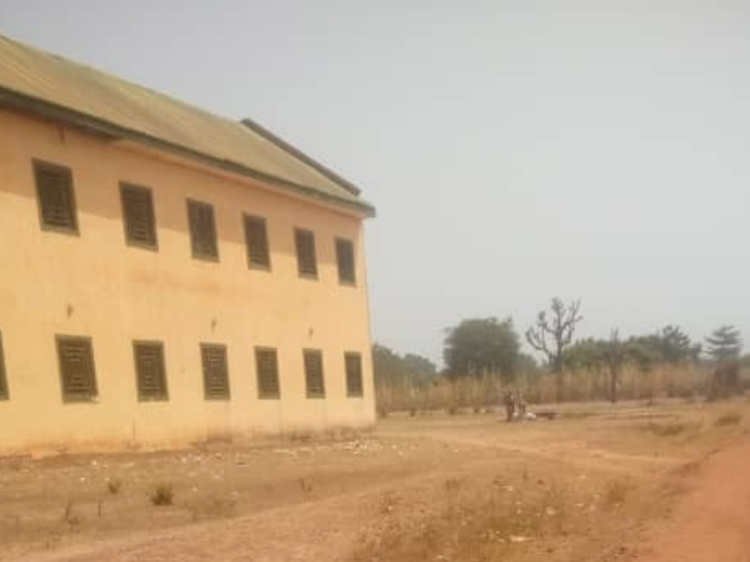
36 students abducted from Lassa Government Secondary School in Borno State are still in captivity, and fear of another attack is now keeping other children away from school, even as the state reports rising enrolment.
Development Diaries reports that parents in Lassa community, Askira-Uba area of the state, have stopped sending their children to school months after terrorists abducted the students.
The government of Borno State has relocated students of the school to safer schools, but the continued captivity of their classmates has left parents worried about sending their own children back to the classroom.
The Commissioner for Information and Internal Security, Professor Usman Tar, said the state’s school security committee was assessing schools for vulnerabilities and that military and paramilitary personnel have been deployed.
However, for parents who have watched children disappear from a school, a security assessment is only as reassuring as the protection it provides.
The situation comes as Al Jazeera reports that school enrolment in Borno has nearly doubled after years of conflict, following efforts by the state government to rebuild schools.
The report also points to concerns about attendance, teacher availability and learning outcomes for children whose education was interrupted.
Both reports can be true, as more children may be registered in schools across Borno while parents in Lassa keep their children at home because they fear another abduction.
In other words, while enrolment figures may look encouraging in government reports, they cannot tell us how many children are actually showing up for lessons.
Nigeria’s Annual School Census, administered through State Universal Basic Education Boards and consolidated by the Universal Basic Education Commission (UBEC), tracks enrolment.
However, without regular attendance figures, children who stop going to school because of insecurity can disappear from the picture without appearing in the statistics as children who have lost access to education.
And this problem goes beyond Lassa because a school security assessment and the deployment of soldiers do not automatically restore parents’ confidence.
Families need to know that schools are protected, that there is a clear response if an attack occurs and that the government is doing everything possible to bring the 36 abducted students home.
Until then, a school may be open on paper while its pupils remain at home.
Girls face particular risks because parents worried about abduction, sexual violence and forced marriage may be more likely to withdraw their daughters from school.
Children with disabilities also need evacuation arrangements that account for those who cannot easily run, see or hear an alarm, just as poorer rural families have fewer alternatives, since they may not be able to afford transport or relocate their children to schools in safer towns.
Nigeria’s constitution directs government to provide free and compulsory education, while the Universal Basic Education Act 2004 makes basic education compulsory. The Child Rights Act, as applicable in Borno State, also protects children’s rights to education and protection from abuse and exploitation.
So the Borno State Ministry of Education and its school security committee should publish the findings of their vulnerability assessments and explain what protection measures have been put in place.
The Borno State Universal Basic Education Board should also publish attendance figures by sex and local government area alongside enrolment data, while UBEC should make attendance reporting a requirement of the Annual School Census.
The National Safe Schools Response and Coordination Centre and the Office of the National Security Advisor should also disclose how many schools in Borno are covered by the protection system, while the military should provide a credible update on efforts to rescue the 36 students abducted from Lassa Government Secondary School.
Parent-teacher associations and school-based management committees, on their part, can help by keeping termly attendance records and submitting them to the state education board, while parents can request the security assessment for their schools and the name of the officer responsible for implementing it.
Borno cannot measure the return of education by how many children appear on school registers while fear is keeping them out of classrooms.