




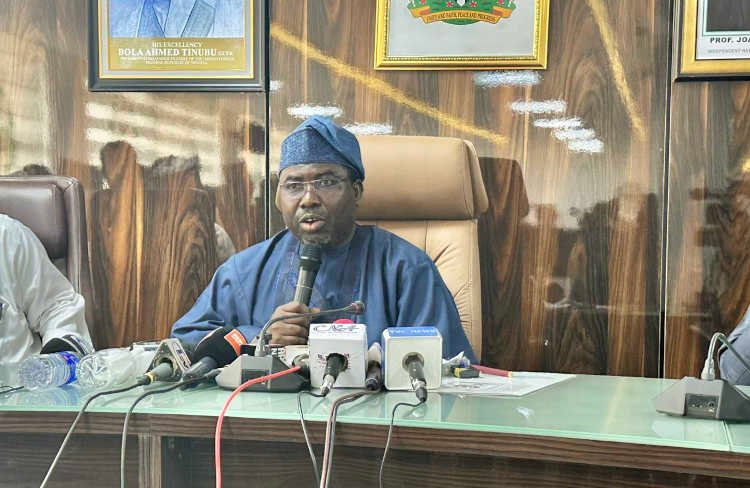
Nigeria’s 2027 elections are already under a shadow, as growing allegations of bias against the leadership of the Independent National Electoral Commission (INEC) under Professor Joash Amupitan raise a more troubling question of whether the umpire can truly be trusted to play fair.
Development Diaries reports that the alleged past social media posts linked to the INEC chairman, which appear to show support for the ruling All Progressives Congress (APC) and President Bola Tinubu, have resurfaced at a time when neutrality is not just expected but required.
The Nigerian constitution does not remove an INEC chairman based on vibes or viral posts, as Section 157 sets a high bar, requiring presidential action backed by a two-thirds Senate majority.
That process exists to protect institutions from political witch-hunts. But even if something is legally permissible, it can still be politically damaging, and in elections, perception is the main issue.
According to data from the Afrobarometer, public trust in electoral bodies across Africa has been declining in contexts where citizens perceive bias or manipulation. In Nigeria, post-election surveys after the 2023 polls already showed significant levels of distrust in the electoral process.
So, when new allegations surface, they land on an already cracked foundation, and the real issue here is whether Nigerians can walk into the 2027 elections believing that their votes will count.
Professor Amupitan himself must understand that silence or blanket denial is no longer enough in an era where digital evidence shapes public opinion. If there are legitimate explanations, they must be clear, verifiable, and transparent.
The presidency, led by President Tinubu, also has a duty to ensure that the integrity of the electoral system is not compromised because if the appointing authority appears indifferent to public concern, it sends a dangerous signal that confidence in institutions is optional.
As for the Nigerian Senate, which constitutionally plays a role in any removal process, it must also resist the temptation to treat this as business as usual, as oversight is a democratic responsibility.
INEC as an institution must go beyond statements and demonstrate independence through action. Decisions that affect opposition parties, electoral guidelines, and stakeholder engagement must be communicated with clarity and backed by transparent legal reasoning.
But perhaps the most important role in this matter belongs to citizens. This is the time to ask hard questions, demand evidence, and insist on accountability because at the end of the day, democracy is protected by people who refuse to look away when the system begins to tilt.