



Recovering N180 billion in assets means little if wealth of that scale can still pass through Nigeria’s asset declaration system without raising public questions.
Development Diaries reports that the Federal High Court in Abuja recently ordered the final forfeiture of 48 properties linked to former Attorney General of the Federation and Minister of Justice, Abubakar Malami.
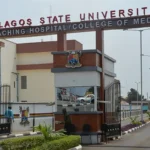
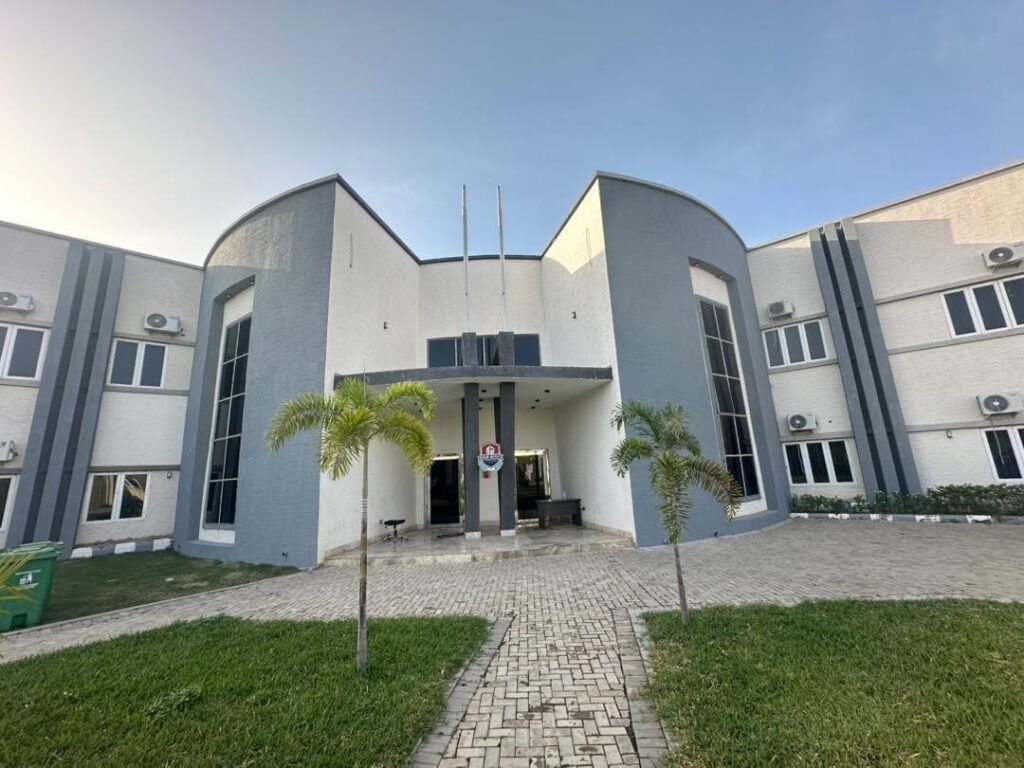
The assets include a university with three campuses, hotels, a radio station, petrol stations, warehouses, plazas, farmlands and residential estates spread across the Federal Capital Territory, Kano, Kaduna and Kebbi.
Based on the figures provided by the Economic and Financial Crimes Commission (EFCC), the forfeited portfolio is estimated at about N180.4 billion, with Justice Joyce Abdulmalik making it clear that this was a civil forfeiture proceeding in which the legal threshold was reasonable suspicion rather than proof beyond reasonable doubt.
The separate money-laundering trial continues, but the asset-declaration system should not have to wait for a criminal judgment to answer how wealth of that scale escaped public scrutiny.
Why were the assets forfeited without a criminal conviction?
Justice Abdulmalik’s ruling answers that question. Civil forfeiture only requires the court to determine whether there is reasonable suspicion surrounding the assets, while the separate money-laundering trial will determine criminal liability.
Why did the court return some of the properties?
Even the forfeiture application itself did not succeed in full because while the EFCC sought the forfeiture of 57 properties, the court released nine assets valued at about N28.7 billion after finding insufficient evidence linking them to unlawful activity.
That outcome shows the evidence was weighed property by property rather than accepted as a single package.
What happened to the asset declarations filed with the Code of Conduct Bureau (CCB)?
That question now moves to the bureau because Malami maintained that the properties were declared in 2019 and 2023 as required by the Constitution.
If those declarations were indeed filed, the obvious question is whether anyone examined them because asset declaration is supposed to be more than an annual exercise in filling forms and hoping the cabinet has enough shelves to store them.
Who manages recovered assets after government takes possession?
Nobody has publicly explained who will manage the 48 forfeited properties, how they will be managed or where any income they generate will go, just as no publicly reported framework allows Nigerians to track their custodians, management arrangements or the destination of the proceeds they generate.
What could N180.4 billion have done if it had remained in public service?
The value of those assets also puts Nigeria’s public spending choices into perspective, with the Universal Basic Education Commission (UBEC) repeatedly reporting billions of naira lying idle because many states failed to provide counterpart funding for basic education.
The forfeited assets are worth considerably more than those unaccessed funds, shifting the conversation from recovery to whether recovered public wealth ever finds its way back into public services.
Nigeria’s constitution requires public officers to declare their assets and commits government to abolishing corrupt practices and abuse of power. The country has also ratified international anti-corruption agreements that recognise asset recovery as a fundamental principle.
Those commitments become difficult to measure when citizens can see recovered assets but cannot follow what happens after recovery.
Communities eventually pay the bill whenever public resources disappear, and examples include rural health centres that continue to operate without equipment, schools that struggle without basic facilities, and water, nutrition and other public services that arrive years behind schedule because resources meant for them travelled somewhere else first.
That contradiction is visible in Kebbi State, where several of the forfeited properties are located even as the state continues to record one of Nigeria’s highest numbers of out-of-school girls.
The CCB should publish annual statistics showing how many asset declarations it receives, verifies and refers for investigation, while the EFCC should publish a public register of recovered assets, their custodians and the proceeds generated from them.
The Federal Ministry of Justice should also present a proceeds-of-crime management framework requiring annual public reporting to the National Assembly.