






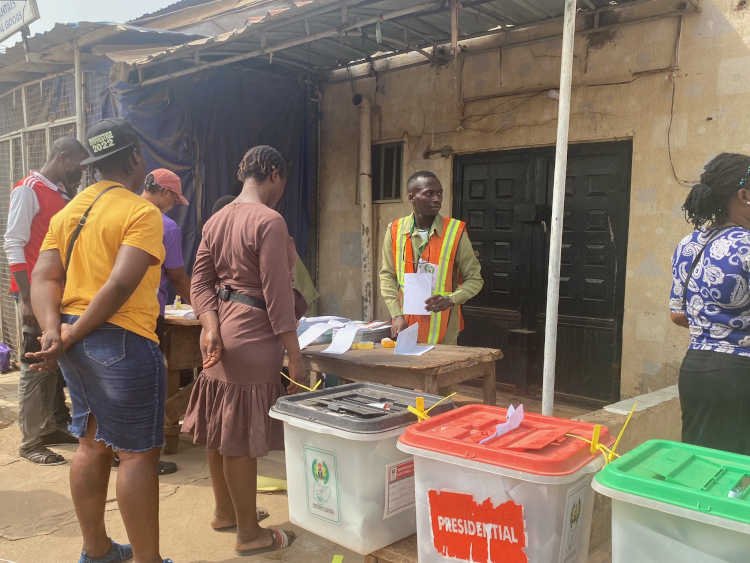
In a move that risks deepening the already wide trust gap between citizens and the government, some lawmakers in the National Assembly are championing a proposed compulsory voting bill.
Development Diaries reports that the proposed bill, co-sponsored by the Speaker of the House of Representatives, Tajudeen Abbas, and Labour Party lawmaker Daniel Ago, seeks to amend the Electoral Act to make voting mandatory for all Nigerians of voting age in national and state elections.
The bill also proposes a six-month jail term or a fine of N100,000 for eligible citizens who fail to vote.
Forcing citizens to vote under the threat of jail time or a fine contradicts the very foundation of democratic participation, which is built on free will, choice, and informed consent.
In any truly democratic society, participation in elections must be voluntary, not coerced.
The right to vote includes the right not to vote, and attempting to strip citizens of that freedom through legislation undermines the very essence of democracy.
It shifts the blame for low voter turnout from the government’s failure to inspire confidence to the electorate’s supposed indifference, which is unfair and misleading.
People are not refusing to vote because they are irresponsible; many have lost faith in a system that has repeatedly failed to deliver credible outcomes.
Elections marred by irregularities, voter intimidation, and poor service delivery have discouraged millions from participating.
Besides, trust is not legislated into existence; it is built through deliberate, consistent action and accountability from those in power.
It is especially troubling that lawmakers are proposing compulsory voting while many of the complaints and irregularities from the 2023 elections remain unresolved.
Nigerians have repeatedly expressed dissatisfaction with how their votes were handled, particularly regarding the integrity of the collation process and the failure of the Independent National Electoral Commission (INEC) to deliver on its promises of transparency through BVAS and IReV.
Rather than addressing these grievances, the National Assembly is moving to criminalise non-participation, a move that appears tone-deaf and dismissive of citizens’ concerns.
More critically, the move betrays a lack of respect for the citizen’s autonomy and freedom of conscience. Section 38 of the 1999 constitution guarantees freedom of thought, conscience, and belief.
By attempting to force participation in elections, the proposed bill directly violates this right. A citizen who chooses not to vote, whether out of protest, dissatisfaction, or personal principle, is exercising a legitimate democratic choice.
Until Nigerians are given genuine reasons to believe in the process, through fairness, accountability, and results that reflect the people’s will, forcing them to vote will only deepen distrust and raise further questions about the government’s commitment to true democratic values.
What Nigeria truly needs is meaningful electoral reform, not coercion.
Development Diaries calls on the National Assembly to redirect its energy towards strengthening the electoral system by enacting reforms that guarantee transparency, justice, and accountability.