



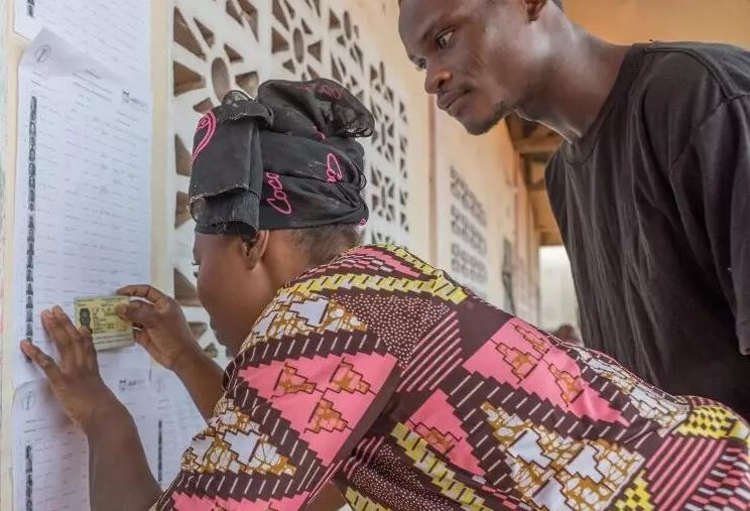
Nigerians are preparing to vote on 16 January, 2027, but the register they will vote with still contains dead people, underage voters and duplicate entries that the electoral commission has been unable to remove.
Development Diaries reports that the Independent National Electoral Commission (INEC) has shelved a planned six-month clean-up of the voter register because it cannot complete the exercise before election day.
Instead, the commission has scheduled a mock accreditation and result-transmission test for 28 November, leaving the known problems on the register unresolved as it rehearses the technology that will process voters and transmit results.
It is a curious order of priorities because the machine that reads the register gets a rehearsal, while the register itself is left with entries that should not be there.
Similar concerns about electoral credibility are emerging elsewhere in Africa, though through different problems, with opposition leaders in Kenya challenging the Independent Electoral and Boundaries Commission (IEBC) over preparations for the 2027 election, including result-declaration timelines and unequal access to national identity cards.
Rigathi Gachagua has given the commission chairman until January to respond to opposition concerns, while Kalonzo Musyoka and Justin Muturi have called for results to be declared by midnight on election day and demanded consultations with young people and religious leaders.
Interior Cabinet Secretary Kipchumba Murkomen has accused the opposition of resisting transparent presidential tallying and warned that attacks on the commission could threaten stability.
But a commission cannot build public confidence by asking people to trust it while concerns about voter registration, identity documents and result management remain unanswered.
Tanzania, on its part, is facing a different test, as after an election violence is linked to 518 deaths, the presidency is proposing a reconciliation body, with nominations sought from religious organisations, political parties and civil society.
CHADEMA did not attend the 16 November State House meeting and has called for an independent mediator, while raising the imprisonment of its chairman as an obstacle to participation. The proposed reconciliation body is separate from the Lila inquiry into responsibility for the violence, whose findings remain unpublished.
Across the three countries, the trouble begins before or after the ballot itself. Nigeria’s voter register is not being cleaned in time; Kenya’s identity card process is being questioned over unequal access; and Tanzania is trying to reconcile a country still seeking answers about election-related killings.
These failures have constitutional consequences: Nigeria’s constitution guarantees citizens aged 18 and above the right to register and vote, and Kenya’s constitution protects adult citizens’ right to register and vote, as well as their entitlement to an identity document.
The African Charter on Democracy, Elections and Governance also commits state parties to credible elections and the resolution of electoral disputes through appropriate institutions.
The people most likely to be pushed aside are those who already face barriers to public services such as rural women, persons with disabilities and internally displaced Nigerians who struggle to reach registration centres or correct errors in time.
In Kenya, identity card vetting in northern areas and for Nubian and Somali communities can leave women without the documents needed to register, while Tanzania’s post-election treason cases have included children, some reportedly as young as 13.
INEC should publish before the 28 November test the number of dead, underage and duplicate entries it has identified but will not remove, broken down by state, and explain how it will prevent those entries from being used at polling units.
Kenya’s IEBC should publish identity card issuance figures by county and sex before its January deadline, while the Registrar of Persons should provide clear processing timelines.
As for Tanzania, its Lila Commission should publish its findings, and the presidency should ensure that any reconciliation process includes independent mediation and meaningful participation by excluded political groups.
While election technology can help transmit results, it cannot clean a voter register, issue an identity card or answer for people killed during an election.